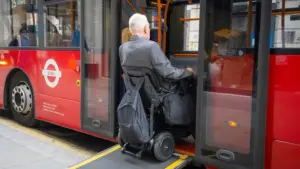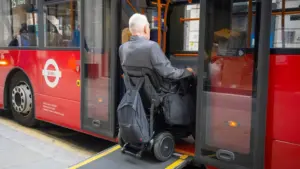

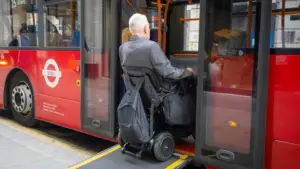








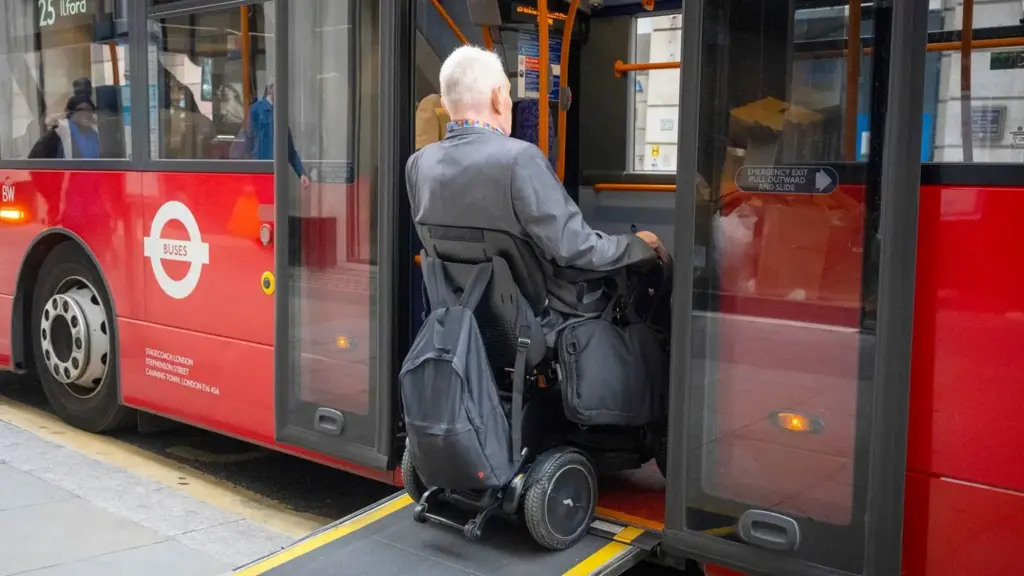
Starting April 1, disabled people across England will be able to travel by bus for free at any time of day, marking a major milestone in public transit equity and accessibility. Previously, free bus passes were restricted to off-peak hours on weekdays—specifically between 09:30 and 23:00—making it difficult for pass holders to commute to standard morning jobs, attend early professional commitments, or participate in late-night events without incurring out-of-pocket costs. The removal of these time limits will benefit an estimated one million people nationwide, transforming local bus travel from a restricted daytime convenience into a true full-time lifeline for work, education, and social participation.
The landmark policy follows a successful trial in Greater Manchester’s integrated public transit system, known as the “Bee Network.” The regional pilot demonstrated the feasibility and social benefits of removing time restrictions on concessionary travel, providing a practical blueprint for national implementation. Furthermore, the nationwide reform responds to years of sustained campaigning by prominent disability rights organizations, including Scope and Transport for All. Advocates have widely celebrated the move for eliminating an unfair "postcode lottery," where the practical utility of a concessionary pass previously depended heavily on localized municipal rules and regional funding decisions. However, civil society organizations emphasize that this reform is only one crucial step forward, noting that eligibility requirements across various local authorities still require broader standardization to ensure true national equity.
To make the program permanent and sustainable, the £60 million scheme is being jointly funded through the Department for Transport and the Department for Work and Pensions. Government officials are framing the reform as an essential workforce and cost-of-living initiative, aligning it with existing broader transit measures such as the nationwide £2 single-fare cap. By implementing this change, England is finally bringing its concessionary transit policy in line with similar 24/7 programs that have already been operating successfully in Scotland and Wales, closing a notable geographical gap in accessibility across the United Kingdom.
Global Takeaways: How Other Countries Can Make Accessible Commuting Possible
Making daily commuting accessible and affordable for disabled citizens requires a comprehensive combination of thoughtful policy design, reliable digital systems, and targeted public investment. As transportation networks around the world look for ways to improve inclusivity, the British experience offers critical insights into how structural reforms can reshape public mobility.
Why Was the UK Able to Do It?
The ability of the United Kingdom to enact this nationwide shift stems from a combination of existing concessionary transit frameworks, centralized government funding, and persistent pressure from advocacy groups. While local authorities historically managed the administration of bus passes, the central government possessed the financial leverage and regulatory authority to coordinate a nationwide funding injection. By pairing Department for Transport resources with Department for Work and Pensions objectives, policymakers were able to bridge the financial gap that previously prevented local councils from expanding pass validity into peak commuting hours. Additionally, the groundwork laid by regional initiatives like Greater Manchester’s Bee Network provided empirical evidence that removing time restrictions would not overwhelm transit systems, giving national decision-makers the confidence to roll out the policy on a countrywide scale.
Does It Depend on Existing Infrastructure?
Yes, heavily. Free transit passes only work if the public transport network is physically and technologically accessible to begin with. Concessionary fares are of limited use if passengers cannot physically board the vehicle or navigate the transit environment. A successful nationwide policy relies on continuous investment in modern bus fleets equipped with wheelchair ramps, audio-visual next-stop announcements, and dedicated priority seating spaces. Furthermore, digital ticketing systems, real-time tracking applications, and properly trained drivers who understand the needs of disabled passengers are essential components of an accessible infrastructure. Without these physical and operational foundations, expanding travel hours alone cannot fully resolve the systemic barriers faced by disabled commuters.
What Is Needed to Make Commuting Affordable for People with Disabilities?
Achieving true affordability and accessibility in public transportation requires a multi-layered approach that goes beyond simply waiving fares. First, governments must establish universal fare policies that eliminate regional disparities and administrative fragmentation, ensuring that a transit pass holds equal value regardless of municipal boundaries. Second, national and local authorities need to dedicate consistent funding toward maintaining and upgrading public vehicle fleets, bus stops, and stations to meet high standards of physical accessibility. Third, policymakers must actively consult with disability advocacy groups and everyday transit users to identify ongoing bottlenecks, such as inconsistent eligibility criteria or poorly integrated transport links. Finally, integrating concessionary travel schemes with broader cost-of-living and employment support programs ensures that public transit acts as an effective bridge to economic independence rather than a daily financial obstacle.