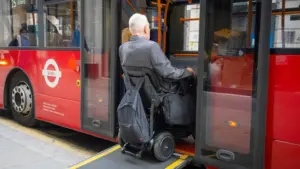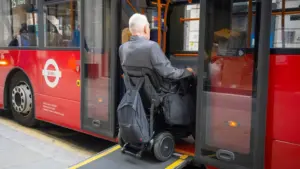
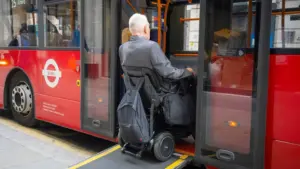








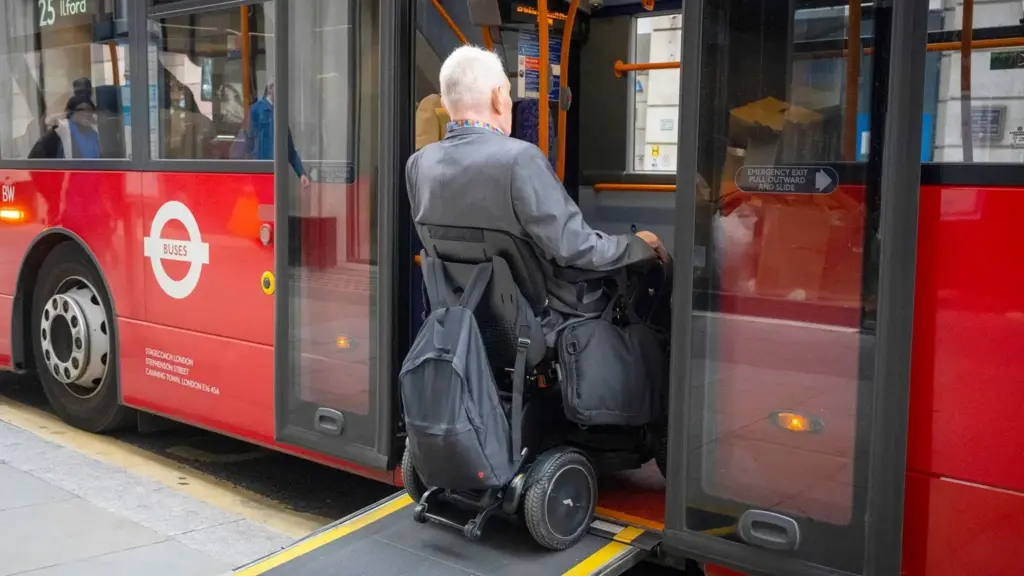
Starting April 1, disabled people across England will be able to travel by bus for free at any time of day, marking a major milestone in public transportation accessibility. Previously, free bus passes were restricted to off-peak hours on weekdays, specifically between the hours of 09:30 and 23:00. This long-standing limitation made it exceedingly difficult for pass holders to commute to standard morning jobs, attend early professional commitments, or participate in late-night social and cultural events.
The removal of these time limits will benefit an estimated one million people nationwide, effectively transforming the traditional bus pass from a limited concession into a true full-time lifeline. By dismantling the barriers that previously restricted travel to specific hours, the policy aims to integrate disabled citizens more fully into the economic and social fabric of daily life across England.
The landmark policy follows a highly successful trial period within Greater Manchester’s integrated public transport system, known as the “Bee Network.” The success of that regional pilot provided a practical blueprint for national implementation, demonstrating that all-day accessibility is both operationally feasible and deeply beneficial to local communities. Furthermore, the nationwide shift responds directly to years of persistent campaigning by prominent disability rights organizations, including Scope and Transport for All.
Advocates have enthusiastically celebrated the move for eliminating an unfair "postcode lottery," a system where the practical validity and hours of concessionary passes depended heavily on arbitrary local rules and regional council boundaries. However, while disability organizations have praised the government for addressing time restrictions, they emphasize that this reform is only one crucial step forward. They note that eligibility requirements across various regions still require broader standardization to ensure true equity for all disabled travelers regardless of where they live.
To make the program permanent and economically sustainable, the £60 million scheme is being funded jointly through the Department for Transport and the Department for Work and Pensions. Government officials frame the reform as an essential workforce and cost-of-living initiative, designed to ease financial pressures while opening up greater employment opportunities. This initiative joins existing broader transit measures, such as the nationwide £2 single-fare cap, and successfully brings England in line with similar 24/7 concessionary transit programs that are already operating successfully in Scotland and Wales.
Global Takeaways: How Other Countries Can Make Accessible Commuting Possible
Making daily commuting accessible and affordable for disabled citizens requires a careful combination of thoughtful policy design, reliable digital systems, and targeted public investment. As nations around the world look for ways to improve urban mobility and social inclusion, the UK’s latest transit reform offers key insights into what is possible when government bodies align public funding with civil rights advocacy.
Why Was the UK Able to Do It?
The ability of the United Kingdom to enact this nationwide transformation stems from a combination of sustained political pressure, collaborative policy trials, and centralized funding mechanisms. For years, disability rights advocates kept the issue at the forefront of the national agenda, demonstrating the economic and social costs of limiting transit access to off-peak hours.
When regional transport authorities, such as those overseeing Greater Manchester’s Bee Network, tested all-day access on a local level, they provided concrete evidence that the operational challenges could be managed effectively. This localized success built the necessary political confidence for national departments—specifically the Department for Transport and the Department for Work and Pensions—to commit the £60 million required to back the initiative jointly. By integrating this reform with existing national cost-of-living measures like the single-fare cap, the government framed accessible transit not as an isolated welfare program, but as a core pillar of national economic participation and workforce development.
Does It Depend on Existing Infrastructure?
Yes, heavily. Free transit passes only work if the public transport network is physically and technologically accessible to begin with. Concessionary fares and all-day access policies lose much of their practical value if disabled commuters encounter physical or systematic barriers before they even board a vehicle.
For a policy like England’s to succeed, the underlying transport infrastructure must feature continuous improvements. This includes ensuring that buses are equipped with functional ramps, audible and visual next-stop announcements, and dedicated wheelchair spaces that are respected and kept clear. Additionally, digital infrastructure plays a vital role. Smart ticketing systems, real-time bus tracking apps, and standardized electronic pass validation systems must be reliable and seamlessly integrated across different transport operators. Without these foundational elements of physical accessibility and technological reliability, expanding the hours of a free pass cannot fully solve the mobility challenges faced by disabled passengers.
What Is Needed to Make Commuting Affordable for People with Disabilities?
Creating a truly affordable and accessible daily commuting environment for people with disabilities requires a multi-layered approach that goes beyond simply waiving ticket fees. First and foremost, governments must establish universal fare concessions that eliminate regional disparities and bureaucratic red tape, ensuring that a pass issued in one area is fully honored without confusing local restrictions.
Second, funding models must be sustainable and protected against local government budget cuts, requiring dedicated national investment to back concessionary travel schemes. Third, policy frameworks must be designed in direct consultation with disability organizations and everyday transit users to identify hidden barriers, such as complex application processes or restrictive eligibility definitions.
Finally, affordability must be paired with system-wide predictability, meaning that transit authorities must guarantee reliable service frequencies, accessible interchanges, and well-maintained vehicles so that disabled commuters can rely on public transportation for time-sensitive obligations like employment and education. Through these coordinated measures, public transit can evolve into an inclusive service that genuinely accommodates the diverse needs of the entire population.