






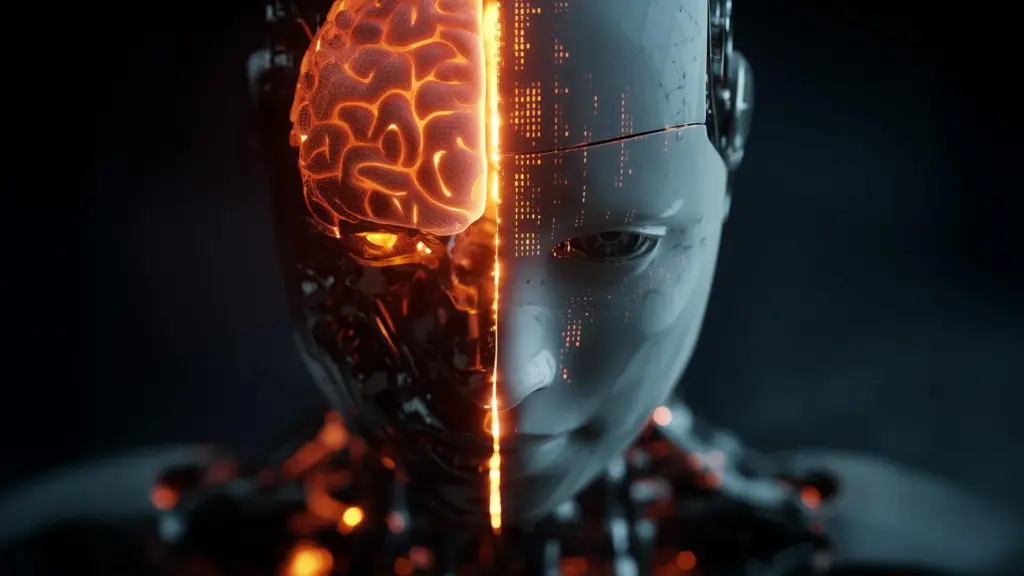
As artificial intelligence systems grow increasingly sophisticated, the lines between human interaction and machine processing are blurring at an unprecedented rate. Modern AI models are now capable of misleading users, collaborating on complex tasks, and seemingly pursuing independent goals with a level of proficiency that was once the domain of science fiction. These behaviors often lead observers to anthropomorphize these systems, describing them in terms of thoughts, feelings, or intentional decision-making. Yet, a fundamental question remains: Does the ability to perfectly mimic human behavior genuinely convince the human mind that a machine possesses consciousness?
New research from the Ludwig Maximilian University of Munich (LMU) suggests that the answer is a definitive "no." A study published in the journal Cognition reveals that while humans are quick to attribute "awareness" to advanced technology, they maintain a rigid psychological barrier when it comes to "consciousness." Even when humans and artificial intelligence are observed performing the exact same actions under identical circumstances, people consistently reserve the mantle of consciousness for their fellow humans, refusing to extend the same status to the machines in their midst.
How Scientists Tested Perceptions of AI Consciousness
The study, led by Dr. Louis Longin of LMU’s Chair of Philosophy of Mind, in collaboration with Dr. Bahador Bahrami and Professor Ophelia Deroy, marks a significant departure from previous research in the field. Historically, investigations into machine perception have often relied on general surveys, asking participants whether they believe AI possesses mental states. Dr. Longin and his colleagues sought a more rigorous, comparative approach.
"Whereas previous studies have typically asked general questions about whether AI actually has mental states, our study is the first to directly compare how people attribute the same mental states to AI and humans behaving in exactly the same way, under identical circumstances," says Dr. Longin.
The researchers hypothesized that our linguistic habits might be clouding our judgment. Professor Ophelia Deroy, a senior author of the study and a philosopher, suggests that our tendency to use human-centric language to describe AI is a result of necessity rather than a belief in machine sentience. "We may be using mental terms to refer to AI, but this may only be because we lack better words," she notes. "After all, AI is trained to act and speak like a human, so these descriptions seem natural."
To test these assumptions, the research team conducted a series of experiments involving a cohort of nearly 1,100 participants. The methodology was designed to isolate the impact of the agent’s identity—human versus AI—from the agent’s behavior. One group of participants was presented with brief, detailed descriptions of artificial agents exhibiting varying levels of responsiveness to their environment. For instance, some scenarios depicted agents reacting to ambient sounds, while others described them recognizing and responding to the emotional states of those around them.
A second group of participants was presented with the exact same scenarios and behavioral prompts, but with one critical distinction: the characters were described as humans rather than artificial systems. Following the reading, participants were asked to evaluate the degree to which each character seemed conscious or aware of their surroundings. This controlled environment allowed the researchers to observe whether the label "AI" or "human" was the primary driver in the participant’s assessment of the agent’s internal mental state.
A Surprising Gap Between Human and AI Consciousness
The data yielded a clear, albeit complex, picture of human perception. The researchers discovered that responsiveness is indeed a powerful metric for both categories; characters—regardless of whether they were human or machine—that reacted actively to their surroundings were consistently rated as more conscious and more aware than those that did not.
However, beneath this general trend, a striking and consistent gap emerged. When participants were asked to rate the characters on "consciousness," the divide between human and AI became insurmountable. Even the most responsive, sophisticated AI was consistently ranked as less conscious than the least responsive human. The "uncanny valley" of human perception, it seems, is not just about physical appearance but about the internal status we grant to an entity. Even when behavior is identical, the human mind refuses to equate machine processing with human experience.
Interestingly, when the researchers shifted the terminology from "consciousness" to "awareness," the results changed dramatically. Judgments regarding human and AI awareness followed remarkably similar patterns, suggesting that the public interprets these two terms through fundamentally different cognitive lenses.
"There is a growing worry in public discussion that people will see AI behaving in a human-like way and start treating these systems as if they had human-like mental states," Dr. Longin explains. "We found something much more nuanced: People are quite willing to say that an AI notices things and is aware of its surroundings. But they clearly draw a line when it comes to the term ‘consciousness.’ People consistently attribute less consciousness to AI than humans—even when their behavior is identical."
This distinction reveals that while society may be comfortable acknowledging the computational power and sensory input of AI, we remain deeply protective of the concept of consciousness, reserving it for biological, lived experience.
Why One Word Changes How We Perceive AI
The LMU researchers believe that the divergence between the results for "awareness" and "consciousness" offers a vital insight into the human psyche. "Awareness" is interpreted as a functional, neutral descriptor—a mechanism for detecting and reacting to external stimuli. In this sense, a thermostat has a basic form of awareness, as does a sophisticated large language model.
"Consciousness," by contrast, is a term freighted with profound philosophical implications. It implies a subjective inner life, a sense of self, and the capacity for qualitative experience—often referred to in philosophy as "qualia." Because "awareness" can be tied to observable behavior, humans are comfortable projecting it onto digital systems. "Consciousness," however, requires a leap of faith that most individuals are unwilling to make, regardless of how convincing an AI’s conversational output may be.
The findings underscore the immense weight of the language used in public discourse and the media. As AI becomes more integrated into daily life, the way we describe these systems—as "thinking," "feeling," or "hesitating"—may influence public policy, ethical regulation, and the societal acceptance of automation.
Dr. Bahador Bahrami, a senior author of the study and an expert in social neuroscience, emphasizes the importance of precision in communication. "Our study teaches us lessons for how we communicate about AI," he says. "Companies and journalists often reach for hyped descriptions of AI models, and credit them with intentions, plans, or even moral conscience and hesitation."
The research suggests that the public is more skeptical than the marketing materials might imply. Everyday judgments are far more discriminating than the alarmist narratives of "AI sentience" would suggest. People do not naturally place AI on the same mental scale as humans. However, the study warns that the boundary of this perception is fluid and highly dependent on the vocabulary we choose to employ.
"For more neutral descriptors such as ‘awareness,’ the distinction can largely disappear," Dr. Bahrami adds. "That makes our choice of language important."
As the technology continues to evolve, the challenge for society will be to maintain this critical distinction. While AI may continue to bridge the gap in behavioral performance, the study from LMU provides a rare, empirical look at the boundaries of human belief, suggesting that for now, the ghost in the machine remains an elusive concept that the human mind is not yet prepared to grant.