










Memory lapses, the thinning of skin, and the gradual loss of bone mass have long been viewed as disparate symptoms of the aging process, each treated by specialists in separate medical fields. However, groundbreaking experiments in rodent models have revealed a common thread that may link these conditions: a decline in a specific protein located deep within the brain. Researchers have identified that restoring this protein, known as Menin, can alleviate several hallmarks of aging, while targeted treatment with the amino acid D-serine shows promise in addressing specific cognitive deficits.
The findings, published on March 16, 2023, in the open-access journal PLOS Biology, were led by Lige Leng of Xiamen University in China. The study established a compelling connection between hypothalamic inflammation, systemic metabolism, and the physical decline associated with aging. While subsequent research has expanded on this mechanism, the scientific community emphasizes that these findings remain experimental, particularly regarding the potential use of supplements, which require cautious interpretation and rigorous clinical validation.
How a Brain Protein Influences the Aging Process
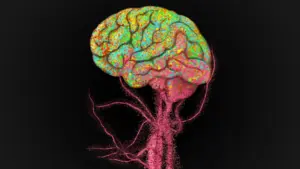
The investigation focused primarily on the hypothalamus, a small but critical region of the brain that acts as a master regulator for metabolism, hormonal balance, and other essential life functions. Beyond its role in basic survival, the hypothalamus appears to serve as a command center for the aging process. As inflammatory signaling increases within this region, it triggers a cascade of effects that influence not only neurological health but also the structural integrity of tissues throughout the entire body.

Before the 2023 study, Leng and his colleagues had established that Menin plays a vital role in restraining inflammation within the hypothalamus. This protective function raised a fundamental question for the team: If Menin levels naturally diminish with age, could that loss be a primary driver of age-related physical and cognitive decline?
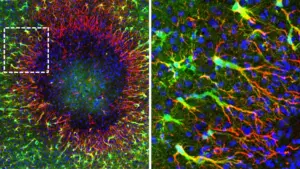
To test this hypothesis, the researchers mapped Menin expression across different cell types in the ventromedial hypothalamus—a section of the brain heavily involved in metabolic regulation. They discovered that Menin levels consistently fell in specific neurons as the mice aged. Notably, this decline was not observed in astrocytes or microglia, the brain’s support and immune cells. This specificity suggested that the protein’s loss was not a generalized degradation of brain tissue but a targeted physiological shift that could potentially be reversed.
To confirm that the loss of Menin was a causal factor in aging rather than a mere symptom, the team utilized genetically engineered "conditional knockout" mice. By selectively removing Menin from the hypothalamus in younger mice, the researchers induced a rapid onset of aging-related traits. These included reduced bone mass, accelerated skin thinning, measurable cognitive decline, and a modestly shortened lifespan. These findings provided strong evidence that the depletion of Menin is a significant contributor to the systemic deterioration seen in elderly organisms.
The D-Serine Connection
The study further identified that the absence of Menin disrupted critical chemical communication pathways between neurons. Mice lacking the protein exhibited lower levels of D-serine, an amino acid that acts as a co-agonist for receptors involved in learning and memory. These receptors are essential for long-term potentiation—the process by which neurons adjust the strength of their connections to store information.
The researchers discovered that Menin regulates an enzyme responsible for the production of D-serine. When Menin levels dropped, the enzyme became less active, leading to a shortage of the amino acid. This suggests that Menin influences cognition through a dual mechanism: by suppressing neuroinflammation and by maintaining the precise chemical environment required for effective brain signaling.
However, the researchers caution against conflating experimental treatments with dietary supplementation. While D-serine is available as a supplement, it is fundamentally different from L-serine, the form commonly found in foods such as soybeans, eggs, fish, and nuts. Although the body can convert L-serine into D-serine, the two molecules are not interchangeable in a clinical context. Eating foods rich in serine is not equivalent to the controlled delivery of D-serine used in the experiment, and the study did not conclude that dietary changes could replicate the effects observed in the lab.
Restoring Menin in Older Mice
In a pivotal experiment, the researchers attempted to reverse aging in 20-month-old mice—the equivalent of elderly human subjects. Using gene therapy, they delivered the genetic code for Menin directly into the hypothalamus, prompting cells in that region to resume production of the protein.
The results were striking. Thirty days post-treatment, the elderly mice showed measurable improvements in skin thickness, bone density, and performance on behavioral tests related to learning and balance. These physical improvements were accompanied by a restoration of D-serine levels in the hippocampus, a brain region central to memory. Furthermore, the researchers noted that restoring Menin appeared to extend the lifespan of the treated mice.
In a separate test, the team administered D-serine directly into the drinking water of older mice for three weeks. While this improved cognitive performance, it did not produce the broader, systemic physical improvements associated with Menin restoration. This distinction is critical; it suggests that while D-serine may mitigate specific cognitive deficits, it does not act as a panacea for the entirety of the aging process.
At the time, Lige Leng noted the potential significance of these results: "We speculate that the decline of Menin expression in the hypothalamus with age may be one of the driving factors of aging, and Menin may be the key protein connecting the genetic, inflammatory, and metabolic factors of aging." He added that the study highlights how systemic aging phenotypes and cognitive deficits are mediated by neuroinflammatory changes and metabolic signaling, and that, at least in a laboratory setting, these processes are potentially reversible.
Subsequent Research and Scientific Context
Since the 2023 publication, the scientific community has explored related mechanisms, though these should be viewed as independent investigations rather than direct confirmation of the Menin hypothesis. In March 2024, a study in the Journal of Physiology and Biochemistry examined cultured hippocampal cells exposed to stress hormones. Researchers found that a compound called itaconate could increase Menin levels, thereby reducing inflammation and cell death. When Menin was silenced in these cells, the protective effect vanished. While this study reinforces the protective role of Menin, it remains limited to cellular models.
Other research has bolstered the broader concept of the "hypothalamic-body axis." A 2024 study in Cell Metabolism identified a distinct group of neurons in the hypothalamus that communicates directly with adipose (fat) tissue. Stimulating this system improved physical activity levels and extended the lifespan of mice. While this involves a different molecular pathway than Menin, it supports the fundamental idea that localized brain signals dictate systemic aging.
A significant leap in mapping these changes occurred in January 2025, when researchers at the Allen Institute published an analysis of approximately 1.2 million mouse brain cells in the journal Nature. They identified that cells concentrated around the hypothalamus’s third ventricle are among the most sensitive to aging, showing a marked decline in functional gene activity and an uptick in immune-related gene expression. This study provides a structural map of aging that aligns with the general focus of the Menin research.
Complexity in Serine Metabolism
The idea that increasing D-serine is inherently beneficial has also been challenged by more recent work. An April 2025 study in Cellular and Molecular Life Sciences focused on mouse models of Alzheimer’s disease, finding that an early, abnormal rise in D-serine actually accompanied, and potentially exacerbated, signaling disruptions. Genetically silencing the enzyme responsible for D-serine production in these models actually prevented certain cognitive issues, demonstrating that the amino acid’s effects are highly dependent on the underlying biological state of the brain.
Furthermore, a September 2026 report in the Journal of Alzheimer’s Disease found that an L-serine-enriched diet could restore some aspects of neurogenesis in the hippocampus of Alzheimer’s-prone mice, but had no effect on the buildup of amyloid plaques. These disparate findings underscore that serine metabolism is a complex, context-dependent target. There is no evidence currently to suggest that simple supplementation is a viable treatment for human aging.
Translating Findings to Human Health
The path from rodent models to human medicine remains fraught with uncertainty. While there have been small-scale human trials involving D-serine, they have not established it as an anti-aging treatment. A 2016 randomized study of 50 healthy older adults showed only marginal, inconsistent benefits on cognitive tasks, with no evidence of lasting improvement or systemic health changes.
Many questions remain unanswered. Researchers have yet to determine the exact trigger that causes Menin levels to decline with age, the duration of benefits following any potential intervention, or the risk of unintended biological consequences. The current findings represent a compelling experimental pathway, suggesting that the hypothalamus holds the keys to understanding and potentially mitigating age-related decline. However, the current state of the science points toward a need for continued, rigorous investigation rather than the adoption of unproven supplements. For now, the prospect of "reversing" human aging through these pathways remains an ambitious goal of future medicine, not a present-day reality.