








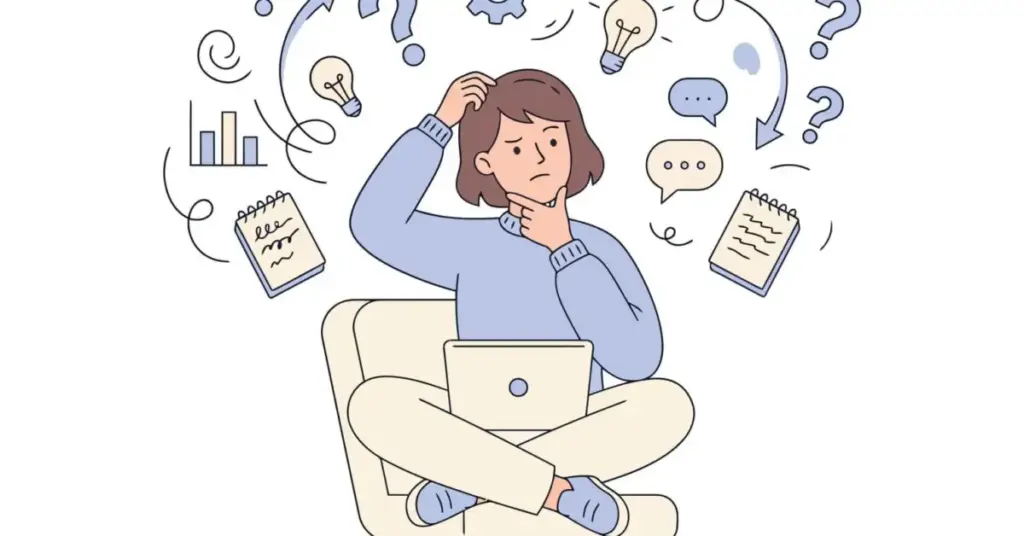
Lately, a hauntingly familiar refrain has been echoing through the offices of mental health professionals and across social circles: "I’ve done everything I was supposed to do. Is this it?" It is a question posed by women in the throes of midlife, a period increasingly defined not just by professional milestones, but by a profound sense of exhaustion and existential questioning.
These women are navigating a complex intersection of biological changes—specifically perimenopause—and shifting personal identities. They are the individuals who have spent decades perfecting the art of being indispensable. In the workplace, they are the reliable anchors who ensure projects cross the finish line. At home, they are the architects of the "second shift," managing the intricate web of kin-keeping, from scheduling medical appointments to maintaining family cohesion. For years, they operated under the assumption that professional success and rising income would eventually purchase them the ultimate luxury: freedom. Instead, they have found that the more reliable their reputation becomes, the more the world expects them to handle. The common justification, often delivered with a smile, is, "But you’re just so good at it!"
The data supports the lived experience of these women. According to Gallup’s 2026 report on the workplace, 34 percent of women working full-time reported feeling engaged at work, compared to 28 percent of men. Yet, this high engagement comes at a heavy cost. The same report indicates that 31 percent of women experience frequent workplace burnout, compared to 23 percent of men—a disparity that persists regardless of parental status.

The physiological dimension of this crisis cannot be overlooked. Researchers are only now beginning to grasp the breadth of perimenopause and its impact on cognitive and emotional bandwidth. A 2025 study tracking 679 women discovered a direct correlation between the escalation of menopause symptoms and an increase in workplace burnout over a six-month period. When this is compounded by the external pressures of return-to-office mandates, ongoing economic uncertainty, and the rising cost of living, the ability to scale back feels less like a choice and more like an impossibility. A September 2026 report from the Centers for Disease Control and Prevention (CDC) underscored the severity of this fatigue, finding that 71.5 percent of U.S. adults felt exhausted at least some days during a three-month span, with women reporting significantly higher rates of fatigue—20 percent—compared to 13 percent for men.
The Mirage of Autonomy
For many, there was a quiet, almost naive promise embedded in the pursuit of a career: that as one advanced and earned more, life would become lighter. The hope was that financial security would allow for the outsourcing of labor—childcare, housekeeping, or meal preparation. Yet, even when such resources are secured, the "mental load" often remains firmly on the shoulders of the woman. She remains the primary processor of the family’s needs, the person who holds the master schedule in her head, and the one responsible for the emotional temperature of the household.
The women seeking help are neither incapable nor unaware. They are highly intelligent, often recognizing that their own rigid expectations are a significant driver of their exhaustion. However, understanding the source of the problem is vastly different from feeling empowered to dismantle it. They frequently ask, "If I don’t do it, who will? Who will ensure the lunches are packed or check in on aging parents?" These are not merely complaints; they are valid reflections of a societal structure that has relied on them as default caregivers for decades. Many express a deep desire to stop "playing the game," but they find themselves trapped, as the identity of being the person who keeps everything running has become inseparable from who they are.
When Reliability Becomes a Trap
To understand this phenomenon, one might look at a composite figure often seen in therapeutic practice—let’s call her "Julie." A Gen Xer or an elder Millennial, Julie came of age during the height of the "girlboss" and "lean-in" era. Her professional profile on LinkedIn suggests a trajectory of unmitigated success, yet internally, she is calculating how much longer she can maintain the pace. She is caught in the classic "sandwich generation" squeeze: raising young children while simultaneously providing care for aging parents. As the oldest daughter, she has spent her life acting as the glue for her family. Now, she is beginning to wonder what it would feel like to relinquish that role, but the prospect is terrifying.
When women like Julie begin to explore the possibility of change, they are inevitably confronted by four core, existential questions.
The Cost of Stepping Back
The first hurdle is the fear of social retribution: "What if everyone gets mad at me?" This is a profound concern for women socialized to prioritize being "nice" or "accommodating." In many family structures and cultures, caretaking is the primary currency of love. Consequently, setting a boundary can feel indistinguishable from rejecting one’s loved ones. The work of healing involves accepting the reality that when you alter a dynamic, others will inevitably experience frustration. They have grown accustomed to a version of you that is perpetually available. Learning to tolerate their disappointment, while remaining firm in one’s own values, is a necessary, albeit painful, stage of growth.
The second question is rooted in anxiety: "What if something bad happens?" The human brain is evolutionarily wired to scan for threats—a trait that once kept ancestors alive but now frequently triggers unnecessary panic. When clients work through these scenarios, they are encouraged to interrogate the "worst-case" narrative. What is the actual likelihood of catastrophe if a chore is missed or a request is declined? While some things may indeed fall through the cracks—a messy house or a forgotten appointment—it becomes possible to distinguish between true non-negotiables and the "would be nice" tasks that have been masquerading as necessities.
The third question touches on self-worth: "Am I a bad person?" Because so many women have spent their lives tying their value to their utility, the act of saying "no" can feel like a moral failing. The challenge here is to move past binary, black-and-white thinking. It is possible to be a deeply caring, invested person while simultaneously declining a volunteer role or choosing not to be the primary organizer of a family reunion. Often, these women require an objective observer to hold up a mirror, revealing that they would never judge another person by the impossibly high standards they impose upon themselves.
Finally, there is the most surprising question of all: "What if I’m no longer needed?" This realization often brings a wave of unexpected grief. Being the "go-to" person has, for many, been a source of pride, competence, and meaning. It is a set of skills honed over years of anticipating needs and solving problems. Stepping back requires mourning the loss of that role and acknowledging the years spent carrying the weight. Yet, this process of taking accountability for one’s own contribution to these dynamics is exactly what opens the door to personal power.
Making Room for the Self
As the calendar turns toward the end of the year—a season defined by shorter days and an increasing density of social expectations—it serves as an opportune moment for reflection. Before automatically saying "yes" to the next request, there is a chance to pause and interrogate the motivation: Is this a task I truly desire to perform? Is it an obligation imposed by others’ expectations? Or is it simply a relic of a role I have always played?
The transition toward a more balanced life is rarely achieved through a sudden, dramatic exit. Instead, it is found in small, consistent daily actions: delegating the planning of an event, articulating a firm "no" to a commitment, or asking for help before reaching the point of total collapse. If the role of the person who holds everything together were to be laid down, the question remains: what kind of life might emerge in the space that is finally left for oneself?