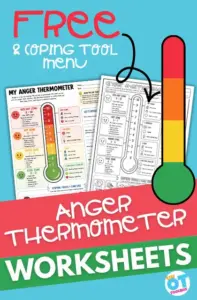








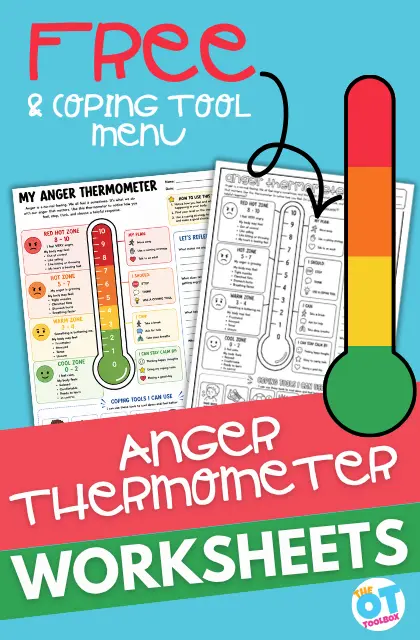
As educators, clinicians, and families continually search for effective ways to help children and adults navigate daily stressors, a new clinical resource has been introduced to the therapeutic community. Developed to support a wide range of developmental and functional needs, a newly released free anger thermometer printable is designed to bridge the gap between emotional awareness and practical daily performance in occupational therapy settings.
While the concept of an emotional meter is not entirely new to clinical practice, this visual tool has been specifically tailored by occupational therapy professionals to target foundational areas that heavily influence occupational participation. These include emotional regulation, executive functioning, self-awareness, social participation, impulse control, conflict resolution, interoception, and overall occupational performance.
Measuring Emotional Intensity Through Visual Support
Anger remains a completely normal human emotion, with everyone experiencing occasional frustration, irritation, and disappointment. However, the fundamental challenge often lies not in the feeling itself, but in how individuals recognize those emotions and choose to respond. Without adequate self-awareness and proper regulation strategies, escalating anger can significantly disrupt interpersonal relationships, academic performance, work participation, daily routines, and overall well-being.

The newly released printable resource is crafted to assist children, teens, and adults in identifying their emotional intensity, recognizing early warning signs, and establishing a structured plan to respond to frustration in healthier ways. By visualizing emotions along a gradient thermometer scale, individuals can learn to catch emotional escalation early, allowing them to practice stopping, thinking, and selecting an appropriate response long before reaching a behavioral breaking point.
Clinicians note that the tool functions effectively as a self-monitoring instrument, an emotional regulation activity, or an executive functioning support. For many clients who struggle simply to name their internal states, the thermometer offers a concrete visual method to articulate feelings that might otherwise remain abstract and overwhelming.
Defining the Emotional Continuum
To better understand how the tool operates within a therapeutic framework, practitioners look at how emotional intensity is mapped out. Similar to how a physical thermometer measures temperature, an emotional thermometer gauges the degree of internal arousal, moving smoothly from a state of calm to one of complete overwhelm.
Rather than categorizing emotions into simplistic binaries of good or bad, the anger thermometer instills the perspective that feelings exist along a continuous spectrum. This visual representation helps users realize that anger rarely appears out of nowhere; instead, it typically builds gradually over time.
By assigning numerical values or descriptive markers to different levels of feeling, individuals can grade their emotional states. This process shares conceptual similarities with other established therapeutic frameworks, such as monitoring engine speeds in the Alert Program or identifying colored zones in the Zones of Regulation. However, this specific tool hurls its primary focus directly onto the nuances of anger and frustration.
The Critical Role of Self-Awareness
A central pillar of successful emotional regulation is self-awareness. Many children, adolescents, and adults fail to recognize the initial, subtle signs of anger until their emotions have already boiled over into disruptive behaviors. Often, an individual may only notice their internal distress after they have begun yelling, arguing, shutting down entirely, withdrawing from social situations, or acting impulsively.
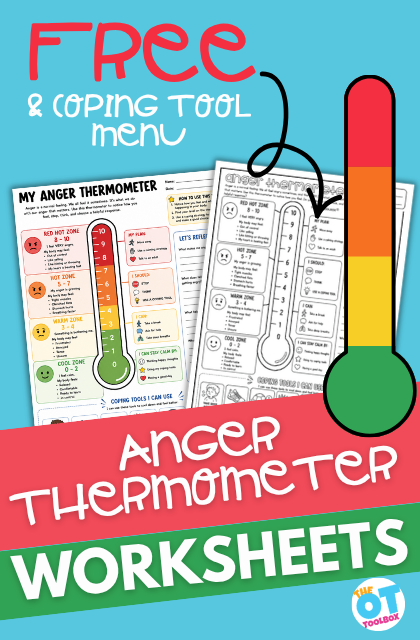
By utilizing the thermometer framework, individuals are prompted to pause and engage in metacognition—the ability to reflect upon one’s own thoughts, physical responses, and subsequent actions. This reflective pause encourages users to monitor changes in their emotional temperature and tune in to what their bodies are telling them before a conflict occurs.
Experts emphasize that anger frequently manifests physically within the body long before it becomes apparent in external behavior. The printable resource encourages users to track these physiological warning signs, which commonly include clenched fists, a racing heart, tightened jaws, stomachaches, or a sudden surge of heat. Recognizing these early physical signals gives individuals a crucial window of opportunity to implement coping strategies much earlier in the escalation cycle.
Furthermore, the framework addresses environmental and situational triggers—the specific demands, interactions, or experiences that tend to spike emotional intensity. By identifying these personal triggers and reviewing patterns on the worksheet, individuals can better prepare themselves for challenging scenarios that demand extra support.
Strengthening Executive Functioning and Daily Participation
The utility of the anger thermometer extends deeply into the realm of executive functioning. Executive functions are the cognitive processes that allow individuals to monitor their emotions, control impulses, solve problems, and make thoughtful decisions. When emotions spike into high-intensity states, these critical cognitive functions often become temporarily compromised.
By incorporating the thermometer into routines, clients actively practice self-monitoring, inhibitory control, emotional regulation, cognitive flexibility, metacognition, and structured problem-solving. Strengthening these skills helps mitigate the regulation difficulties that frequently underlie challenges in school, home, and work environments.
From an occupational therapy perspective, emotional regulation directly influences an individual’s ability to participate across all areas of daily life, as outlined in the Occupational Therapy Practice Framework. Clinicians use such tools to support clients across diverse domains, including social participation, education, work, activities of daily living, and instrumental activities of daily living. Whether a child is trying to navigate classroom transitions or an adult is attempting to manage workplace stress and professional feedback, emotional grounding remains essential for successful engagement.
Developing Practical Action Plans
A key component of the resource involves guiding users through self-reflection on how anger impacts their daily functioning and interpersonal relationships. By evaluating how emotional spikes affect social interactions, communication, and task completion, individuals begin to connect internal feelings with real-world consequences.
To bridge the gap between awareness and action, the worksheet incorporates a structured anger action plan. This feature allows users to pre-determine specific coping strategies tailored to different numerical levels on the thermometer. For instance, an individual might plan to take a short breathing break during early signs of irritation, step away to consult a trusted adult if frustration intensifies, or move to a safe space and utilize a sensory toolkit when approaching maximum distress.
Created by Colleen Beck, an occupational therapist with extensive experience across school-based practice, pediatric outpatient care, and early intervention, the resource reflects years of grassroots clinical insight. Designed to foster independence and emotional resilience across the lifespan, the tool is currently available to practitioners, educators, and families seeking practical interventions for emotional regulation and executive functioning development.