








Stress is a universal human experience, often viewed primarily as a disruptive force that clouds judgment or hinders performance. However, for years, neuroscientists have suspected that stress serves a more nuanced, evolutionary purpose. It is well-documented that the physiological "fight or flight" response—driven by a cascade of hormones, most notably cortisol—can dramatically alter the way we perceive and store information. Specifically, stressful situations seem to create memories that are more vivid, durable, and emotionally resonant than those formed during mundane moments. While the phenomenon is widely recognized, the precise neural mechanisms governing how a chemical signal translates into a permanent mental impression have remained elusive.
Now, a team of researchers at Yale University has bridged this gap, offering a significant breakthrough in our understanding of the brain’s architecture. In a study recently published in the journal Science Advances, the team reveals that cortisol does not merely "turn on" memory; it actively reshapes how brain networks dedicated to emotion and memory interact and synchronize. By uncovering these underlying dynamics, the study provides a clearer picture of why certain experiences remain etched in our minds while others fade into obscurity.
The Role of Cortisol in Memory Formation
For decades, both human and animal studies have consistently demonstrated that stress and its associated hormone, cortisol, can enhance the retention of emotional information. Central to this process is the amygdala, a small, almond-shaped cluster of nuclei located deep within the temporal lobe. The amygdala acts as the brain’s emotional processing center, serving as a filter that identifies experiences of potential significance or threat.
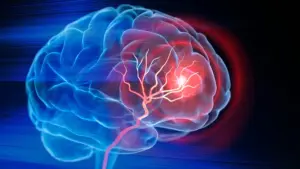
Despite this knowledge, pinning down the exact role of cortisol has been notoriously difficult. The challenge stems from the complexity of the human brain: many regions are multifunctional, participating in a vast array of cognitive processes simultaneously. Because a single brain region might be involved in both the perception of an emotional stimulus and the subsequent encoding of that memory, isolating the hormone’s specific influence on each stage of the process has been a major hurdle for researchers.
Elizabeth Goldfarb, an assistant professor of psychiatry at the Yale School of Medicine and the study’s corresponding author, notes that forming emotional memories is a multi-step journey. "Forming memories for emotional experiences involves different processes in the brain: first, perceiving an experience as emotional or intense, and second, encoding that experience into long-term memory," says Goldfarb, who is also a member of Yale’s Wu Tsai Institute, an interdisciplinary hub for the study of human cognition.
To gain clarity, the Yale team sought to disentangle these processes, aiming to determine how cortisol specifically alters the brain’s ability to flag emotional significance while simultaneously locking that experience into a lasting, long-term memory.
Observing the Brain in Action
To investigate these mechanisms, the researchers designed a rigorous, double-blind experiment. Participants were administered either a dose of hydrocortisone—a synthetic version of the body’s primary stress hormone—or an inactive placebo. Following the administration of the substance, participants were placed inside a functional MRI (fMRI) scanner. This sophisticated imaging technique tracks blood flow and oxygen consumption, providing a real-time map of which brain regions are active during specific cognitive tasks.
While inside the scanner, participants viewed a series of images designed to elicit varying levels of emotional response. As they viewed these images, they provided immediate feedback on their emotional reactions. The following day, the researchers returned to test the participants’ recall, gauging how well they remembered the images they had viewed while under the influence of the hormone or the placebo.
To ensure the highest level of scientific integrity, each participant underwent the experiment twice—once with the hydrocortisone and once with the placebo. Because the study was double-blind, neither the participants nor the researchers knew which substance was being administered at any given time. This design allowed the scientists to create a direct, intra-individual comparison, observing how the exact same brain responded to the same stimuli with and without the presence of elevated cortisol.
A New Lens on Functional Connectivity
One of the most innovative aspects of the Yale study was the researchers’ approach to analyzing the fMRI data. Traditionally, functional connectivity—the measure of how closely different brain regions synchronize their activity—requires several minutes of data to produce a reliable snapshot. However, the Yale team utilized a more granular approach, analyzing connectivity across individual trials that lasted only about five seconds.
By zooming in on these brief, discrete time windows, the researchers were able to test whether specific patterns of synchronized brain activity could accurately predict two distinct outcomes: the level of emotional intensity reported by the participant and the success of long-term memory formation.
The strategy proved highly effective. By separating the patterns associated with emotional intensity from those associated with memory encoding, the scientists could observe exactly how cortisol mediated the relationship between the two. This methodological leap provided a high-resolution view of the shifting landscape of the brain as it processed and solidified emotional information.
Cortisol as a Network Coordinator
The results of the study were striking, revealing that cortisol functions as a sophisticated coordinator of neural activity. The researchers observed two primary effects. First, as expected, the presence of cortisol improved the participants’ ability to retain memories of emotionally significant events. Second, and more importantly, the hormone facilitated this improvement through specific, measurable changes in the functional networks responsible for emotion and memory.
In networks associated with emotional processing, cortisol induced more consistent and reliable patterns of activity, suggesting that the hormone effectively heightens the brain’s "alert system," ensuring that emotional stimuli receive more robust and consistent processing. Simultaneously, in memory-related networks, the hormone caused a shift toward specialization; these networks became more finely tuned to prioritize emotional information, adjusting the way the brain encodes these meaningful experiences.
Perhaps most significantly, cortisol increased the coordination between the emotion and memory networks. The hormone essentially acted as a bridge, allowing these disparate systems to communicate more effectively when processing an experience that carried emotional weight. These findings suggest that the strengthening of emotional memories is not the work of a single brain region, but rather the result of a highly orchestrated, multi-network interaction facilitated by the presence of stress hormones.
Implications for Learning and Memory
The study’s findings offer a compelling explanation for why stress does not simply make us remember everything we experience. Instead, the effect is highly selective. By prioritizing information that is emotionally intense or personally significant, the brain uses stress as a signal to determine what is worth keeping.
"Stress responses are fundamentally adaptive and can help you form strong memories—but this is specific to experiences that you find to be emotionally intense or meaningful," explains Goldfarb. This insight provides a practical takeaway for anyone navigating the pressures of learning or professional development. "This is in part related to your brain increasing engagement of networks that track emotional intensity. So, if you are stressed out and trying to learn something new, it might help to think about exciting elements or strong feelings connected to what you are learning."
Rather than viewing stress as an inherently disruptive force that impairs cognitive function, the research suggests a more optimistic perspective: stress can be a tool for prioritization. When the brain is under stress, it actively recruits and coordinates its resources to preserve information that matters most. By consciously connecting new information to personal interests, excitement, or strong feelings, individuals may be able to "tap into" these enhanced memory networks even during stressful periods.
The study, which also involved contributions from Yale professors Rajita Sinha and Todd Constable, represents a significant step forward in neurobiology. Supported by grants from the National Institutes of Health, this research reframes our understanding of the brain’s resilience and adaptability, demonstrating that even when we are under pressure, our neural networks are hard at work, filtering the noise of the world to ensure that the most important experiences are never forgotten.