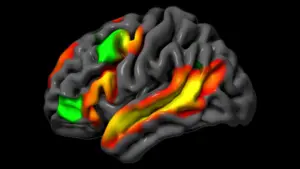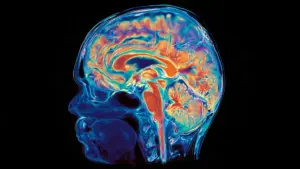










Scientists at the Mark and Mary Stevens Neuroimaging and Informatics Institute (Stevens INI) at the Keck School of Medicine of USC have uncovered compelling new evidence that two neighboring types of brain tissue may work in tandem to preserve cognitive function well into old age. Their research, published in Alzheimer’s & Dementia: The Journal of the Alzheimer’s Association, suggests that the structural integrity of the brain’s local communication pathways—specifically the superficial white matter—may serve as a critical buffer, influencing how significantly the loss of gray matter impacts a person’s thinking abilities.
This discovery offers a potential explanation for a longstanding mystery in neuroscience: why two individuals with identical levels of gray matter loss often exhibit vastly different degrees of cognitive decline. By looking beyond the gray matter, which has historically been the primary focus of neurodegenerative research, the team at Stevens INI has highlighted the potential role of "hidden" wiring in maintaining cognitive resilience.
Understanding the Brain’s Local Communication Network
To understand the significance of this finding, one must first distinguish between the two types of tissue in question. Gray matter is the brain’s primary processing center, housing the dense collection of nerve cell bodies responsible for higher-order thinking, memory, and information processing. Conversely, superficial white matter consists of a delicate layer of short, curved nerve fibers located directly beneath the gray matter that coats the outer surface of the brain.

Think of these fibers as the local infrastructure of the brain. While long-range tracts facilitate communication between distant lobes, superficial white matter acts as the local roads, linking neighboring regions of the cerebral cortex and allowing them to exchange information seamlessly.
"Gray matter and superficial white matter are physically close and may play different roles: gray matter processes information, while superficial white matter helps nearby brain regions communicate," explained Yingxu Liu, PhD, a postdoctoral scholar at the Stevens INI and the first author of the study. "Our findings suggest that cognitive health depends not only on how much gray matter is preserved, but also on the condition of the wiring that connects it."
The collaborative nature of these two tissues means that when the local "wiring" is compromised, the efficiency of the entire system may falter, even if the processing centers themselves remain relatively intact.
Advanced Imaging: Measuring the Brain’s Hidden Wiring
Investigating the microscopic structure of these connections requires more than standard clinical imaging. The researchers utilized an advanced form of diffusion MRI—a sophisticated technique that tracks the movement of water molecules through brain tissue. Because water molecules naturally diffuse along the pathways of nerve fibers, this method allows scientists to visualize microscopic features that would remain invisible on a conventional brain scan.
In this study, the team focused on two specific metrics: neurite density and the volume of free water surrounding these structures. Neurites are the minute projections through which nerve cells send and receive signals. When researchers observe a lower density of neurites or an increase in freely moving water, it typically signals a breakdown in tissue integrity. Such disruptions are often associated with inflammation, swelling, or the loss of myelin, the protective sheath that insulates nerve fibers and ensures fast signal transmission.
To test the functional consequences of these structural changes, the study cohort—comprising 459 adults aged 60 and older—underwent rigorous cognitive assessments. These tests covered a wide spectrum of mental faculties, including memory, executive function, visuospatial ability, and, most notably, language. The results showed a consistent link between the health of superficial white matter and cognitive performance, with language abilities showing the most robust connection. Specifically, participants with higher integrity in their superficial white matter performed better on language tasks, particularly in the frontotemporal regions of the brain, which are critical for word recognition, speech fluency, and maintaining linguistic information in working memory.
Healthy Wiring as a Cushion Against Gray Matter Loss
While gray matter atrophy remains the most potent predictor of cognitive decline, the researchers found that the impact of this loss is not uniform. The condition of the superficial white matter serves as a variable that dictates how severely gray matter damage manifests in day-to-day life.
When local communication pathways were found to be in poor condition, gray matter loss was strongly associated with significant cognitive impairment. However, when the superficial white matter remained healthy, the negative impact of gray matter loss on cognitive performance was markedly dampened. This suggests that healthy "local wiring" might provide a form of cognitive reserve, allowing the brain to compensate for structural degradation in the gray matter by keeping information flowing efficiently between adjacent regions.
"The findings point to superficial white matter as a possible source of resilience," said Leon Aksman, PhD, assistant professor of research neurology at the Stevens INI and the study’s senior author. "Two people with a similar degree of gray matter loss may not experience the same cognitive effects if the local connections surrounding that gray matter differ in health. Following participants over time will be essential to test whether preserving these connections can help maintain cognition."
Expanding Research to Diverse Populations
A notable aspect of this research is its commitment to inclusivity. The data were sourced from the Harmonized Diagnostic Assessment of Dementia for the Longitudinal Aging Study in India (LASI-DAD). Historically, brain imaging studies have been heavily skewed toward populations in high-income, Western nations, often overlooking the geographic, educational, and social diversity of the global population.
The LASI-DAD cohort provides a unique window into cognitive aging for individuals in low- and middle-income settings. More than half of this population has low literacy, and approximately 60% reside in rural communities. By analyzing this group, the researchers were able to identify that the association between superficial white matter health and language ability was particularly pronounced among those with no formal education or those who struggled with literacy.
The research team is careful to note that these social factors are not direct "causes" of biological changes in the brain. Rather, they highlight that brain aging is the culmination of a lifelong accumulation of experiences—including environmental exposures, educational opportunities, and social circumstances—that interact in complex ways with our biology.
Looking Toward the Future of Brain Aging Research
Despite these significant insights, the researchers acknowledge the limitations of their cross-sectional analysis. Because the study captured a "snapshot" of brain health at a single point in time, it cannot determine the chronological order of these changes. It remains unclear whether the deterioration of superficial white matter is a precursor to gray matter loss, whether they occur simultaneously, or if the degeneration of the white matter follows the initial damage to the gray matter.
Clarifying these temporal relationships will require longitudinal studies that track individuals over many years as they age. Future research is also expected to delve into how other biological factors—such as vascular health, systemic inflammation, and the accumulation of Alzheimer’s-related proteins like amyloid and tau—interact with the structural integrity of both gray and white matter.
"A fuller understanding of brain aging requires research that reflects the world’s social, cultural, and geographic diversity," said Arthur W. Toga, PhD, director of the Stevens INI and Provost Professor at USC. "By studying an underrepresented population and looking beyond gray matter alone, this work brings us closer to identifying the biological and social factors that may protect cognition across the lifespan."
As the scientific community continues to peel back the layers of how the human brain changes with age, the discovery of the protective role of superficial white matter opens new avenues for potential intervention. By shifting the focus from simply observing damage to understanding how different parts of the brain work together to maintain resilience, researchers hope to eventually develop strategies that could preserve cognitive function for a longer portion of the human lifespan.