







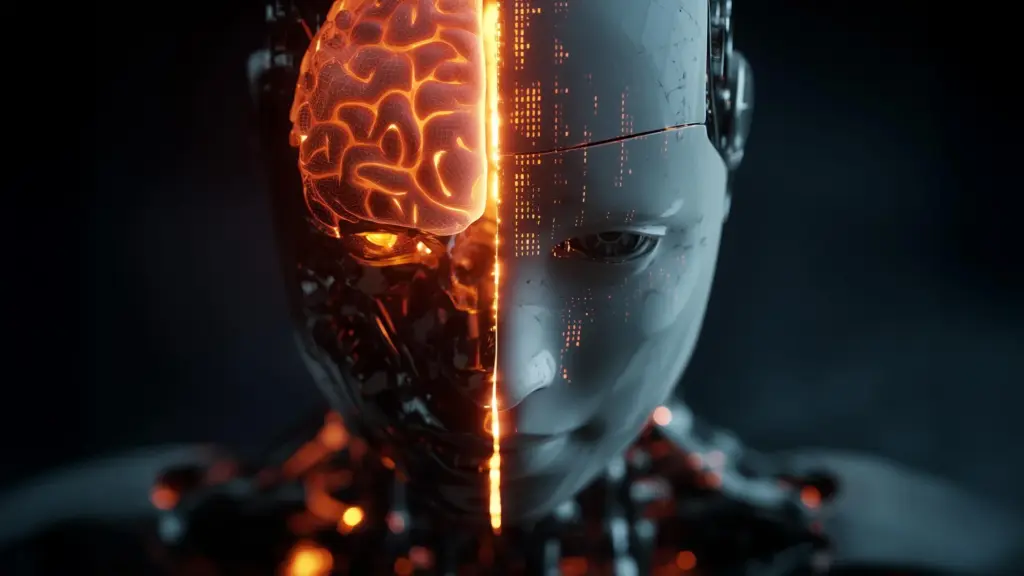
As artificial intelligence systems achieve new milestones in natural language processing, creative problem-solving, and adaptive learning, the boundary between human-like performance and human-like internal experience has become increasingly blurred. We now live in an era where AI can mislead users, collaborate on complex tasks, and seemingly pursue independent goals, leading many to reflexively describe these systems in anthropomorphic terms. It has become common to hear that an AI "thinks," "feels," or "decides." Yet, a pivotal question remains at the intersection of philosophy and technology: Does behaving exactly like a human actually convince the public that a machine possesses a conscious mind?
New research from Ludwig Maximilian University of Munich (LMU) suggests that the answer is a definitive "no." A study published in the journal Cognition reveals that while humans are quick to acknowledge an AI’s ability to process information, they maintain a rigid, intuitive distinction between intelligent behavior and the possession of a conscious, subjective inner life. Even when a machine acts in perfect mimicry of a human, the human observer remains profoundly skeptical of its internal reality.
How Scientists Tested Perceptions of AI Consciousness
The study, led by Dr. Louis Longin of LMU’s Chair of Philosophy of Mind, alongside colleagues Dr. Bahador Bahrami and Professor Ophelia Deroy, represents a significant shift in how researchers investigate the "mind" of AI. Previous academic inquiries into this subject have often relied on broad, abstract questioning, asking participants to speculate on whether artificial systems possess mental states in a vacuum. The LMU team chose a more rigorous, comparative approach.

"Whereas previous studies have typically asked general questions about whether AI actually has mental states, our study is the first to directly compare how people attribute the same mental states to AI and humans behaving in exactly the same way, under identical circumstances," says Dr. Longin.
To isolate the factors driving these perceptions, the researchers conducted experiments involving nearly 1,100 participants. The methodology was designed to strip away external biases by keeping the behavioral descriptions identical while only changing the nature of the actor—either a human or an artificial intelligence. One group of participants read short scenarios describing artificial agents with varying levels of environmental responsiveness. For example, some descriptions detailed agents that could react to auditory stimuli, while others were described as capable of recognizing and responding to the emotional states of other entities.
A second group was presented with the exact same scenarios, but the characters were described as humans. Following these prompts, participants were asked to evaluate the degree to which each character—human or machine—appeared to be conscious or aware of its surroundings. By holding the behavior constant and varying only the identity of the agent, the researchers could pinpoint exactly where the "consciousness gap" exists.
A Surprising Gap Between Human and AI Consciousness
The data collected during the experiment yielded a nuanced view of human psychology. As expected, responsiveness was a universal metric for gauging a character’s mental state. Regardless of whether the agent was human or AI, those that reacted more actively and appropriately to their environment were consistently rated as being more "aware." In this sense, the participants were logical; they used observable behavior as a proxy for cognitive engagement.
However, a striking and consistent discrepancy emerged when the researchers shifted the focus from "awareness" to "consciousness." Even when an artificial intelligence was described as being highly responsive—performing actions that were indistinguishable from those of a human—it was still rated as significantly less conscious than even the least responsive human in the control group. The study demonstrates that, in the human mind, there is a hard ceiling for AI. No matter how perfectly a machine mimics human behavior, it does not gain entry into the category of "conscious beings" in the eyes of the observer.
Interestingly, when the researchers asked about "awareness" rather than "consciousness," the gap narrowed significantly. Judgments for humans and AI followed largely similar patterns, suggesting that the public interprets these two terms through entirely different cognitive lenses.
"There is a growing worry in public discussion that people will see AI behaving in a human-like way and start treating these systems as if they had human-like mental states," Dr. Longin explains. "We found something much more nuanced: People are quite willing to say that an AI notices things and is aware of its surroundings. But they clearly draw a line when it comes to the term ‘consciousness’. People consistently attribute less consciousness to AI than humans—even when their behavior is identical."
This indicates that while we are comfortable granting AI a form of "functional awareness"—the ability to perceive and process data—we hold a more protected, exclusive definition of consciousness, one that implies a subjective experience or an inner mental life that we are not yet ready to assign to silicon and code.
Why One Word Changes How We Perceive AI
The LMU researchers believe that the discrepancy between the terms "awareness" and "consciousness" is not merely a linguistic quirk, but a window into how we organize our world. Awareness is viewed as a functional, technical descriptor. It implies an agent’s capacity to detect inputs and formulate outputs based on its environment—a process that we can observe in smart thermostats, self-driving cars, and advanced language models. Because awareness is tied to observable behavior, it is a category that we are happy to share with our machines.
Consciousness, by contrast, is a heavy, emotionally charged term. It carries the weight of subjective experience, the "what it is like to be" quality of existence. It implies feelings, moral agency, and a genuine inner perspective. When we apply the label of "consciousness" to an entity, we are essentially acknowledging that it has a stake in its own existence. The findings suggest that the human brain is highly resistant to granting this status to artificial systems, regardless of how effectively they can trick us with human-like interactions.
This distinction has profound implications for the ongoing debate regarding the ethics and regulation of AI. As these systems become increasingly integrated into social, legal, and professional spheres, the language used to describe them is shaping public policy and social norms. If the public intuitively separates "aware" machines from "conscious" humans, this could influence how we legislate AI rights, accountability, and the degree of trust we place in autonomous systems.
The Power of Language in the Age of AI
As the researchers conclude, the findings underscore the responsibility held by those who build and report on these technologies. In an era where AI is often marketed with hyperbolic language, the importance of precise terminology cannot be overstated.
"Our study teaches us lessons for how we communicate about AI," says Dr. Bahador Bahrami, a senior author of the study and an expert in social neuroscience. "Companies and journalists often reach for hyped descriptions of AI models, and credit them with intentions, plans, or even moral conscience and hesitation. What our study shows is that everyday judgments are much more discriminating: People do not simply put AI and humans on the same mental scale. But the boundary also depends on which terms we use. For more neutral descriptors such as ‘awareness’, the distinction can largely disappear. That makes our choice of language important."
The LMU study serves as a grounding force in a rapidly accelerating field. It reminds us that while the technological capabilities of artificial intelligence are growing at an exponential rate, human perception remains deeply rooted in a cautious, defensive, and highly specialized understanding of what it means to be a conscious being. As we continue to interact with increasingly sophisticated machines, we are likely to remain comfortable calling them "aware" while remaining steadfastly unwilling to grant them the mantle of consciousness. This linguistic and cognitive boundary acts as a final safeguard, preserving the unique status of the human mind even as our digital creations grow ever more adept at playing the part.