







At a time when modern industrial society faces overlapping ecological, social, and psychological crises, a growing movement of thinkers, researchers, and neurodiversity advocates are pointing toward ancient philosophical traditions and indigenous wisdom to rethink humanity’s place in the natural world. Core ideas within Buddhist and Daoist spiritual traditions are increasingly seen as reflective of the commonalities found across many human-scale indigenous cultures. By aligning a compassionate frame of love—understood as vulnerable mutual knowing—with a panpsychic relational philosophy, observers argue that everyone wants their experience to be taken seriously. As embodied spirits compelled to make sense of a complex world, humans can only do so in good company.
Life
Observing that life creates conditions conducive to life, a principle frequently highlighted by systems thinkers like Janine Benyus, strongly hints at the reality that the dynamic process of existence consists fundamentally of feedback loops. Life is entirely relational, sacred, cyclical, fleeting, compostible, nested, regenerative, and forever mysterious for all its participants.


Rather than viewing the planet through a purely mechanical lens, high-dimensional spaces providing a reasonable description of Gaia—the totality of life, including the potential of homo ecologus—are best conceptualized entirely relationally, building from the foundational layers of physics upwards. Life consists of relationships, which function as feedback and learning loops. In aggregate, these loops form the building blocks of what human-scale perception experiences as consciousness. While science cannot definitively quantify or prove the emergence of consciousness in this manner, it is equally incapable of disproving it, highlighting the natural limits of both scientific inquiry and human comprehensibility.
Spirits
At spatial and temporal scales relevant to biological systems, small feedback loops emerge between molecules, resulting in the astonishing complexity of cell biology and molecular genetics. These scale up into vast interactions between bioregional terrestrial and marine ecosystems. Popular anthropocentric conceptions of consciousness typically restrict awareness to animals possessing brains, thereby excluding the myriad feedback loops operating across smaller and larger scales of living systems.
Powered-up feedback loops occur temporarily when information accumulates within specific living cells or beings over time. Conversely, healthy human bodies and stable social relationships maintain molecular and interpersonal feedback loops in a balanced, de-powered state. Fueled by external energy from living food or shared lived experiences, these balanced systems generate outputs ready to be reintegrated by local ecologies of care.

This relational worldview aligns closely with panpsychism, a philosophy viewing consciousness as omnipresent across all scales. This perspective shares profound commonalities with Eastern traditions such as Buddhism and Daoism, challenging the cultural biases inherent in modern industrialized notions of intelligence and success while respecting human cognitive and emotional limits.
Buddhism, an Indian philosophical tradition founded by the historical Buddha in the fifth century BCE, centers heavily on the alleviation of dukkha, or suffering and unease. This fundamental focus corresponds directly to the active desire of hypersensitive neurodivergent individuals to minimize cognitive dissonance, while pointing to the societal toll exacted when cultures normalize high levels of unresolved cognitive dissonance over extended periods.
Similarly, Daoism emphasizes harmony with the Dao, an enigmatic process of transformation underlying reality. Daoist virtues—such as effortless action, naturalness, simplicity, compassion, frugality, and humility—resonate strongly with many neurodivergent sensitivity profiles and offer a timeless critique of anthropocentric empire-building. Alongside indigenous egalitarian hunter-gatherer societies, these traditions demonstrate how humor and humility can subvert centralized power structures.
Love

As ecologist Vandana Shiva has observed, deep care and love for the Earth connect every layer of life, from microorganisms supporting plants to bees pollinating flowers, reflecting a deeply interconnected global consciousness expressed through diverse living forms. The extent to which humans are truly alive emerges directly from mutual trust, commitments, and shared understanding within our relationships.
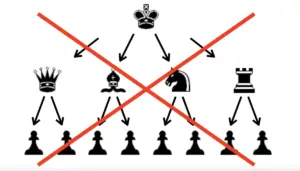
In contrast, relationships mediated by abstract, super-human scale anthropocentric institutions are inherently devoid of genuine shared understanding. When cultures compel individuals to invest in such sterile institutions, capacity for authentic relationships with living beings diminishes. Recognizing this dynamic allows for a sober perspective on institutional collapse, viewing it not as an absolute catastrophe, but as the expiration of an invalid social license. Indigenous societies that have resisted the myth of homo economicus offer vital lessons in nurturing collaborative niches rather than engaging in wasteful, head-to-head competition.
Sensitivity Profiles
All humans possess unique sensitivity profiles shaped by neurological baselines and specific ecological contexts. This is particularly pronounced among hypersensitive neurodivergent individuals, many of whom navigate traumatic experiences within a society that frequently marginalizes and pathologizes them. Data indicates that a significant majority of neurodivergent adults regularly feel overwhelmed, misunderstood, disrespected, or unsafe, with overall wellbeing depending heavily on alignment between personal sensitivity and local ecologies of care.

Official diagnostic criteria for conditions such as autism frequently overlap with symptoms of complex trauma, making it difficult to separate innate neurological differences from lifelong environmental stressors. Consequently, the modern medical model’s focus on decontextualized individuals and simplistic diagnostic labels often falls short, particularly for intersectionally marginalized populations. Advocates within the neurodiversity movement call for intersectional solidarity beyond rigid diagnostic categories, emphasizing that every individual repository of lived experience deserves to be taken seriously.
Culture Co-Evolution
Major evolutionary milestones throughout the history of Gaia share deeply co-evolutionary characteristics, exemplified by the emergence of multi-celled organisms and semi-permeable cellular membranes. Rather than relying on energy-intensive, head-to-head competition, sustainable cultural evolution operates through conscious collaborative niche construction and omni-directional learning.
Egalitarian hunter-gatherer societies, supported by hundreds of thousands of years of cultural co-evolution, prioritize collaborative values that minimize conflict. Modern initiatives—ranging from Harrison Owen’s Open Space technology to digital collaboration tools designed for long-term sustainability—seek to resurrect these collaborative principles, recognizing that beyond human scale, humanity can align with Gaia’s accumulated wisdom.

The Human Spirit Within Gaia
Humans evolved to make sense of the world at human scales. The rise of industrialized civilization and the dominance of homo economicus have broken traditional human-scale networks, leaving individuals isolated within consumer spectacles. Moving away from the worship of power-driven strongmen requires a scientifically enlightened appreciation of Gaia’s four-billion-year history and a return to radical egalitarianism as an adaptive architecture of human intelligence.
Recognizing these dynamics helps reframe internalised ableism, exposing how modern WEIRD (Western, Educated, Industrialized, Rich, Democratic) societies have detached from evolutionary roots. By moving past atomized individualism and fostering human-scale ecologies of care, communities can begin to heal from the pervasive impacts of cultural alienation.
Reviving Trust in Humanity

The atomized modern world often erodes faith in humanity and Gaia, generating widespread mistrust, guilt, and self-hatred under the pressure to appear independent and strong. Research from organizations like AutCollab highlights a profound paradox: while neurodivergent individuals deeply desire to help others, many hesitate to ask for assistance themselves due to prevailing cultural norms of competitiveness and self-reliance.
To counter these systemic issues, a growing number of thinkers and practitioners are advocating for the abandonment of life-denying economic ideologies in favor of life-affirming practices rooted in community care. As international initiatives such as the UN International Year of Cooperatives highlight, cooperative models offer essential pathways for overcoming global challenges by prioritizing mutual aid, intergenerational learning, and ecological stewardship.
Ultimately, navigating the decline of unsustainable industrial institutions involves providing viable, compassionate exit paths and nurturing human-scale ecologies of care. By reintegrating the wisdom of indigenous traditions, Eastern philosophies, and neurodivergent perspectives, humanity can move away from destructive competition and toward a harmonious, resilient future within Gaia.