








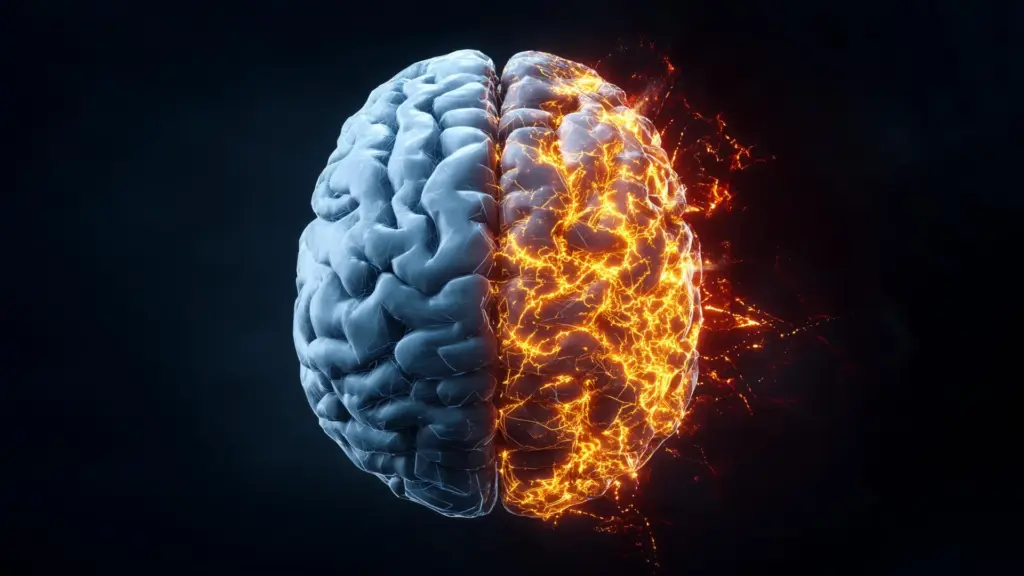
Scientists have identified a promising new pathway for reducing neuroinflammation—a chronic, damaging immune response within the brain that is linked to a wide array of devastating neurological and psychiatric conditions. In a study published in the journal Brain, a research team led by Professor Nicholas Barnes at the University of Birmingham has pinpointed the P2X7 receptor as a primary driver of this inflammatory process. By successfully blocking this receptor in human brain tissue, the researchers have opened a potential door for repurposing existing drugs to treat conditions ranging from Alzheimer’s disease and Parkinson’s to traumatic brain injury (TBI), depression, and psychosis.
Blocking a Key Driver of Brain Inflammation
Neuroinflammation is a complex biological process that, while intended to protect the brain, can become chronic and destructive when left unchecked. For years, researchers have sought to understand the cellular mechanisms that initiate these persistent inflammatory signals. The study conducted by Professor Barnes and his colleagues focused specifically on the P2X7 receptor, which is known to play a crucial role in triggering inflammatory signaling pathways.
To investigate the receptor’s function, the research team employed a dual approach, utilizing both live cultures of human brain cells and actual slices of brain tissue obtained during neurosurgical procedures. This allowed the team to observe the cellular behavior in a controlled environment while validating their findings in human tissue. The researchers discovered that P2X7 receptors are instrumental in promoting the release of cytokines—small signaling proteins that act as mediators for the immune system. When the brain’s inflammatory response is activated, these cytokines are released in a cascade that can exacerbate tissue damage.
By applying a specific antagonist—a substance designed to inhibit the biological response of a receptor—the researchers were able to block the P2X7 receptor. The results were significant: the inflammatory response within the human brain tissue samples dropped markedly. This finding is particularly important because the P2X7 receptor is already a known target for various pharmaceutical compounds. This suggests that the medical community may not need to start from scratch to develop a new treatment, but could instead focus on repurposing existing therapeutics that are already known to interact with this receptor.
Professor Nicholas Barnes, a key figure in the College of Medicine and Health at the University of Birmingham and the corresponding author of the study, highlighted the importance of this discovery. "This exciting discovery marks a major step toward repurposing existing therapeutics to combat neuroinflammation at its source," Professor Barnes noted. "The identification of this receptor could have far-reaching implications for some of the most debilitating and widespread brain disorders, such as Alzheimer’s disease, Parkinson’s, and multiple sclerosis, or inflammation-linked psychiatric conditions like schizophrenia and depression."
Studying the Brain’s Immune Cells
A central component of this research involved a deep dive into the behavior of microglia, the specialized immune cells of the central nervous system. Microglia act as the brain’s "first responders," constantly patrolling the environment to monitor for injury, infection, or cellular debris. They are responsible for coordinating the brain’s response to damage, but when they become overactive or dysfunctional, they can drive the chronic neuroinflammation associated with many neurodegenerative diseases.
One of the longest-standing obstacles in neuroscience has been the difficulty of studying human microglia in a laboratory setting. Once these cells are removed from their native, highly complex environment within the human brain, they typically lose their defining characteristics and functional properties, likely due to the absence of the precise regulatory signals provided by neighboring cells. To overcome this, Professor Barnes’s team developed a innovative methodology for converting white blood cells into microglia-like cells.
This process, which involves transforming human peripheral monocytes collected from blood samples, creates a scalable and reliable platform for researchers to examine how human microglia react to inflammatory stimuli. Interestingly, this cellular transformation process mirrors a mechanism that has recently been identified as occurring naturally in the human brain during the aging process. By using these monocyte-derived microglia, the team was able to study human microglial biology with a level of precision that was previously unattainable.
When the researchers introduced the P2X7 receptor antagonist to these laboratory-grown cells, they were able to effectively interfere with the inflammatory signals that are normally released as microglia become damaged or die. This observation was vital because it provided clear, measurable evidence of how blocking the P2X7 receptor could mitigate the destructive signals sent by these immune cells.
"Studying human microglia has long been a major challenge," Professor Barnes explained. "Our approach involved the use of monocyte-derived microglia which provide a powerful, scalable, and virtually unlimited platform for studying human microglial biology with unprecedented precision."
From Lab Models to Human Brain Tissue
The journey from a controlled laboratory model to a clinical application is a difficult one, often littered with promising findings that fail to replicate in real-world human tissue. However, in this case, the researchers ensured their findings were robust by bridging the gap between their monocyte-derived models and actual human brain samples. After confirming that blocking the P2X7 receptor successfully dampened the inflammatory response in the lab-grown cells, the team tested the same strategy on human brain tissue obtained from patients undergoing neurosurgical procedures.
The successful translation of these results into human tissue represents a significant milestone. It moves the research from the realm of theoretical potential into a more tangible prospect for clinical application. By validating that the P2X7 receptor functions as a targetable driver of inflammation in actual human brain tissue, the team has established a strong rationale for future clinical trials.
The researchers believe this work is particularly urgent for conditions like traumatic brain injury (TBI), where there are currently no effective pharmacological treatments to reduce the secondary neuroinflammation that often follows the initial trauma. By suppressing this inflammatory cascade, it may be possible to limit the long-term damage caused by the injury and improve patient outcomes. Similarly, for those suffering from neurodegenerative conditions where inflammation is a hallmark of disease progression, this therapy could offer a new avenue for intervention.
Looking ahead, the successful outcomes of this study provide the necessary impetus to advance toward clinical trials. "Having identified the response in the human monocyte-derived microglia, this provided the impetus to translate these findings with human brain obtained following neurosurgical procedures," said Professor Barnes. "This successful translation means the next stage for this research is the development of clinical trials in patients with neurodegenerative conditions and patients with TBI where there are no effective pharmacological treatments to reduce the neuroinflammation and arising damage."
As the scientific community continues to explore the complex relationship between the immune system and the brain, this research provides a clear, actionable target. By focusing on the P2X7 receptor, scientists are not only deepening our understanding of how the brain manages inflammation but are also moving closer to providing relief for millions of people living with some of the most challenging neurological and psychiatric conditions today. The ability to utilize existing pharmaceutical tools to target this pathway suggests a hopeful future where the burden of neuroinflammation might be significantly reduced.