




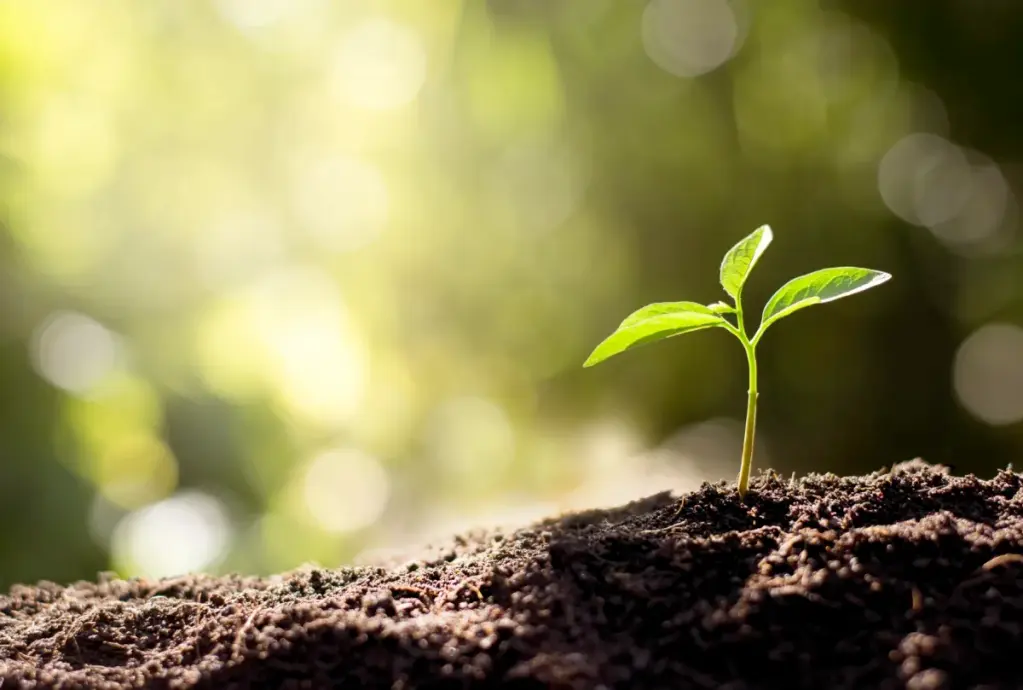
Autistic culture represents a vast world of infinite diversity that exists far beyond the boundaries of the neuronormative imagination. Every autistic relationship is entirely unique, yet many individuals carry the weight of profound trauma. To address these realities, communities are finding that they require appropriate tools to invest in deeply understanding one another. Cultural metamorphosis requires radically reframing everything society understands about cultural adaptivity in terms of co-creating sustainable ecologies of care.
In contemporary society, the demand for reliable peer support and emotional backing routinely outstrips available supply. This deficit is vividly reflected in overall mental health statistics, escalating levels of burnout, and the quantitative and qualitative findings of AutCollab Research. This ongoing challenge is driven by the common reality of autistic emotional exhaustion, a widespread lack of adequate peer support, and the severe trust problems manufactured by the competitive imperatives of homo economicus.
Attempting to make sense of a difficult social landscape and articulate potential avenues for collective survival requires an immense expenditure of energy, particularly emotional energy. No single individual can shoulder this burden alone. Maintaining faith in humanity depends heavily on a small network of trusted peers within an immediate ecology of care, a foundation of mutual aid that sustains community-level advocacy.

The modern world desperately requires more intersectional solidarity across all dimensions, alongside increased dialogue, transparency, and compassion. In short, society must invest in deep mutual understanding, a shift that is increasingly visible on the margins of mainstream culture.
Within the socially toxic environment driven by hyper-competitive economic models, many basic relationship-building, maintenance, and repair skills have been lost or rendered rare. To relearn these vital capacities, communities require practical frameworks—akin to an Autistic Relationship Manual—coupled with the helping hands and compassionate hearts that can only be provided by peers.

Cultural Metamorphosis and Human-Scale Nurturing
Cultural metamorphosis is a radical form of collaborative niche construction that requires humanity to reframe conventional assumptions regarding cultural adaptivity at a human scale. Dominant economic paradigms have pushed life-affirming cultures beyond the sustainable limits of the anthropocentric bell curve. The center of this curve has transformed into a hypernormative cultural dead zone, often paralyzed by institutionalized dogmas.
Cultural healing requires a profound shift in trust away from established, centralized institutions and toward mutual aid and community co-creation at a human scale. This transition echoes the insights of indigenous scholar Yuria Celidwen, who emphasizes the necessity of community commitment and the creation of safe spaces of trust. Navigating these difficult narratives and dismantling harmful frameworks leaves individuals vulnerable, yet doing so is essential for collective wellbeing and planetary health.
This shift in trust is already taking place organically outside traditional institutional structures, driven primarily by self-selected and self-organizing groups operating on the intersectional margins of modern societies. The objective of community relationship frameworks is to catalyze further intersectional dialogue, helping individuals release unwarranted fears and shame imposed by trauma and rigid cultural expectations.
In the context of this cultural metamorphosis, autistic individuals function as imaginal cells within human-scale cultural organisms. Numbering in the hundreds of millions globally and distributed across every ecosystem—alongside hundreds of millions of other neurodivergent individuals—autistic human animals frequently demonstrate a profound concern for social justice and actively challenge toxic in-group competitive behaviors. They assist one another in establishing unique relationships, households, and human-scale cultural organisms rooted in their own space and time.
Real change requires deep courage and challenges foundational worldviews. Unlike centralized mechanisms of control, grassroots movements manifest as millions of diverse, small initiatives at a human scale, representing a profound transformation beyond institutional reach.

Redefining Autistic, Human, and Animal Identity
Within healthy egalitarian human ecologies, autistic individuals are best understood as agents of a well-functioning cultural immune system. Their unusual, heightened baseline sensitivity profiles mean they possess a reduced capacity for maintaining cognitive dissonance. Unconstrained by rigid cultural gender norms, they frequently demonstrate a capacity to relate deeply to both human and non-human living beings. These sensitivity profiles limit their ability to think hierarchically and engage in purely transactional social busyness.
In the dominant hypernormative culture, explaining the immersion in healthy autistic culture or the development of sacred lifetime relationships can be challenging. Mainstream society often fails to comprehend how autistic individuals support, love, and care for one another in ways that far exceed the neuronormative imagination.
Furthermore, within the modern social framework, it is vital to emphasize that autistic individuals are fully human. Humans share an evolved capacity for developing and maintaining cultures and languages, allowing for flexible, complex collaboration based on shared intentions and mutual understanding. Establishing verbal or written commitments constitutes an effective human-scale cultural framework for coordinating social affairs. Breaking these commitments impacts physical, mental, and spiritual health, reflecting humanity’s evolutionary heritage as cultural organisms.
Acknowledging this heritage leads to the recognition that every relationship is sacred, and no life—human or non-human—should ever be discarded. Alongside culture and language, humans possess an evolved capacity for pair-bonding within human-scale groups, forming networks of sacred relationships defined by shared experiences.
Reiterating humanity’s biological roots, humans are fundamentally animals. Like other species, humans engage in diverse sexual and social behaviors. Capacities for culture and language have expanded the complexity of human imagination, resulting in an infinite variety of cultural gender identities and sexual preferences. Western, Educated, Industrialized, Rich, and Democratic (WEIRD) cultures have not cornered the market on human expression, and attempting to impose these regional norms globally constitutes a form of neocolonialism.

Similarly, super-human scale structures like modern nation-states and corporations rely on legal fictions incompatible with evolutionary history. Universally applicable social norms defined by these entities frequently cause widespread harm. Recognizing human animal limitations fosters humility and encourages a daily appreciation for the living world.
Relational Building Blocks and Health
Every human relationship is sacred and unique, meaning standardized templates rarely apply universally. However, specific relational building blocks help articulate unique commitments, preferences, and needs.
The ability to extend trust depends directly on the health of an individual’s surrounding ecology of care. Autistic individuals embedded in supportive cultures tend to extend deep trust, particularly to peers. In unsafe environments dominated by internalized ableism, this trust is easily exploited, making its protection a collective responsibility. Isolation remains a significant risk for advocates and highly sensitive individuals who absorb the suffering of the world. Ensuring their survival requires embedding them within healthy, supportive ecologies of care.
Beyond trust, shared understanding serves as a foundational prerequisite for any relationship. Furthermore, while most humans share broad value similarities, transparency regarding relative value priorities dictates relational health. Shared and complementary interests form the bedrock of unique friendships and partnerships, enabling collaborative niche construction and the formation of human-scale cultural organisms.
Relational health can be defined as the absence of cognitive dissonance from the perspectives of all involved parties. When modern social structures destroy human-scale deliberation, life becomes incoherent, leading to strain and emotional exhaustion. Addressing these challenges requires mastering communication skills rooted in a desire to share knowledge, learn, and deliberate collectively, mirroring the egalitarian decision-making seen in hunter-gatherer societies.

Conversely, hyper-competitive cultures often prioritize abstract social status symbols and ambiguity over genuine understanding. Spending extended hours in high-pressure workplaces and digital spaces can normalize deceptive communication, resulting in chronic cognitive dissonance and spiritual alienation.
Energy management also plays a crucial role in relational sustainability. Cognitive and emotional capacities are limited, and activities continuously affect energy reservoirs tied to dialogues, open-space communication, and environmental routines. Quantifying and communicating these energy limits helps prevent burnout and preserves relational stability.
Sacred Relationships and the Path Forward
True relational literacy is demonstrated through the establishment of lifetime friendships, economic partnerships, or romantic partnerships. These sacred relationships represent the fundamental building blocks of life. By categorizing relationships based on evolutionary heritage—without arbitrary distinctions between work and personal life—communities can incrementally relearn basic relationship-building, maintenance, and repair skills.
Certification within this framework relies entirely on mutual agreement between the participants. A learner license represents a commitment to mutual learning, while a full license reflects the sustained commitments established over years of shared experience. Mastery of relationship repair and reconfiguration skills remains essential to reducing and eliminating cognitive dissonance, thereby preventing emotional pain from eroding relational health.
As grassroots networks continue to expand across the margins of modern society, the movement toward authentic, autonomous ecologies of care grows organically—one trusted relationship at a time. Through ongoing dialogue, shared understanding, and mutual aid, communities are actively forging resilient pathways beyond the limitations of the dominant economic paradigm.