







The World Health Organization (WHO) and the Swiss Confederation have officially cemented their enduring alliance by formally announcing the renewal of their bilateral cooperation strategy. The newly established framework will guide joint public health initiatives, multilateral health security, and strategic health governance for the period spanning from 2024 to 2028. This significant milestone builds upon a pioneering history of collaboration between the global health agency and the Swiss government, reinforcing a shared commitment to addressing complex health challenges both within the European region and on the global stage.
The formalization of the renewed strategy took place at the Regional Office of the WHO in Copenhagen, Denmark, on March 4, 2025. There, senior representatives from both organizations gathered to sign and adopt the updated cooperation framework, setting a clear operational roadmap for the coming years. The event marked the culmination of a joint decision-making process initiated in 2022, when WHO and Swiss authorities mutually agreed that the ongoing partnership required an updated strategic vision to adequately address evolving contemporary health landscapes, emerging biological threats, and shifting demographic pressures across Europe and globally.
The roots of this unique collaboration run deep. Back in 2013, Switzerland made history by becoming the very first high-income country within the WHO European Region to pilot a dedicated country cooperation strategy with the organization. Over the subsequent decade, that initial framework served as a vital instrument for aligning national health priorities with broader regional and global strategies, fostering a model of cooperation that combined Switzerland’s formidable domestic and international health expertise with WHO’s normative guidance and convening power.
The newly minted WHO–Switzerland country cooperation strategy for 2024–2028 captures the lessons learned from more than a decade of structured partnership. It identifies key strategic priorities designed to maximize the impact of joint technical cooperation, policy dialogue, and resource mobilization. While high-income countries typically operate under different engagement frameworks with the UN health agency compared to developing nations, Switzerland’s ongoing role as a pilot and partner underscores its unique position as a global hub for health diplomacy, scientific research, and humanitarian action.
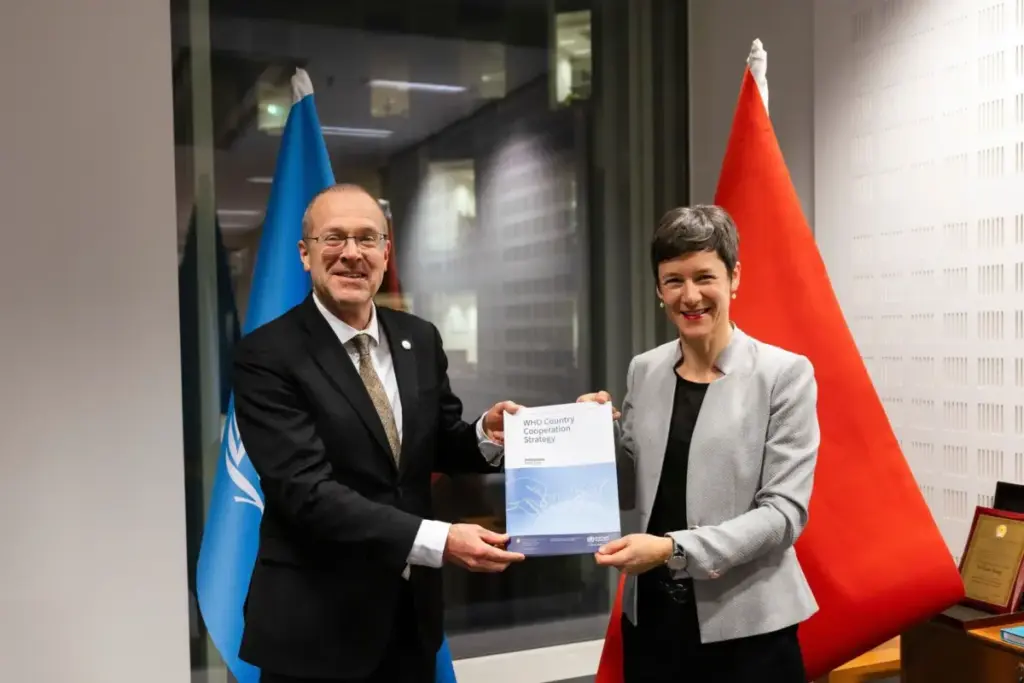
The agreement was officially advanced and solidified through high-level diplomatic and public health engagement. Barbara Schedler, Ambassador for Global Health at the Swiss Federal Office of Public Health, met directly with Dr. Hans Kluge, WHO Regional Director for Europe, to agree upon the concrete steps forward for closer collaboration. During their formal meeting in Copenhagen, Dr. Kluge and Ambassador Schedler reviewed the core tenets of the new strategy, emphasizing the necessity of agile, collaborative responses to transnational health threats, health system resilience, and equitable access to medical countermeasures.

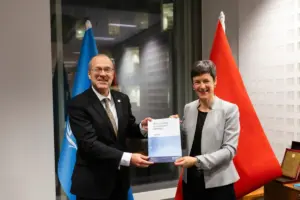
The visual documentation of the event captured this cooperative spirit, featuring Dr. Hans Kluge holding the official WHO Country Cooperation Strategy document alongside Ambassador Barbara Schedler. This shared leadership vision reflects the deeply integrated nature of the partnership, which extends far beyond standard administrative diplomacy into active, operational public health initiatives.
Among the prominent pillars supporting this broader strategic relationship is the ongoing collaboration between WHO and Switzerland regarding the global BioHub system. In mid-2024, the partnership reached another critical milestone when both entities took active steps to strengthen the global BioHub system. This innovative global mechanism is designed to facilitate the rapid, safe, and transparent sharing of novel pathogens and clinical materials between laboratories worldwide. By leveraging Switzerland’s advanced scientific infrastructure, biosafety standards, and logistical capabilities, the BioHub system significantly enhances global preparedness against potential future pandemics and epidemic-prone diseases, ensuring that the international scientific community can study, track, and counter biological risks with unprecedented speed and safety.
The renewal of the 2024–2028 cooperation strategy arrives at a crucial time for European and global public health. Health systems across the region continue to grapple with the long-term reverberations of the COVID-19 pandemic, persistent health workforce shortages, the health impacts of climate change, and the growing burden of non-communicable diseases. By embedding their partnership in a formal, multi-year strategy, WHO and Switzerland are positioning themselves to provide coordinated, evidence-based support that addresses these systemic vulnerabilities.
Stakeholders, researchers, and public health professionals interested in examining the operational details of the agreement can access the official documentation through digital channels. The WHO/Europe website hosts the comprehensive news release detailing the March 2025 signing ceremony, alongside the full publication of the WHO–Switzerland country cooperation strategy 2024–2028. These resources outline the specific indicators, policy priorities, and cooperative mechanisms that will govern the partnership through the end of the decade.
Through this renewed framework, Switzerland and the World Health Organization reaffirm a shared dedication to multilateralism, scientific excellence, and health equity. As the partnership moves into its next operational phase, both institutions aim to leverage their combined capacities to safeguard public health populations across Europe and contribute meaningfully to global health security.