





The foundational concepts within ancient Eastern spiritual traditions such as Buddhism and Daoism share deep commonalities with the relational worldviews of human-scale indigenous cultures across the globe. By framing compassion as vulnerable mutual knowing, these traditions align seamlessly with a panpsychic relational philosophy. At the heart of this perspective is the understanding that human beings are embodied spirits, intrinsically compelled to make sense of a complex world, and that this search for meaning can only truly succeed in good company.
Life
Life, as ecologist Janine Benyus famously observed, creates conditions conducive to life. This deceptively simple observation hints at the fundamental reality that the dynamic processes of life consist entirely of interconnected feedback loops.
Life is thoroughly relational, sacred, cyclical, fleeting, compostable, nested, and regenerative, while forever retaining an aura of deep mystery for all participants. High-dimensional spaces that model Gaia—encompassing the entirety of life and the potential of homo ecologus—are best conceptualized through relationships, stretching continuously from the foundational layers of physics upward.

Because life consists of feedback and learning loops, these mechanisms aggregate to form the building blocks of what human perception experiences as consciousness. This viewpoint finds extensive support in Eastern philosophy. While humanity’s cognitive limitations prevent us from scientifically quantifying and proving with absolute certainty that consciousness emerges in this exact manner, science is equally incapable of disproving it. This limitation highlights the boundaries of human comprehensibility rather than any inherent uselessness of the scientific method, much like mathematical systems that contain statements which can never be formally proven true or false.

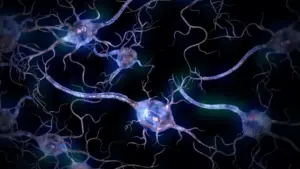
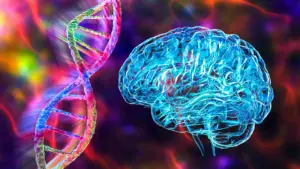
Within biological and ecological systems, the smallest feedback loops occur at the molecular level, resulting in the staggering complexity observed in cell biology and genetics. These loops scale upward into massive feedback loops between bioregional terrestrial and marine ecosystems. In contrast, popular anthropocentric definitions of consciousness typically generalize only to animals equipped with brains, effectively excluding the myriad feedback loops occurring across smaller and larger spatial and temporal scales.
Spirits
Powered-up feedback loops occur when information piles up within specific living cells or organisms over time. However, these loops remain strictly temporary relative to the lifespans of the entities involved. Human bodies grow to a certain maturity and then remain stable for a lifetime, maintaining internal molecular feedback loops in a balanced, de-powered state fueled by living food and energy from the sun. Similarly, healthy social relationships remain stable when maintained through shared experiences and mutual understanding, ultimately producing cultural outputs that integrate naturally back into local ecologies of care.
This universe of dynamic feedback loops naturally leads to a panpsychic philosophy where consciousness is omnipresent across all scales. This perspective challenges modern industrial biases regarding intelligence and success, inviting a non-anthropocentric worldview that honors the cognitive and emotional boundaries of human scale.
Buddhism, as a major philosophical and religious tradition originating in the Gangetic plain, emphasizes the path to awakening and the full liberation from dukkha, or suffering. The Buddhist focus on minimizing unease closely parallels the drive of hypersensitive neurodivergent individuals to reduce cognitive dissonance, while simultaneously highlighting the societal dangers of normalizing prolonged cognitive dissonance.

Similarly, Daoism emphasizes harmony with the Dao, advocating for effortless action, naturalness, simplicity, compassion, frugality, and humility. These virtues offer a timeless critique of anthropocentric empire-building, aligning closely with the sensitivity profiles of neurodivergent individuals and the egalitarian principles of hunter-gatherer societies.
Love
As activist and scholar Vandana Shiva notes, a deep love for the Earth and life itself connects all living systems, from microorganisms and plants to humans, as different expressions of a single, interconnected consciousness. The vitality of life emerges directly from mutual trust, shared commitments, and genuine understanding within our relationships.
Conversely, relationships with abstract, super-human institutions are inherently devoid of genuine shared experience. As modern cultures pressure individuals to invest in these sterile institutional relationships, society loses its capacity for authentic connection with living beings. Understanding this dynamic reframes institutional collapse not as a catastrophe, but as the rightful expiration of an invalid social license.
Relationships can be understood as continuous, multi-modal dialogues within ecologies of care. By shifting perspectives toward collaborative niche construction and mutual aid—concepts championed historically by thinkers like Pyotr Kropotkin—society can move away from destructive competition and embrace a relational framework of compassionate evolution.

Sensitivity Profiles
Every human possesses a unique sensitivity profile shaped by neurological baselines and lived experiences within specific ecological contexts. This is particularly pronounced among hypersensitive neurodivergent people who frequently navigate trauma within a social world that marginalizes and pathologizes them. Data indicates that a significant majority of neurodivergent adults regularly experience feelings of being overwhelmed, misunderstood, disrespected, or unsafe.
Diagnostic criteria for autism frequently overlap with symptoms of complex trauma. Consequently, it is often impossible to separate innate neurodivergent baselines from the impacts of living in a hypernormative industrial society. Medical models that focus strictly on pathologizing decontextualized individuals risk causing severe harm, particularly to those who are intersectionally marginalized.
Unresolved cognitive dissonance acts as a persistent dis-ease that demands resolution. While some individuals can tolerate dissonance over long periods, hypersensitive individuals are often acutely aware of it and driven to take action to reduce it. Recognizing these diverse sensitivity profiles calls for a rejection of rigid diagnostic standards that pathologize human variation.
Culture Co-Evolution
Major evolutionary milestones in the history of Gaia feature deeply co-evolutionary characteristics, demonstrating that evolutionary processes are inherently ecological rather than species-specific. The semi-permeable membranes of biological cells provide a robust model for co-evolutionary interactions that has endured for billions of years.

Applying these insights to human cultures points away from energy-intensive, wasteful head-to-head competition and toward collaborative niche construction. Egalitarian hunter-gatherer societies have practiced omni-directional learning and cooperation for hundreds of thousands of years, offering valuable lessons for designing digital and social systems that foster mutual aid.
The Human Spirit Within Gaia
Humans evolved to process the world at human scales. Attempts to define normality or adaptiveness at the level of the isolated individual are fundamentally flawed. Modern Western, Educated, Industrialized, Rich, and Democratic (WEIRD) societies have become detached from their evolutionary roots, operating instead within a spectacle of atomized individualism and corporate-dominated communication.
In this environment, recognizing Gaia as the true authority offers a path toward cultural metamorphosis. By examining academia, mathematical models, and the technological landscape through a critical lens, societies can begin to dismantle the pseudoscientific assumptions underpinning modern industrial systems. The pursuit of endless economic utility and net worth has normalized the exploitation of human lives while eroding genuine intergenerational dialogue.
Reviving Trust in Humanity
The erosion of human-scale cultural organisms has left modern societies struggling with widespread mistrust, self-hate, and systemic guilt. The cultural script of the autonomous, strong individual discourages vulnerability and isolates people from community support. Research shows that while neurodivergent individuals deeply desire to help others, many remain fearful of asking for assistance themselves.

Overcoming these systemic failures requires discarding the ideology of homo economicus in favor of life-affirming communal living models. As 2025 marks the United International Year of Cooperatives, global frameworks are increasingly highlighting the cooperative model as an essential solution to contemporary challenges.
Ultimately, humanity is compelled to make sense of the world through human-scale connections. Wisdom lies in recognizing the difference between advanced recursive tool design and true ecological understanding. Guided by the wisdom of Gaia, society holds the potential to transition away from life-denying economic dogmas and toward regenerative ecologies of care that honor the interconnected spirit of all living beings.