









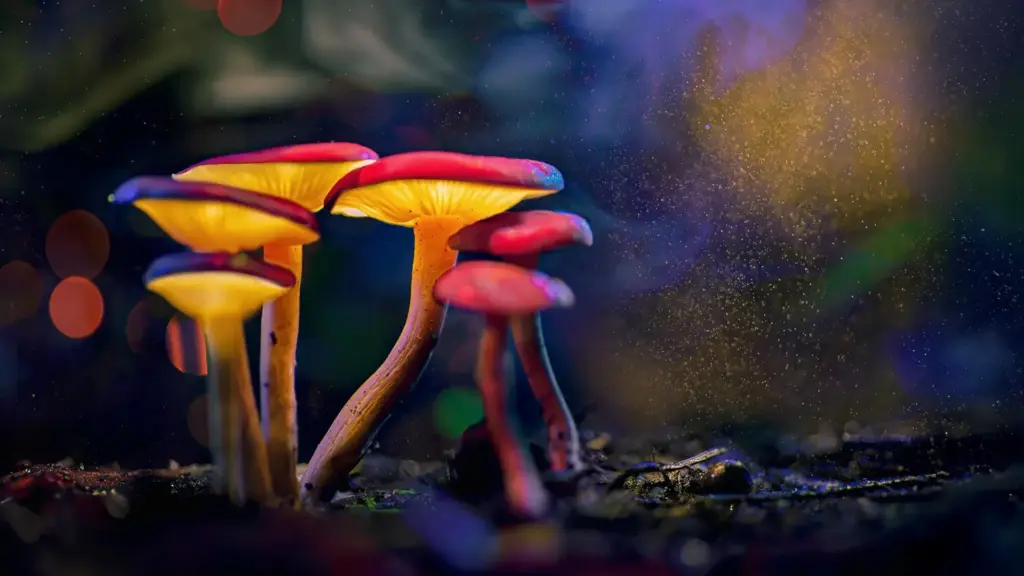
In a significant discovery that offers a new window into the neurobiology of social interaction, researchers have found that psilocybin—the psychoactive compound found in over 200 species of mushrooms—exerts a surprisingly specific influence on the behavior of aggressive fish. The study, published in the journal Frontiers in Behavioral Neuroscience, suggests that even a brief, low-dose exposure to the substance can dampen the most volatile, high-energy aggressive displays in the mangrove rivulus (Kryptolebias marmoratus) without stripping away the animals’ fundamental ability to engage in social interaction.
Psilocybin has long been recognized for its capacity to interact with serotonin receptors in the mammalian brain, a mechanism that modulates a wide spectrum of psychological states, including mood, appetite, and aggression. However, while human interest in the therapeutic potential of psychedelics has surged in recent years, the scientific community has historically lacked a clear understanding of how these compounds influence the intricate dance of social behaviors among non-human vertebrates. This latest Canadian study, led by researchers at Acadia University and the University of British Columbia, provides some of the first empirical evidence that the substance can act as a selective "volume knob" for conflict.
The Mangrove Rivulus: A Unique Model for Behavioral Science
To test the effects of the compound, the research team turned to the mangrove rivulus, a small, amphibious fish known for its remarkable and naturally aggressive disposition. These fish are not merely chosen for their temperament; they are scientifically prized for their unique biology. Unlike most vertebrate species, the mangrove rivulus is a hermaphrodite capable of self-fertilization, which allows them to produce offspring that are genetically identical clones.

This reproductive quirk proved invaluable to the researchers. By utilizing three distinct genetic lines of lab-bred fish, the team could effectively minimize the "noise" of genetic variation. This control ensured that when they observed a shift in behavior following a dose of psilocybin, they could be significantly more confident that the change was a direct response to the chemical, rather than a reflection of inherited traits or individual personality differences. The aggressive nature of the species also provided a clear, measurable metric for the study, as their combativeness is both predictable and easy to categorize.
The Experimental Framework
The methodology employed by the researchers was designed to isolate the impact of psilocybin from the complex social environment of the fish. The experiment was organized around three distinct groups of fish: those receiving the psilocybin, those acting as the "stimulus" fish—meant to provoke a social response—and a group utilized for pharmacokinetics to measure the concentration of the compound accumulating within the animals’ bodies.
To establish a behavioral baseline, the researchers introduced two fish into a tank divided by a fiberglass mesh and an opaque barrier. This setup allowed the fish to sense one another through visual and chemical cues while preventing physical conflict. After a five-minute acclimation period, the opaque barrier was removed, allowing the researchers to document the baseline level of aggression and social interaction.
Twenty-four hours later, the experimental subjects were submerged in water containing dissolved psilocybin for a 20-minute exposure period. Once this window had passed, they were returned to the tank with their original social partner. The researchers then removed the opaque barrier once more to observe any behavioral deviations from the previous day.
Deciphering the "Calming" Effect
The results were striking. Fish that had been exposed to the psilocybin exhibited a marked reduction in both their overall activity levels and their propensity for high-intensity, aggressive "bursts." These swimming bursts are of particular interest to biologists because they represent a high-energy escalation of conflict. Even when physical contact is prevented by a barrier, these bursts serve as a clear signal of intent to attack.
"Swimming bursts are high-energy attack behaviors that represent an escalation of aggression towards the stimulus fish without making physical contact," explained Dr. Suzie Currie, a biologist at The University of British Columbia and senior author of the study. "Other types of aggressive behaviors, like head-on displays, are more about communication and social assessment and require very little energy."
Crucially, the research revealed that psilocybin did not act as a total behavioral sedative. While the compound significantly reduced the energetically costly, escalated attacks, the fish continued to perform lower-energy social displays. This selectivity is the most compelling aspect of the study, suggesting that the substance does not simply render the animal unresponsive to its environment or sluggish in its social cognition.
"Psilocybin’s calming effect appears to selectively reduce energetically costly, escalated behaviors while lower-energy social display behaviors remained largely unchanged," said Dayna Forsyth, a research associate and former MSc student at Acadia University, who served as the first author of the study. "These findings provide the first evidence that psilocybin can selectively reduce escalated aggression in a vertebrate model without suppressing social interaction. It suggests that this compound can selectively dampen escalated social conflict rather than shutting down behavior altogether."
Implications and Future Directions
The researchers are quick to caution against over-extrapolating these results to human clinical settings. The study was conducted on fish, and it focused on acute, short-term exposure. It was not designed as a clinical trial, nor can it offer definitive proof that psilocybin would influence human aggression through the same mechanisms. Furthermore, the study did not examine the potential for long-term behavioral changes, the effects of repeated dosing, or the possibility that the fish might eventually develop a tolerance to the substance.
Despite these limitations, the study marks a significant milestone in behavioral neurobiology. By identifying which social responses are most sensitive to psilocybin, scientists have gained a new model for investigating the biological pathways that are often too complex or ethically difficult to map in human subjects.
"Future studies can build on this work to explore how psilocybin alters neural signaling, which serotonin pathways are involved, and why some aspects of social behavior are affected while others are not," Dr. Currie added. "These are questions that are difficult or impossible to answer directly in humans."
As research into psychedelic compounds continues to expand globally, the use of such non-mammalian models provides a vital, foundational layer of knowledge. By observing the "calming" effect in the mangrove rivulus, researchers have opened a new door into the study of how ancient chemical compounds interact with the fundamental wiring of social conflict. Whether this research will eventually inform therapeutic interventions for humans remains a distant, yet intriguing, possibility. For now, the focus remains on understanding the specific neurochemical mechanisms that allow a simple compound to dampen the fire of aggression while leaving the social fabric of the animal intact.