





For anyone who spends enough time in high-altitude environments, accountability takes on a very specific, unforgiving meaning. It goes far beyond mere self-blame or the simple admission that a mistake has been made. In the high alpine, accountability represents an absolute willingness to face conditions precisely as they are, to own whatever mistakes or outcomes belong to you, and to execute the next vital decision before life—or the elements—makes that decision for you.
For one veteran mountaineer, that lesson hit home more profoundly during a recent expedition in Mongolia than it ever had before. After nearly two years of meticulous planning, a dedicated logistics team was led deep into the remote Altai Mountains during the dead of winter to support an ambitious attempt at a series of solo first ascents. That grueling endeavor ultimately resulted in a world record for the most first ascents in the country’s recorded history. Yet, when looking back on the journey, the final tally of summits is not what lingers in the memory.
What stays is the cold.

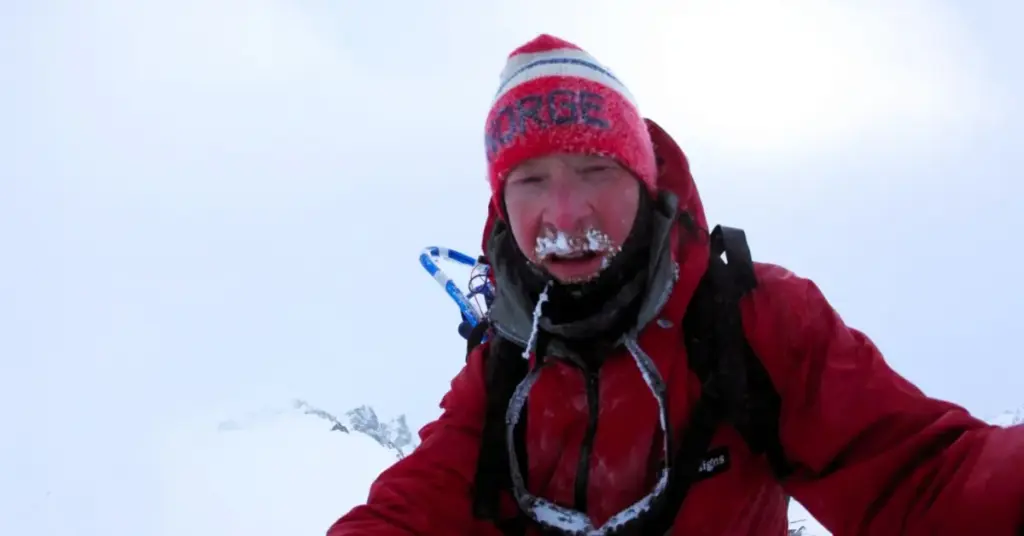
Temperatures during the expedition plummeted well below -30 degrees Fahrenheit, testing the absolute limits of human endurance. The climbers and support personnel faced relentless avalanches, blinding snowstorms, and fierce winds capable of knocking a grown person off their feet. The extreme environment took a severe physical toll, resulting in cases of hypothermia and painful frostbite. Some fingertips turned black from tissue damage, while the relentless frost cracked and left the skin raw and bleeding. In one particularly harrowing incident, the climber broke through surface ice into a freezing river. By the time heavy boots and snowshoes were freed from the icy trap, the situation had escalated far beyond mere discomfort, turning rapidly into a desperate race against time.
Throughout the ordeal, the weight of responsibility rested squarely on a single set of shoulders. The expedition had been personally conceived, sponsors secured, the base-camp team and logistics organized, and a conscious choice made to elevate the challenge by tackling the mountains in the punishing winter season. While the local team provided vital operational support from base camp, every critical decision on the mountain had to be made independently.
When weather windows briefly opened, the days spent climbing were consumed by constant self-interrogation. Was the thermal gear adequate for the plunging temperatures? Was the terrain being read correctly, or was danger being overlooked? Had physical and mental limits been pushed too far? There was a stark, undeniable awareness that no rescue team was waiting in the wings to swoop in if an error in judgment occurred.
Years of accumulated experience in the mountains have proven that debating a problem, fighting the terrain, or cursing the weather changes nothing. Survival requires an immediate, objective assessment of the situation, an honest acknowledgment of what is going wrong, a clear recognition of personal missteps, and decisions rooted strictly in present reality rather than an initial, carefully laid plan. If body temperatures begin to drop dangerously, if physical speed slows, or if weather conditions rapidly deteriorate, those harsh variables must be factored into every choice. In high-stakes mountaineering, refusing to acknowledge a developing problem can easily cost a climber their life. Pressing forward simply because of a prior commitment to a schedule or a route is not a display of courage; it is an act of sheer recklessness.
This philosophy extends far beyond the snowy peaks. Difficult situations arise in every facet of daily life—in demanding workplaces, domestic settings, personal relationships, and unexpected crises. In all of these scenarios, a singular, probing question must be asked: "What part of this is mine?"
True self-accountability is frequently confused with unproductive self-criticism. Beating yourself up after an endeavor goes awry—regardless of whether the ultimate outcome was directly your fault—does not inherently make you any more capable of handling the immediate aftermath or preparing for what comes next.
Instead, genuine accountability must begin well before a crisis fully materializes. It means recognizing the subtle warning signals that are simply too dangerous to ignore, preparing diligently for the variables within your control, and accepting your share of the responsibility when things inevitably veer off course. Even when you are not entirely responsible for the root cause of a problem, you remain entirely responsible for your next move.
This unforgiving dynamic is precisely what continues to draw adventurers back into harsh natural landscapes. The mountains offer no shelter behind good intentions, misplaced blame, or a rigid plan that no longer matches the physical reality on the ground. They strip away illusions, forcing individuals to confront raw facts, identify what belongs to them to fix, and take decisive action before hesitation becomes a far greater threat than the original obstacle itself.
Life outside the wilderness rarely presents a clean slate. Human relationships, professional careers, financial stability, physical health, and personal loss do not offer the straightforward, predictable choices found on a topographic map. Yet the fundamental question remains equally valid: What part of this is mine? Finding the answer begins with seeing a situation clearly for what it is, recognizing the exact spaces where personal influence still exists, and taking targeted action where it truly matters.
The bitter winds and sub-zero trials of Mongolia proved that accountability cannot make harsh circumstances simply vanish. Instead, it accomplishes something far more useful by keeping an individual actively engaged with the remaining parts of their life that are still theirs to lead.