






Stress is often viewed as a disruptive force in our daily lives, a physiological burden that clouds judgment and inhibits focus. However, a new study led by researchers at Yale University suggests that stress—or more specifically, the hormones it releases—plays a far more nuanced and constructive role in how we perceive and retain information. The findings, published in the journal Science Advances, provide a significant breakthrough in understanding why some life experiences are etched permanently into our minds while others fade away into insignificance.
For years, scientists have understood that cortisol, a steroid hormone secreted by the adrenal glands during stressful encounters, has a profound impact on memory. It has long been established that cortisol can strengthen emotional memories, acting as a biological marker that flags certain events as worth keeping. Yet, the precise mechanism—the "how" behind this neurological phenomenon—has remained elusive. The Yale research team has finally mapped the internal communication pathways that allow this hormone to recalibrate the brain’s networks, revealing a sophisticated system designed to prioritize meaningful information.
The Biological Architecture of Emotional Memory
"We all experience stress, and my lab is interested in understanding how stress can be helpful," says Elizabeth Goldfarb, the study’s corresponding author and an assistant professor of psychiatry at the Yale School of Medicine and of psychology in the Faculty of Arts and Sciences. Her work aims to deconstruct the myths surrounding stress, moving beyond the narrative of it being purely harmful to explore its role in human cognition and adaptation.
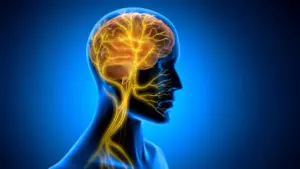
To understand why cortisol has this effect, researchers have traditionally looked at individual brain regions. The amygdala, a small, almond-shaped structure deep within the temporal lobe, has long been a primary focus of this research. Known as the brain’s "emotional center," the amygdala is responsible for processing fear, pleasure, and the emotional significance of external stimuli. When we encounter something intense, the amygdala fires, signaling to the rest of the brain that this moment is worth paying attention to.
However, isolating the function of the amygdala has proven difficult. Because the brain is a highly integrated organ, many regions participate in multiple mental functions simultaneously. Distinguishing between the act of perceiving an emotional stimulus and the subsequent process of encoding that stimulus into long-term memory is a massive challenge for neuroscientists. As Goldfarb, who is also a member of Yale’s Wu Tsai Institute—an interdisciplinary hub for the study of cognition—explains, "Forming memories for emotional experiences involves different processes in the brain: first, perceiving an experience as emotional or intense, and second, encoding that experience into long-term memory." By disentangling these two phases, the researchers sought to pinpoint exactly where and how cortisol exerts its influence.
Observing the Brain in Real Time
To investigate these processes, the Yale team designed a sophisticated experiment that utilized functional MRI (fMRI) technology. The participants in the study were tasked with viewing a series of images while inside an fMRI scanner, which measures brain activity by tracking fluctuations in blood flow and oxygen levels. This allowed the researchers to observe, in real-time, which neural networks were lighting up as participants reacted to various visual stimuli.
The study design was rigorous and precise. Participants were administered either a dose of hydrocortisone—a synthetic form of cortisol—or an inactive placebo. To ensure the integrity of the data, the study employed a double-blind design, meaning neither the researchers nor the participants knew which substance was administered during any given session. Each participant completed the experiment twice, allowing the researchers to observe the same individual’s brain response under both the influence of the stress hormone and the control condition. After viewing the images and reporting their emotional reactions, the participants were tested the following day to see how much of the visual content they could accurately recall.
A New Approach to Functional Connectivity
One of the most innovative aspects of this study lies in the methodology used to analyze the fMRI data. Traditionally, neuroscientists study "functional connectivity"—the measure of how synchronized activity is across different brain regions—by analyzing data collected over several minutes. This provides a general overview of brain network behavior but often misses the rapid, dynamic shifts that occur when we encounter a specific event.
The Yale team took a different approach. They analyzed functional connectivity during individual trials that lasted only five seconds. These brief snapshots allowed the scientists to determine if specific patterns of brain activity could predict two distinct outcomes: the emotional intensity a participant reported feeling in the moment, and whether that participant would be able to successfully retrieve the memory of that image twenty-four hours later.
By successfully identifying patterns associated with both emotional perception and memory encoding within these short windows, the researchers were able to see exactly how cortisol altered the interplay between these networks. The result was a high-resolution look at the brain’s internal "decision-making" process regarding which information to prioritize for long-term storage.
How Cortisol Rewires the Brain’s Network
The study yielded two primary findings that clarify the role of stress in memory. First, it confirmed that cortisol significantly improved the participants’ ability to recall emotionally significant images, reinforcing the consensus that stress is a powerful modulator of memory. Second, and more importantly, the researchers discovered that the hormone achieved this by inducing distinct, measurable changes in how brain networks communicate.
In the brain networks responsible for emotional processing, cortisol led to more consistent and reliable patterns of activity. It essentially acted as an amplifier, increasing the engagement of these networks and ensuring that the brain reacted more strongly to the emotional weight of an experience. Meanwhile, in the memory networks, the hormone triggered a different kind of adjustment: it made these networks more specialized for emotional information. This suggests that cortisol doesn’t just "turn up the volume" on brain activity; it actively reconfigures the encoding process to favor information that carries emotional significance.
Perhaps most critically, the researchers observed increased coordination between the emotion and memory networks. When cortisol was present, these two systems were observed to be in better sync, working together more effectively to process and store high-stakes experiences. This suggests that the "strengthening" of a memory is not the result of a single brain region working harder, but rather the result of a more cohesive, integrated effort across multiple neural circuits.
The Evolutionary Benefit of Selective Memory
The findings offer a compelling explanation for why stress does not result in a total, indiscriminate improvement of memory. If stress simply boosted everything, our minds would be cluttered with mundane details. Instead, the brain uses stress as a filter, prioritizing information that is emotionally intense or personally meaningful. This is an inherently adaptive trait, likely evolved to help humans survive by ensuring that high-stakes, dangerous, or highly rewarding experiences are remembered with crystal clarity.
"Stress responses are fundamentally adaptive and can help you form strong memories—but this is specific to experiences that you find to be emotionally intense or meaningful," says Goldfarb. This insight has practical applications for learning and memory in everyday life. For students or professionals working under pressure, the research suggests that "stress-induced learning" can actually be leveraged if one intentionally connects the material to something that triggers an emotional or personal response.
By identifying the specific brain mechanisms at play, the Yale team has shown that stress is not merely a disruption to be managed, but a biological tool for prioritizing what matters. Rather than viewing stress as an enemy of cognition, this research suggests that the brain is expertly designed to work with that stress, ensuring that when the pressure is on, the most important information is preserved for the future. The work, which involved contributions from prominent researchers like Rajita Sinha and Todd Constable and received support from the National Institutes of Health, marks a significant step forward in our understanding of the complex, intimate relationship between our emotions and our memories.