




Many scientists fail to acknowledge the extent to which their disciplinary paradigms remain deeply influenced by the cultural frames of the colonial era. According to neurodiversity and disability activists, the modern mental health crisis is not merely a biological failure, but a symptom of a terminally diseased institutional landscape.
As global industrial societies grapple with deepening ecological overshoot and widespread social alienation, a growing coalition of researchers, systems thinkers, and neurodiversity advocates are arguing that contemporary institutions are built on foundational flaws. By examining how modern structures systematically pathologize human variation, these thinkers are working to construct coherent, life-affirming theories of human existence. At the heart of this movement is collaborative niche construction—an evolutionary process aimed at reducing cognitive dissonance and restoring ecological harmony.
Completely Normal Ways of Feeling Unwell and Distressed
In modern society, the ways in which atomised nuclear families depend on abstract, bureaucratic institutions are considered completely normal. Conversely, anyone who relies on assistance from others in unconventional or interdependent ways is routinely pathologised.
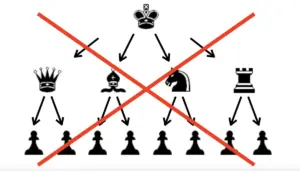
This dynamic creates profoundly alienating and dehumanising social experiences. Critics argue that the global mono-cult surrounding modern populations enforces a rigid standard of independence that runs counter to humanity’s evolutionary history of mutual aid. Social power can be understood through this lens as simply the privilege of not needing to learn or adapt to the needs of others.

Observers of contemporary socio-economic systems suggest that capitalism functions effectively as a collective learning disability, actively contributing to both human and non-human suffering. Modern society—much like the powered-up empires of the past—operates on the systematic hijacking of the evolved human fear response. This design treats populations as programmable biological machines, reducing the wonder of living systems to an industrial factory model driven exclusively by fear and greed.
Internalised Ableism in the Science of Biology
The normalisation of internalised ableism runs remarkably deep, even infiltrating the biological sciences. Well-known biologists frequently perpetuate the unhelpful industrial metaphor of human biological machines, confusing first-order effects—such as the innate human inclination toward mutual aid—with second-order effects, such as the culturally transmitted normalisation of social power gradients found only in deeply troubled societies.
This bias is evident in traditional evolutionary frameworks, such as the naive distinction between r-selection and K-selection survival strategies. While r-selected species prioritize high reproduction rates with minimal parental investment in unstable environments, K-selected species—often exemplified by long-lived, socially complex animals like elephants and whales—involve heavy parental investment, teaching, and protection in competitive environments.
However, labeling species with advanced cultures as operating in a purely "competitive world" represents a clear projection of Western Educated Industrialised Rich Democratic (WEIRD) cultural bias. Critics point out that no one has ever asked a whale or an elephant whether they experience their environment as primarily competitive or collaborative. Only culturally well-adjusted individuals embedded within hierarchically structured empires view the living world through such a lens.

In contrast, egalitarian collaborative environments persist around the margins of dominant empires. Scholars like Vandana Shiva have long identified capitalist patriarchy as the underlying cultural disease framing the entire living world as inherently adversarial.
Reframing Life in Terms of Collaborative Niche Construction
To appreciate the significant role that culture plays in gene-culture co-evolution, researchers argue that traditional paradigms must be expanded or replaced. A more nuanced framework must distinguish between different cultural adaptation strategies rather than assuming all complex species operate under standard K-selection.
Under a proposed "rcC-selection" paradigm, species with a capacity for culture exhibit distinct approaches. On one end is c-selection, where "c" stands for compliance. In c-selected cultural species, societies prioritize producing adults who conform to established, often industrialized cultural norms, with little investment in non-conforming individuals. While this reduces immediate emotional loads for caregivers in degraded environments, it often leads to high rates of mental distress and mortality among the young.
On the other end is C-selection, where "C" stands for culturally adaptive. These populations welcome new cultural knowledge and wisdom, heavily investing in protecting and nurturing all young individuals, including those who do not fit standard molds. C-selection encourages learning from both the cultural milieu and the local ecological environment, resulting in higher resilience during times of rapid environmental change.

This rcC-selection framework offers a more coherent explanation for the observed diversity within cultural species. It challenges biological categorizations that dismiss social sciences and non-Western ways of relating to the world as scientifically insignificant. While stable, abundant environments can incrementally tip societies toward c-selection over generations, dynamic and unpredictable environments favor adaptive C-selection strategies, which allowed humans to survive ice ages and thrive across diverse bioregions.
The Big Cycle of Life
In dynamic ecological contexts, enduring relationships of mutual trust provide far more stability than abstract indicators of social status. Mutual trust acts as the essential currency of living systems, integrating human societies into the regenerative, cyclical flow of life.
Unlike the global mono-cult of capitalist patriarchy, many ancient philosophical and spiritual traditions—including Hindu, Buddhist, and Daoist cosmology—understand existence in terms of cyclical ages rather than a linear arc of progress. This worldview aligns closely with indigenous cultures and civilisational collapse analyses, which view the planet as a regenerative network of relationships.
When dominant hierarchies and abstract status symbols divert energy away from this cyclical flow and toward in-group competition, societies run into severe ecological limits. The structural collapse of such terminally diseased institutions appears disastrous primarily to elites addicted to social power, but it often represents a liberating transition for the broader population.

Omni-Directional Sensing and Learning
Over the past two decades, neurodiversity and disability activists have collaborated to expose the internalised ableism keeping societies locked in suicidal paradigmatic inertia. Participatory research into the daily lives of individuals reveals that cognitive dissonance is a massive burden in modern Western cultures. Most people are driven less by innate greed than by a toxic environment that instills pervasive fear and self-doubt.
In healthy, life-affirming environments, the human capacity to detect cognitive dissonance acts as a catalyst for collaborative niche construction. This evolutionary process of reducing cognitive dissonance relies on omni-directional sensing and learning, which can only emerge in depowered, non-overwhelming settings. Observers note that even non-human systems, such as the decentralized collective intelligence of ant colonies, demonstrate efficient logistics and resource management that modern human societies fail to emulate.
Taking Stock and Moving Toward Ecological Wellbeing
Data from the Global Footprint Network highlights the urgency of these systemic shifts, with humanity continuing to outpace Earth’s biocapacity by consuming natural resources significantly faster than ecosystems can regenerate. Daoist philosophers have warned for millennia that social power over others inherently corrupts, a warning underscored by today’s ecological overshoot.
Rather than continuously redesigning powered-up institutions, advocates suggest practicing depowered dialogue and intentionally flattening hierarchical relationships without waiting for institutional permission. By recognizing human cognitive and emotional limits as immutable realities akin to the laws of physics, communities worldwide are beginning to embrace human-scale initiatives, indigenous wisdom, and lived-experience models of care that offer a path toward genuine ecological wellbeing.