








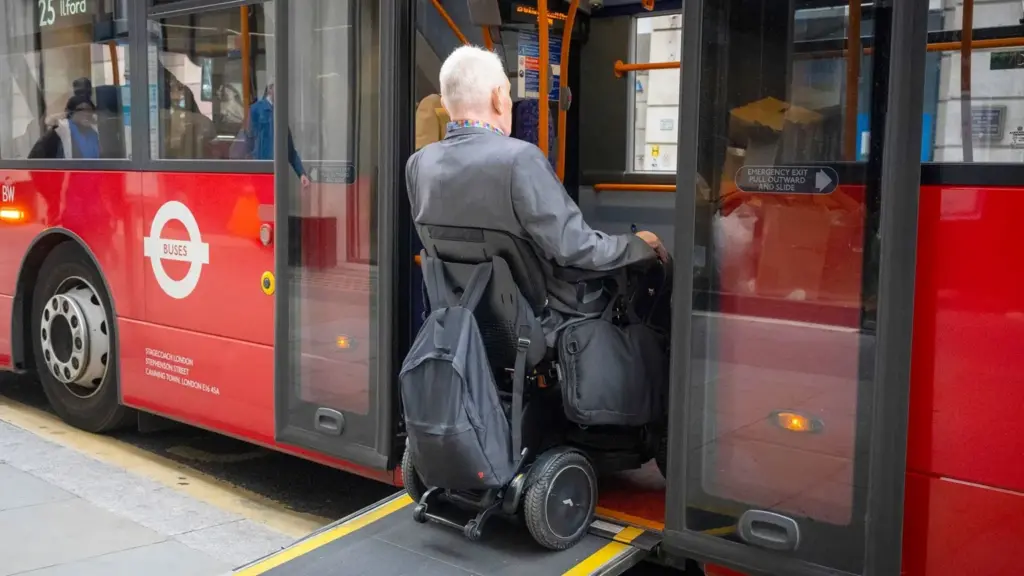
Starting April 1, disabled people across England will be able to travel by bus for free at any time of day, marking a major transformation in national public transportation policy.
Previously, free bus passes were strictly restricted to off-peak hours on weekdays—specifically between 09:30 and 23:00. These legacy time limits created significant logistical hurdles for pass holders trying to build stable routines, making it exceptionally difficult to commute to standard morning jobs, arrive at early appointments, or attend late-night events without incurring out-of-pocket expenses.
The removal of these time limits will directly benefit an estimated one million people nationwide. By lifting the evening and morning restrictions, the policy effectively transforms concessionary bus travel into a true full-time lifeline, giving disabled citizens the same temporal flexibility afforded to other commuters.
The landmark policy follows a highly successful trial conducted within Greater Manchester’s integrated “Bee Network.” It also responds directly to years of persistent campaigning by prominent disability rights organizations, including Scope and Transport for All, who have long argued that restricting travel times penalized people trying to participate fully in the workforce and society.
Advocates have widely celebrated the move for eliminating an unfair “postcode lottery,” a fragmented system where pass validity, operating hours, and local concessions heavily depended on arbitrary municipal rules and regional funding. However, advocacy organizations emphasize that this is only one major step forward in a broader journey toward equity. They note that eligibility requirements across different local authorities still need comprehensive standardization to ensure that a disabled traveler enjoys the same rights regardless of where they live in England.
To make the program permanent and nationwide, the £60 million scheme is being jointly funded through the Department for Transport and the Department for Work and Pensions. Government officials are framing the sweeping reform as an essential workforce and cost-of-living initiative. This investment aligns with existing transit measures designed to ease financial pressures on the public, such as the nationwide £2 single-fare cap. Furthermore, the decision finally brings England into alignment with similar 24/7 concessionary transit programs that have already been operating successfully in Scotland and Wales.
Global Takeaways: How Other Countries Can Make Accessible Commuting Possible
Making daily commuting accessible and affordable for disabled citizens requires a sophisticated combination of policy design, advanced digital systems, and targeted public investment. The United Kingdom’s latest initiative sheds light on the complex interplay of factors required to successfully overhaul legacy transit systems on a national scale.
Why Was the UK Able to Do It?
The ability of the UK government to implement a nationwide 24/7 concessionary transit policy stems from a combination of centralized funding mechanisms, structured inter-departmental cooperation, and sustained political pressure from organized civil society. By pooling resources through both the Department for Transport and the Department for Work and Pensions, the government was able to secure the £60 million baseline funding necessary to absorb the operational costs traditionally borne by local municipalities.
Furthermore, years of advocacy from national disability rights groups provided the necessary political momentum, translating grassroots frustration over the regional "postcode lottery" into actionable legislative reform. The prior testing ground provided by Greater Manchester’s "Bee Network" also offered policymakers a functional blueprint, demonstrating that removing time restrictions could be managed logistically without overwhelming transit capacity.
Does It Depend on Existing Infrastructure?
Yes, heavily. Free transit passes only truly work if the underlying public transport network is physically and technologically accessible to begin with. Concessionary fare policies cannot succeed in a vacuum; they must be supported by tangible physical infrastructure and reliable digital frameworks.
For nationwide 24/7 travel to be genuinely useful, transport networks require step-free station access, low-floor buses equipped with functioning ramps, audible and visual next-stop announcements, and trained operating personnel. Additionally, technological integration—such as standardized smartcard readers, unified ticketing platforms, and real-time accessibility data feeds—is essential for ensuring that pass holders can navigate the system smoothly at any hour of the day or night without encountering administrative or mechanical barriers.
What Is Needed to Make Commuting Affordable for People with Disabilities?
Achieving true affordability and accessibility in public transit demands a multi-layered approach that goes beyond simply waiving fares. First, governments must eliminate regional disparities by establishing unified national eligibility criteria, ensuring that a commuter’s rights do not change when crossing municipal boundaries.
Second, funding models must be sustainable and centrally supported, shielding local transit authorities from budget shortfalls that could otherwise lead to service cuts or reduced accessibility standards.
Third, complimentary policies—such as fare caps, companion passes, and 24/7 access windows—must be implemented to address the compounded financial and logistical burdens often faced by disabled workers and students.
Finally, ongoing collaboration between transit operators, regional governments, and disability advocacy groups is vital to identify service gaps, monitor compliance, and adapt transit networks to the evolving needs of the communities they serve.