








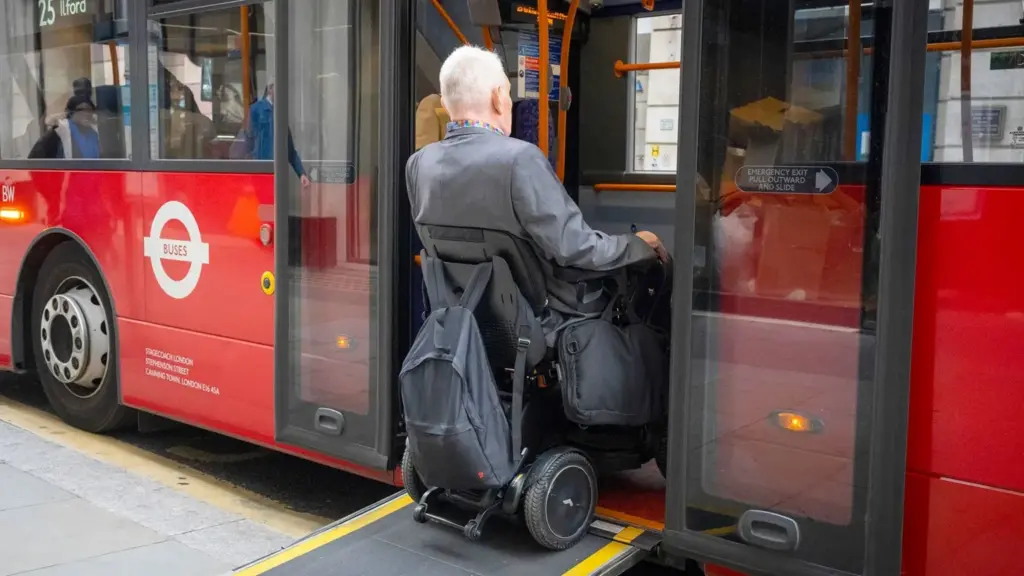
Starting April 1, disabled people across England will be able to travel by bus for free at any time of day, marking a monumental shift in the country’s public transportation accessibility. Previously, free bus passes were strictly restricted to off-peak hours on weekdays, specifically valid only between 09:30 and 23:00. This historical limitation created substantial barriers for pass holders attempting to commute to standard morning jobs, participate in early professional commitments, or attend late-night cultural and social events.
The complete removal of these burdensome time limits will directly benefit an estimated one million people nationwide, fundamentally transforming the national bus network into a true full-time lifeline. For years, advocates have argued that restricting free travel to off-peak hours fundamentally undermined the employment prospects and social independence of disabled citizens, locking them out of the traditional morning rush hour and forcing them to navigate rigid scheduling constraints just to move through their daily lives.
This progressive policy evolution follows a highly successful trial period implemented within Greater Manchester’s integrated “Bee Network.” The regional pilot demonstrated that removing time barriers on concessionary travel did not destabilize local transport operations, but instead provided a vital boost to independence and community participation. Furthermore, the nationwide rollout responds directly to years of relentless campaigning by prominent disability rights organizations, including Scope and Transport for All.
Advocates have widely celebrated the government’s move, praising it as a crucial step toward eliminating an unfair “postcode lottery.” Under the old system, the practical utility of a disabled bus pass often depended entirely on localized municipal rules and regional administrative budgets, creating deep inequalities in mobility depending on where a resident lived. However, while disability organizations have welcomed the elimination of time restrictions with open arms, they also emphasize that this reform is only the beginning of a much longer journey. Campaigners note that eligibility requirements across different municipal regions still urgently need broader standardization to ensure true equity nationwide.
To secure the long-term viability of the program and make the policy permanent, the £60 million initiative is being jointly funded through the Department for Transport and the Department for Work and Pensions. Government officials are explicitly framing the sweeping reform as an essential workforce and cost-of-living initiative. This investment aligns closely with existing transit measures designed to ease financial pressures on the public, such as the nationwide £2 single-fare cap. By implementing this reform, England is finally bringing its concessionary travel framework in line with similar 24/7 transit programs that have successfully operated across Scotland and Wales for years.
Global Takeaways: How Other Countries Can Make Accessible Commuting Possible
Making daily commuting accessible and affordable for disabled citizens requires a careful and deliberate combination of forward-thinking policy design, modern digital systems, and targeted public investment. The UK’s transition to a 24/7 model highlights the intricate web of structural elements required to make public transit genuinely inclusive on a national scale.
Why Was the UK Able to Do It?
The ability of the United Kingdom to enact this comprehensive transit reform stems from a combination of centralized policy frameworks, sustained advocacy, and regional pilot programs that proved the viability of unrestricted travel. By leveraging administrative cooperation between major government bodies like the Department for Transport and the Department for Work and Pensions, policymakers were able to pool financial resources and establish a unified funding mechanism. The success of localized initiatives, such as Greater Manchester’s "Bee Network," provided the empirical evidence needed to convince skeptical legislators that expanding access would yield positive societal and economic returns without overwhelming municipal transit systems.
Does It Depend on Existing Infrastructure?
The success of free and unrestricted transit passes depends heavily on the underlying state of the public transport network. Free travel passes only provide genuine utility if the public transport network is physically and technologically accessible to all members of the community.
A concessionary pass alone cannot overcome physical barriers if buses lack functional wheelchair ramps, audible and visual announcement systems, or adequate priority seating. Furthermore, the technological backbone of the transit network—including smart ticketing infrastructure, real-time vehicle tracking, and digitized route information—must be fully integrated to support a seamless commuting experience. Without these physical and technological foundations, removing time restrictions on paper passes or digital tokens risks driving up demand without providing the actual structural capacity required to accommodate disabled passengers safely and comfortably during peak operating hours.
What Is Needed to Make Commuting Affordable for People with Disabilities?
Achieving true affordability and accessibility in public transportation requires a multifaceted approach that goes beyond simply waiving fares during specific hours. First and foremost, governments must establish consistent, nationwide eligibility criteria to eliminate regional discrepancies and prevent geographic inequality from dictating an individual’s right to mobility.
Additionally, sustainable funding models must be locked into place through dedicated national budgets rather than relying solely on volatile local authority financing. Concessionary travel schemes must also be paired with continuous investments in fleet modernization, ensuring that buses are fully equipped to handle diverse accessibility needs around the clock. Finally, ongoing collaboration with disability organizations and transit advocacy groups remains essential to identify emerging bottlenecks, refine operational policies, and ensure that public funds are directed toward practical measures that genuinely empower everyday commuters.