




The acquisition of speech sounds is a complex developmental milestone, yet few phonemes present as significant a challenge to both clinicians and students as the /r/ sound. Widely recognized in the speech-language pathology community as one of the most difficult sounds to master, the /r/ phoneme—often referred to as a liquid or rhotic sound—demands a high degree of precision in the placement and movement of the articulators. For many children and teenagers, the /r/ sound represents a persistent hurdle that requires specialized intervention, meticulous practice, and, above all, a deep understanding of the underlying mechanics of human speech production.
The inherent difficulty of the /r/ sound stems primarily from its invisibility. Unlike sounds such as /p/, /b/, or /m/, which rely on labial contact that a child can easily observe by looking in a mirror or watching a therapist, the /r/ is produced deep within the oral cavity. The tongue, which acts as the primary articulator for the /r/, must be positioned with extreme accuracy. Whether the student utilizes a "bunched" tongue position, where the tongue body is raised toward the roof of the mouth, or a "retroflexed" position, where the tip of the tongue is curled slightly upward and backward, the margin for error is remarkably slim. Because these movements occur largely out of sight, students often struggle to conceptualize what their tongue is supposed to be doing, leading to frustration and the solidification of incorrect compensatory patterns.
When speech-language pathologists approach the task of remediation, they are essentially tasked with helping a student map an invisible motor movement. This process, known as elicitation, is the foundational pillar of speech therapy for the /r/ sound. Before a clinician can expect a student to produce the sound in complex contexts—such as in initial, medial, or final positions within words, or within conversational speech—the student must first be able to generate a clear, consistent, and solid /r/ sound in isolation. This phase of therapy is critical because it builds the muscle memory necessary for more advanced articulation. Without a stable foundation, attempts to integrate the sound into daily language often lead to distorted productions that can be difficult to correct later on.
The challenge of elicitation is not merely physical; it is also psychological and cognitive. Children and teens who have struggled with articulation for years may have developed a negative association with the sound or have grown accustomed to their own idiosyncratic way of producing it. Consequently, the therapist’s role extends beyond mere physical guidance; it involves fostering an environment where the student feels empowered to experiment with their own vocal mechanism. This requires a shift from passive imitation to active exploration, where the student begins to understand the relationship between their tongue’s position and the resulting acoustic output.
In the current landscape of speech therapy, clinicians are increasingly leveraging visual aids and multimedia resources to bridge the gap between abstract instruction and physical reality. The use of video demonstrations has become a vital tool in this pedagogical shift. By providing a clear, high-definition look at the mechanics of speech, therapists can offer students a reference point that is far more effective than verbal descriptions alone. These visual resources allow students to see the subtle movements of the tongue and the jaw, helping them visualize the internal configuration required to produce the /r/ sound correctly. Such tools serve as a bridge, translating the technical requirements of phonetics into tangible concepts that a young learner can grasp.
The methodology behind these clinical approaches is rooted in the principles of motor learning. Experts in the field emphasize that success is rarely the result of a single technique, but rather a combination of sensory feedback and repetitive practice. For some, tactile cues—where the therapist might use a tool to gently guide the tongue into position—can be incredibly effective. For others, the focus may be on auditory discrimination, helping the student learn to hear the difference between their current production and the target /r/. This multifaceted approach ensures that the student is receiving input through multiple sensory channels, which can significantly accelerate the learning curve.
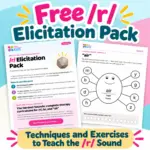
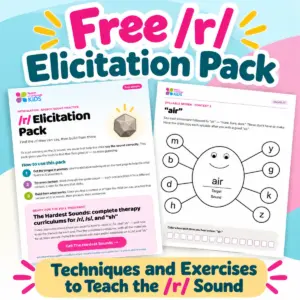
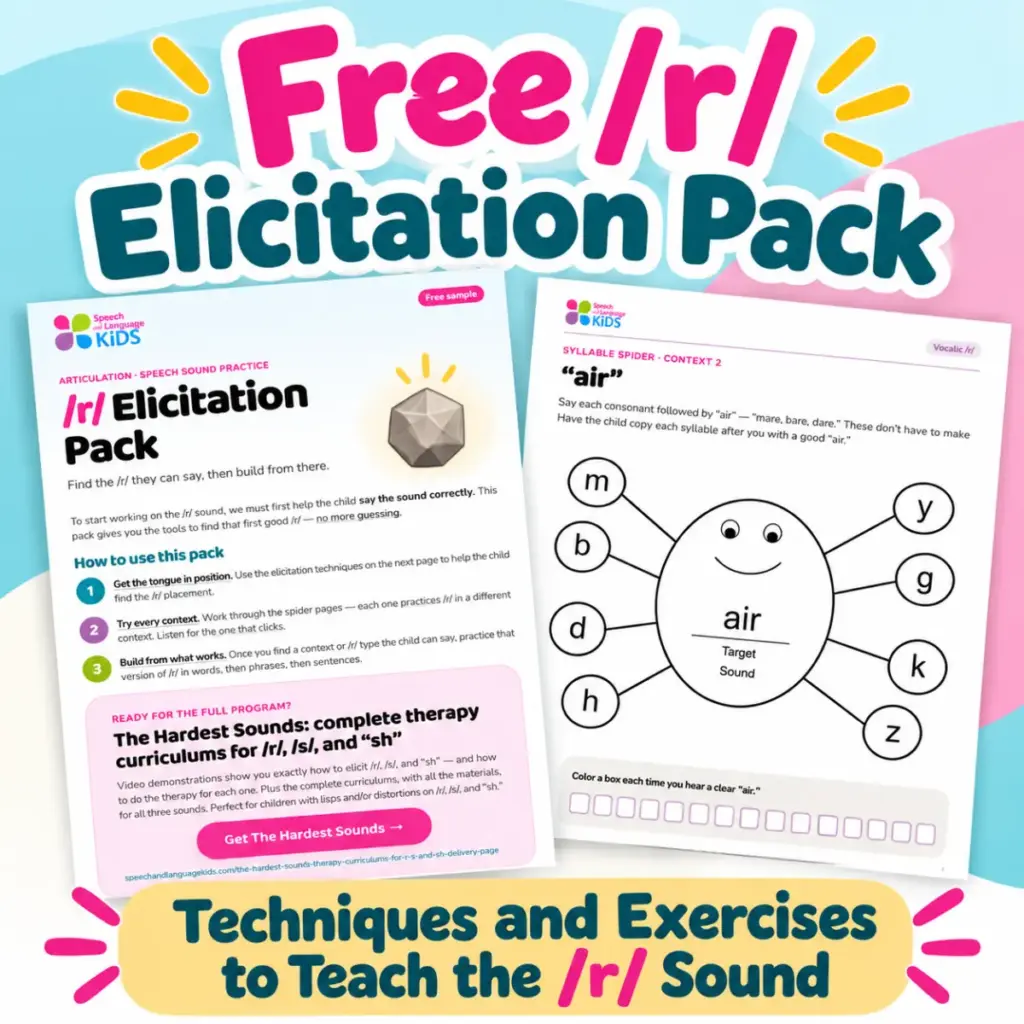
To support this rigorous clinical process, practitioners often rely on specialized materials designed to streamline the elicitation phase. These resources, such as the /r/ Elicitation Pack, are curated to provide a structured yet flexible framework for therapists. By offering a variety of techniques—ranging from tongue-strengthening exercises to specific phonetic placement cues—these materials assist the clinician in tailoring their strategy to the individual needs of the student. Because no two students possess the exact same oral anatomy or learning style, the ability to pivot between different elicitation strategies is a hallmark of an effective therapist.
The development of these resources underscores a broader commitment within the speech therapy community to tackle the /r/ sound with renewed focus and innovation. As technology continues to evolve, so too do the ways in which clinicians monitor progress and provide feedback. Whether through the use of ultrasound imaging to provide real-time visual feedback of tongue movement or through simplified, accessible instructional packs, the goal remains the same: to help the student achieve the articulatory precision necessary for clear and confident communication.
For those navigating the complexities of /r/ therapy, the journey is often incremental. It begins with the initial, often imperfect attempts at elicitation and progresses through a series of small, hard-won victories. A student might start by producing a growling sound, gradually refining it until the distinct quality of the /r/ emerges. This transition from a non-speech sound to a functional phoneme is a significant accomplishment, marking the end of the initial elicitation phase and the beginning of the generalization process. Once the sound is stabilized in isolation, the therapist can begin the work of integrating it into syllables, words, and eventually, the rhythm of natural speech.
The persistence required for this process cannot be overstated. Both the therapist and the student must remain patient, understanding that motor learning is a non-linear journey. There will be days of breakthrough and days of plateau, but the consistent application of evidence-based elicitation strategies provides a roadmap for success. By demystifying the hidden movements of the /r/ sound and providing students with the tools to take control of their own articulation, speech-language pathologists are not just correcting a sound; they are equipping students with the confidence to communicate effectively in all aspects of their lives.
As the field continues to refine these techniques, the focus remains on making the process as accessible as possible. Whether through the shared knowledge of professional networks, the creation of comprehensive resource packs, or the integration of modern digital tools, the objective is to ensure that every student, regardless of the severity of their articulation disorder, has the opportunity to master the elusive /r/ sound. It is a testament to the dedication of the clinical community that, despite the difficulty inherent in this phoneme, progress is consistently being made, one sound at a time. The shift toward more visual, interactive, and structured approaches reflects a deeper understanding of the neurological and physiological demands of speech, setting a new standard for how we address one of the most challenging aspects of language acquisition.