







Core ideas embedded within ancient spiritual traditions such as Buddhism and Daoism are increasingly viewed as deeply reflective of the commonalities found across human-scale indigenous cultures. At a time when modern industrial societies grapple with unprecedented ecological and psychological strain, contemporary thinkers are re-evaluating how a compassionate framework of love—understood as vulnerable, mutual knowing—aligns naturally with a panpsychic relational philosophy. Across society, individuals are expressing a fundamental desire for their lived experiences to be taken seriously. As embodied spirits, humans are compelled to make sense of a complex world, yet this monumental task can only ever be achieved in good company.
Life
As Janine Benyus famously observed, life creates conditions conducive to life. This simple yet profound biological observation points directly to the reality that the dynamic process of living consists fundamentally of continuous feedback loops. Rather than a collection of isolated entities competing in a vacuum, life is entirely relational, sacred, cyclical, fleeting, and compostable. It is deeply nested, continuously regenerative, and forever remains an encompassing mystery for all participants involved.
From the smallest molecular interactions to the vast, sweeping dynamics of terrestrial and marine ecosystems, biological systems are driven by communication and learning loops. When studied closely, this perspective mirrors the foundational texts of Eastern philosophies, which have long championed a non-dualistic, interconnected view of existence. While human cognitive and scientific limitations prevent us from empirically quantifying consciousness down to its absolute emergence, science is similarly incapable of disproving that consciousness arises relationally from the bottom up. This realization does not diminish the immense value of scientific inquiry; rather, it highlights its inherent boundaries, much like the abstract limitations found within mathematics where certain statements can never be definitively proven true or false.

Spirits
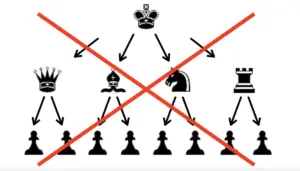
At spatial and temporal scales relevant to biological and ecological systems, the smallest feedback loops emerge between molecules, giving rise to the staggering complexity observed in cell biology and molecular genetics. These loops scale upward into bioregional and planetary networks encompassing the entirety of Gaia. Popular anthropocentric definitions of consciousness typically restrict awareness to animals possessing brains, thereby excluding the myriad feedback loops operating continuously within living systems at both microscopic and macroscopic levels.
Positive or powered-up feedback loops occur when information accumulates over time within specific living cells or organisms faster than in others. However, these powered-up states are always temporary relative to the lifespans of the entities involved. For instance, the physical body of a human animal grows to a certain scale and remains intact for a lifetime. Throughout this span, internal molecular feedback loops between cells and organs are maintained in a balanced, de-powered state, fueled by external energy from living food and generating biological outputs ready to be reassembled into new life.
Similarly, healthy social feedback loops between human animals blossom into enduring relationships sustained by shared experiences and mutual understanding. This relational dynamic generates cultural outputs that can be readily integrated into local ecologies of care. Viewing the universe entirely through these dynamic feedback loops leads naturally to a panpsychic philosophy where consciousness is omnipresent across all scales. This worldview challenges the cultural biases inherent in modern industrialized notions of intelligence and success, inviting humanity to reckon with its cognitive and emotional boundaries.

The core tenets of Buddhism and Daoism offer profound parallels to these ecological realities. Buddhism focuses on minimizing suffering and unease, mirroring the deep-seated drive among hypersensitive neurodivergent individuals to reduce cognitive dissonance. Similarly, Daoist virtues such as effortless action, naturalness, and simplicity provide a timeless critique of anthropocentric empire-building. Together, these traditions echo the egalitarian operating principles observed in hunter-gatherer societies for hundreds of thousands of years, emphasizing that true wisdom lies in harmony rather than dominance.
Love
The extent to which living beings are truly alive emerges directly from mutual trust, shared commitments, and reciprocal understanding within relationships. In contrast, relationships forged with abstract, super-human scale anthropocentric institutions are inherently devoid of genuine shared experience. The more modern cultures force individuals to invest in such sterile systems, the diminished capacity those individuals retain for authentic relationships with living beings.
Recognizing these dynamics allows for a sober reassessment of institutional collapse. Rather than an unmitigated catastrophe, the crumbling of rigid structures can be understood as the natural expiration of an invalid social license. Indigenous societies that have resisted the commodification of life offer invaluable lessons in collaborative niche construction and relational health. By reframing evolution away from fierce, head-to-head competition and toward mutual aid—a concept championed by Pyotr Kropotkin more than a century ago—humanity can begin to rebuild life-affirming ecologies of care.

Sensitivity Profiles
Every human possesses a unique sensitivity profile shaped by neurological baselines and accumulated lived experiences within specific ecological and social contexts. This is particularly pronounced among hypersensitive neurodivergent individuals who frequently navigate trauma within a social world that pathologizes and marginalizes them. Statistical data indicates that a vast majority of neurodivergent adults regularly experience feelings of being overwhelmed, misunderstood, and disrespected.
Official diagnostic frameworks for conditions like autism often overlap heavily with symptoms of complex trauma, making it difficult to separate inherent neurological baselines from lifelong survival responses. The modern medical model, overly reliant on decontextualized diagnostic labels, frequently falls short of addressing the holistic needs of intersectionally marginalized people. Activists and scholars within the neurodiversity movement continue to advocate for intersectional solidarity that honors the uniqueness of every individual’s lived experience rather than forcing human behavior into rigid statistical bell curves.
Unresolved cognitive dissonance generated by unbalanced social dynamics often manifests as chronic mental, spiritual, and physical distress. Individuals with heightened sensitivities are frequently the first to consciously register this dissonance, compelling them to seek resolution. Cultivating environments that honor diverse sensitivity profiles is therefore essential for fostering genuine well-being.

Culture Co-Evolution
Major evolutionary milestones throughout the history of Gaia share deeply co-evolutionary characteristics. Cell biology demonstrates the complementary roles of abstract symbol systems and physical semantics, proving that evolution is fundamentally an ecological process rather than a purely species-specific competition. The semi-permeable membranes of biological cells provide a time-tested model for sustainable interaction between multiple living organisms.
Adopting a co-evolutionary framework reframes cultural development around conscious collaborative niche construction rather than wasteful resource competition. Egalitarian hunter-gatherer societies successfully minimized destructive conflicts for millennia through cultural priorities rooted in sharing, humility, and omni-directional learning. Applying these ancient lessons to modern digital communication and institutional design represents one of the most critical challenges for the coming centuries.
The Human Spirit Within Gaia
Humans evolved to make sense of the world at human scales, relying on deep interpersonal trust and cooperative frameworks. Attempting to define human normality or adaptiveness through isolated, atomized metrics ignores our deep evolutionary heritage. Modern WEIRD societies—Western, Educated, Industrialized, Rich, and Democratic—have become profoundly detached from these roots, functioning instead within mediated spectacles that prioritize transactional utility over relational depth.

Viewing human life through the lens of economic productivity has generated an epidemic of self-doubt, shame, and alienation. When individuals are valued solely by their economic output between early adulthood and retirement age, intergenerational dialogue suffers, and the innate human yearning for community is suppressed. Reviving trust in humanity requires moving beyond the myth of homo economicus and embracing the decentralized wisdom of cooperative, human-scale structures.
Reviving Trust in Humanity
The erosion of human-scale cultural organisms has left modern populations isolated and hesitant to extend deep trust to others. Research consistently shows that while marginalized individuals and neurodivergent populations possess a strong innate desire to support others in need, systemic fear and institutional conditioning frequently prevent them from asking for help in return.
Overcoming these barriers involves dismantling internalised ableism and rejecting pathologizing social standards. As international initiatives highlight the enduring efficacy of cooperative models, communities worldwide are increasingly turning toward decentralized ecologies of care. By fostering spaces where vulnerability is met with mutual understanding rather than judgment, human societies can slowly heal from the fractures of hyper-individualism.

Ultimately, navigating the complexities of the modern era requires a profound shift in perspective. Wisdom is found not in the relentless pursuit of advanced recursive tool design or institutional dominance, but in recognizing our place within the living, breathing network of Gaia. By aligning our social structures, technologies, and interpersonal relationships with the cooperative wisdom encoded in natural systems, humanity can cultivate a resilient, life-affirming path forward.