





In the Western, Educated, Industrialized, Rich, and Democratic world—collectively known as the WEIRD sphere—society operates precisely within what French philosopher Guy Debord once attempted to describe as "The Society of the Spectacle." Within this framework, the reality presented to the public via mass media and social platforms has been meticulously engineered to fit the exacting standards of Homo Economicus®. Every individual born into Westernized countries, or into nations aspiring to Western standards, enters what can be described as the WEIRD Spectacle of internalized ableism.
The less WEIRD a country remains, the lower the fidelity of this Spectacle, leaving a greater margin for life to exist outside its heavily curated boundaries. Having lived lifelong within the ruins of this empire—frequently characterized by critics as the WEIRDT empire, representing the Western Educated Industrialized Rich Democratic Theatre—everything within this cultural apparatus is engineered entirely for perception. There is remarkably little substance or genuine connection left to the biophysical and ecological context that exists far beyond the artificial lights of the theatre.
The foundational institutions of this empire continually pretend that all aspects of human existence can be neatly categorized, managed, and understood through the narrow lens of normality, resting squarely upon the hump of the bell curve. Yet, the living planet refuses to conform to anthropocentric definitions of normality; it remains inherently chaotic, beautifully diverse, and profoundly complex.
For many neurodivergent individuals, heightened sensitivity to language reveals how semantic possibility spaces are tightly bounded by specific terminology while other concepts are consciously excised. In the realm of mainstream politics, the dominant lexicon is overwhelmingly anchored in economic growth and perpetual warfare. Growth economics serves as a convenient euphemism for neocolonialism, systemic violence, and ecological devastation. Scarcely a century ago, public discourse rarely touched upon any fabricated "need" for endless economic growth. Today, however, the most lethal conflicts manifest as economic wars. Deep social inequalities, unequal access to quality healthcare, and systemic barriers to healthy ways of life drive a massive rise in chronic diseases, multiply the risks of global pandemics, and precipitate the premature deaths of millions.
Indoctrination and Cognitive Dissonance
For neurodivergent thinkers, cognitive dissonance is not merely uncomfortable; left to fester, it frequently triggers physical symptoms, migraines, and systemic fatigue. Through transdisciplinary collaboration—often working in small teams characterized by complementary expertise—researchers learn to pose clarifying questions, root out ambiguities, and dismantle potential misunderstandings. These efforts actively build bridges of shared understanding across rigid academic and institutional boundaries, serving as an essential lifeline for anyone striving to reconnect with Gaia, the sacred living world that thrives entirely beyond the artificial confines of the WEIRD Spectacle.
Reflecting on personal history reveals the striking efficiency of anthropocentric indoctrination. Growing up as an outsider immersed in less WEIRD cultures within the lingering ruins of the British Empire leaves vital cracks in cultural enculturation. These fractures eventually provide the critical thinking habits and analytical tools necessary to question the foundational myths of modern civilization.

Prominent historical figures like George Orwell experienced similar cultural vantage points during earlier eras. When modern society finally recognizes that even educated, Western scientific worldviews are never entirely free from ideological bias, humanity gains the capacity to develop far more accurate conceptual models regarding how individual and collective belief systems evolve.
All categories of human belief inherently carry varying levels of uncertainty regarding their validity and real-world applicability. Beliefs concerning the universally competitive nature of human beings are a prime example. When neoliberal economic ideologies become codified into law, they are rapidly internalized as cultural norms by large segments of the population. Ultimately, when the severe externalities of hyper-competitive, profit-maximizing behaviors strike with full force, Homo Economicus® transforms into a self-fulfilling prophecy.
For many sensitive individuals, navigating the corporate world proves impossible over long horizons. Maintaining limitless levels of ongoing cognitive dissonance within an Orwellian environment dominated by social perception management inevitably leads to burnout. Indoctrination into cruelty and violence runs deep within Western culture. Decades ago, formal educational curricula routinely taught that non-human animals lacked genuine thoughts, and that their feelings or consciousness bore no meaningful comparison to human experience. These assertions were presented as objective biological science, frequently accompanied by middle-school biology lessons involving biological dissection and animal experimentation. Such formative experiences remain permanently etched in memory, leaving an indelible imprint that cannot be easily unlearned.
Deep down, human beings innately recognize their fundamental place within Gaia, which explains why natural immersion brings profound peace and why humans are entirely capable of building mutual trust with wild and domestic animals alike. Living creatures inherently recognize one another as active participants in the sacred cycle of life. Every living being demonstrates a capacity to enjoy existence and explore the surrounding world. Humans naturally relate most deeply to animals operating on a comparable physical scale, allowing for genuine, cross-species communication and relationships spanning from domestic companions to wild birds, fish, and mammals.
Healthy Human Scale Cultural Development
When animals consume other animals in nature, it is driven purely by basic survival imperatives, guided by evolved instincts recognizing that life and relationships are fundamentally sacred. The human capacity for culture and spoken language evolved directly on top of this biological foundation. Yet, mainstream Western indoctrination systematically omits this reality because it directly clashes with the neocolonial narrative of technological progress.
From an early age, children across Western societies are thoroughly primed in the doctrine of Homo Economicus® before they receive any substantive education regarding Gaia and the broader living world. This foundational enculturation relies heavily on conditioning compliance through systems of rewards and punishments, effectively teaching children to collaborate primarily for the sake of outcompeting their peers.

Management theorists, such as W. Edwards Deming, long ago highlighted the devastating long-term impacts of merit-based reward systems within organizations. Rather than fostering genuine teamwork, performance reviews and annual ratings cultivate systemic fear, destroy long-term planning, and pit colleagues against one another in an artificial race for promotion. When institutional systems prioritize metrics over collaboration, teamwork becomes structurally impossible, leaving workers to navigate professional environments defined by anxiety and arbitrary evaluation.
When individuals are introduced to the worldview of Homo Economicus® prior to developing deep ecological literacy or emotional intuition, they naturally view any contradictory narrative with deep suspicion. Within the commercialized digital sphere, where mainstream communication channels are heavily corporate-owned and academic institutions rely extensively on private funding, mounting scientific evidence contradicting hyper-competitive models is easily sidelined. Decades of data regarding the innate collaborative inclinations of toddlers, alongside anthropological findings highlighting the pivotal role of egalitarian societies in human evolution, are routinely deprioritized by digital algorithms and institutional gatekeepers.
Historical and anthropological data demonstrate that human beings spent the vast majority of their 300,000-year history living in highly egalitarian, human-scale bands. These groups maintained dynamic, collaborative relationships across vast bioregions, regularly convening for collective learning and welcoming new members without relying on rigid hierarchical super-structures. These historical models closely mirror the operational realities of modern egalitarian worker cooperatives and community-led initiatives among disabled and neurodivergent groups seeking to foster intersectional solidarity.
Cultural historians and anthropologists increasingly argue that Homo Economicus® functions remarkably like a cultural cancer, arresting human organizational development at an infantile, larval stage and locking societies into a perpetual addiction to growth hormones. Just as a human adolescent who continuously overconsumes faces severe metabolic and physiological decline, a global monoculture trapped in an endless pursuit of quantitative expansion suffers systemic ecological and social collapse.
Institutionalized Learning Disability and Economic Eclipse
Institutionalized social power frequently confers the distinct privilege of remaining immune to learning, generating widespread collective stupidity and systemic learning disability. Unconstrained market systems inherently incentivize participants to withhold information, making them the direct antithesis of collaborative niche construction.
Conversely, glimpses of alternative futures can be found in less WEIRD, communally oriented societies. Japan, for instance, is frequently mischaracterized by Western standards as an economic laggard due to an aging population and near-zero GDP growth over recent decades. Yet, such societies offer valuable narratives illustrating what contemporary life looks like when freed from the frantic pace of endless economic expansion, demonstrating the viability of localized, autonomous decision-making over centralized imperial control.

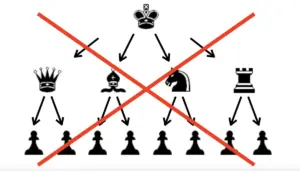
Confronting the reality of this cultural cancer requires acknowledging that traditional markers of patriotism and professional compliance have frequently served to suppress individual ethical judgment. Rather than advocating for new command-and-control hierarchies—which inevitably spawn fresh empire-building cycles—communities are increasingly exploring how to revoke the social license of life-destroying institutions.
Decades of heavy propaganda have culminated in a state of what analysts term "economic eclipse," where ecological realities are entirely obscured by financial abstractions. As societies slowly awaken from this hypernormal illusion, the true ecological costs become unmistakably clear. Recovering from economic addiction requires moving away from the extractive illusion of capital and toward regenerative spaces rooted in trust, community, and mutual aid.
True cultural recovery cannot occur in isolation. By creating human-scale spaces of trust, honoring the sacred rhythms of Gaia, and dismantling the life-denying doctrines of the corporate monoculture, communities can begin the arduous but essential work of healing, stepping beyond the WEIRD Spectacle and returning to a sustainable, relational existence within the living world.