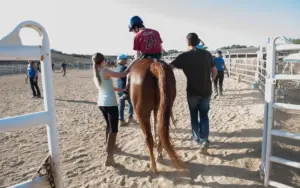








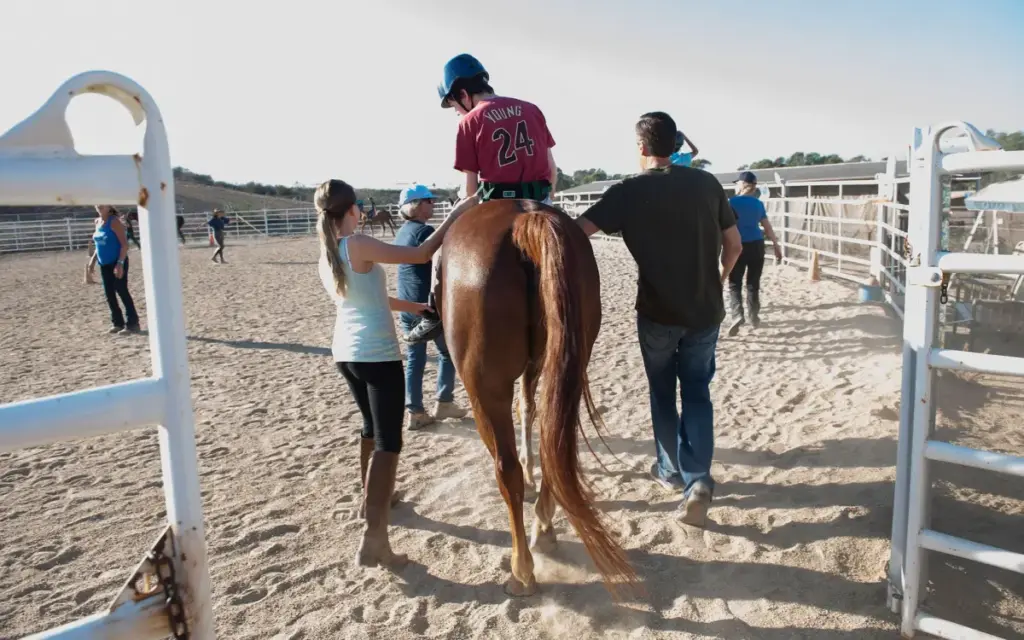
A teenager heads out into the corral, boots crunching against the dirt, preparing for a riding session at the Therapeutic Riding Center in Huntington Beach, California. For this young person, as for countless others navigating the complexities of developmental conditions, the moments spent in the presence of magnificent animals and open air represent far more than just a recreational pastime. According to groundbreaking new research published this month in the esteemed medical journal Pediatrics, riding horses—and even simply spending structured time around them—can make a remarkable and life-changing difference for children diagnosed with autism spectrum disorder.
The study provides compelling scientific backing for what equine therapists and families have long observed anecdotally: that equine-assisted activities help to significantly reduce hyperactivity, curb irritability, and substantially boost crucial social skills. In an era where families and clinicians continually search for complementary, engaging therapies that extend beyond the traditional four walls of a doctor’s office, the findings offer a fresh avenue of hope and a scientifically validated approach to supporting youth with co-occurring psychiatric conditions.
To arrive at these insights, researchers undertook a comprehensive and rigorous study involving 236 children diagnosed with autism and various co-occurring psychiatric conditions. All of the participating children fell between the ages of 6 and 16, a critical developmental window during which interventions can profoundly shape behavioral patterns, emotional regulation, and social integration. The sheer scale and demographic breadth of the participant pool lend considerable weight to the study’s conclusions, marking it as a significant milestone in the field of pediatric therapeutic interventions.

The experimental design divided the children into distinct groups to carefully isolate and measure the specific impacts of direct riding versus passive, environment-based interaction. Some of the young participants were assigned to receive therapeutic horseback riding once a week for a continuous duration of 10 weeks. These sessions placed the children directly on the horses, requiring them to learn riding techniques, maintain posture, respond to the animal’s movements, and actively engage with instructors and handlers in the saddle.
In contrast, another group of children took part in a designated barn activity group. During these sessions, the children visited the stables and observed horses in their natural environment, but they did not directly touch, ride, or otherwise interact with the animals. This clever methodological control allowed researchers to parse out whether the sheer sensory environment of the barn—with its unique smells, sounds, and visual stimuli—was driving the changes, or if the active engagement of riding played a distinct role. A third group served as a control of sorts, experiencing an initial waiting period before participating in the barn activity for five weeks, followed by five weeks of active riding lessons.
When the data was analyzed, the results were striking. Both the hands-on riding program and the passive barn activity led to significant, measurable drops in irritability and hyperactivity among the young participants. Furthermore, the findings revealed noticeable improvements in emotional regulation and social behaviors across the children involved, demonstrating that merely being immersed in an equine environment yields positive psychological and behavioral shifts.
However, the research also uncovered a crucial nuance regarding the intensity and nature of the engagement. While both groups saw benefits, the greatest and most profound impact on hyperactivity was specifically observed among the children in the active riding group. This distinction underscores the unique therapeutic value of the physical and dynamic interaction that occurs when a child is mounted on a horse.
"There is something about riding a horse that is particularly helpful for kids with hyperactivity," said Dr. Robin Gabriels, a prominent professor of psychiatry at the University of Colorado School of Medicine who led the multi-faceted study.
Dr. Gabriels and her fellow researchers emphasize that while horseback riding is not necessarily a universal fix or the right fit for every single child with autism, the findings firmly establish it as a valuable, evidence-based way to supplement existing medical, behavioral, and educational treatments. In a clinical landscape where families often grapple with exhaustive lists of therapies, incorporating an equine program can provide a refreshing and highly effective alternative or addition to standard care modalities.
The mechanisms behind these improvements are rooted in the multi-sensory, dynamic nature of the activity. When a child rides a horse, the animal’s rhythmic, three-dimensional movement closely mimics the pelvic motion of human walking. This provides continuous sensory input that can help regulate the child’s central nervous system, calming the physiological drivers of hyperactivity and restlessness. At the same time, the focus required to maintain balance, follow instructor cues, and manage a large animal demands cognitive engagement that pulls a child away from internal anxieties or repetitive behaviors.
Beyond the physical sensations, the social dimension of the stable environment plays an equally vital role. Interacting with riding instructors, volunteers, and fellow participants encourages communication, cooperation, and shared joy. It creates natural social incentives that can be difficult to replicate in more rigid, artificial settings.
"Working with horses gives these kids a chance to do something active, social, and engaging," Dr. Gabriels noted, highlighting the holistic nature of the intervention. "For some children, that may be a particularly effective way to help them develop skills that can be difficult to teach in a traditional clinical environment."
As these findings gain traction within the medical and therapeutic communities, advocates and professionals hope they will pave the way for greater accessibility and insurance coverage for therapeutic riding programs. For families navigating the daily challenges of autism and co-occurring psychiatric conditions, the research offers reassurance that stepping out of the clinic and into the corral can be a powerful step forward.