




Underneath the surface of internalised ableism, a quiet truth persists: no one truly wants to be seen and heard by the masses. Instead, people prefer to be understood and loved deeply by a few, while naturally harbouring the desire to love and help others. According to cultural commentators and neurodivergent advocates, this fundamental yearning is what defines humanity as sacred biological and cultural animals. Continuous dialogues regarding personal and communal commitments are what imbue life with sacred meaning, transforming human existence into a continuous, shared process of becoming.
Following recent discussions surrounding the inability of many autistic individuals to think in terms of rigid social hierarchies—opting instead for relational ways of living—a timely submission arrived at the AutCollab inbox ahead of the upcoming NeurodiVerse Days of Intersectional Solidarity. Submitted by a neurodivergent therapist, community founder, and indigenous practitioner, the inquiry raised a pressing modern dilemma: How does a community promote mutual aid when its members carry heavy interpersonal trauma and struggle with basic trust?
The social challenges embedded in this question echo the dystopian visions foreseen decades ago in the works of social critic Guy Debord and author George Orwell. Today, these warnings have materialized into a deeply disturbing reality, particularly for cultural minorities, neurodivergent populations, and intersectionally marginalised groups. Early societal indoctrination into the tenets of homo economicus—the economic model portraying humans as purely rational, self-interested actors—continually attempts to transform living, breathing people into soulless transactional units. For autistic individuals, and arguably for humanity as a whole, the capacity to form genuine relationships with other humans and the living natural world directly diminishes their ability to engage in cutthroat, transactional business.

Beneath the corrosive layers of internalised ableism, a core observation remains true for all sober human beings: the craving for deep, intimate understanding among a select few outweighs any superficial desire for mass validation.
Commitments Make Us Uniquely Human
Navigating away from the alienation of modern industrial society requires a healthy, alternative pathway. This way forward is accessible only through mutual trust, shared values, and a conscious shift toward beliefs that represent sacred commitments on a human scale.
Unlike broad, sweeping laws imposed by distant authorities, sacred commitments between specific individuals or small, human-scale groups can be communicated verbally or in writing. Crucially, these agreements scale only to the limited number of relationships a person can genuinely maintain. As circumstances change or environmental pressures shift, these commitments can be jointly updated to reflect the evolving needs of the wider ecology. For many who identify as autistic, a significant portion of their foundational beliefs already falls into this category, taking the shape of deeply held agreements with family members, friends, and trusted colleagues.

In stark contrast, the massive trust deficits generated by the culture of homo economicus stem from external cultural programming. These are beliefs absorbed subconsciously from a hyper-competitive social environment, leaving individuals with convictions whose origins they can no longer trace. While this transactional conditioning affects large segments of society, it stands in direct opposition to unilateral commitments made with oneself—commitments that act as a spiritual pledge to life and to Gaia.
Breaking these foundational commitments leaves individuals physically, mentally, and spiritually unwell. Humans evolved as cultural organisms through this exact web of mutual accountability. Bilateral commitments offered by one party serve as sacred invitations to another, honoring the sanctity of all relationships with living beings. Through deliberative dialogue rooted in love, mutual respect, and understanding, these invitations are shaped into enduring spiritual commitments to one another.
Unlike the standardized, cookie-cutter agreements churned out by industrialised mass society, every authentic commitment is meticulously tailored to a specific relationship. By openly sharing these personal and collective commitments within an immediate ecology of care, individuals gain the capacity to better understand, trust, and rely on one another. Achieving this, however, remains an uphill battle in a wider cultural landscape dominated by radical individualism and systemic mutual distrust.
Deliberative Dialogue
Continuous, open-ended dialogues regarding personal and collective commitments form a vibrant and enduring part of lived Māori culture. Practices of this nature offer a blueprint for honoring life and respecting Gaia.
This communicative process breathes sacred meaning into daily existence, providing a framework through which humans create shared meaning together. It embodies the very experience of life as a process of continuous becoming. By extension, explicit social agreements that stretch far beyond a human scale—such as regional or national legislation—carry severe limitations. These systemic shortcomings explain why indigenous communities, including Māori, frequently engage in complex collective action and public advocacy to protect their rights and lifeways.
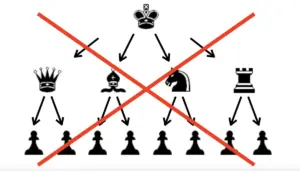
In heavily structured hierarchical societies, legal mandates and policies apply to massive populations while offering minimal input from those directly affected. Consequently, these top-down agreements invariably inflict untold harm, much of which remains entirely invisible to bureaucratic authorities. Humans did not evolve to navigate super-human-scale, hierarchical civilisations; pretending that such structures can be sustained without catastrophic collateral damage is a manifestation of anthropocentric hubris.
Intergenerational trauma compounds these structural failures. Societies must discover ways to break destructive cycles without marginalising or destroying their most sensitive members—the very individuals who are uniquely capable of nurturing ecologies of care free from power dynamics and manipulation. The inherent danger of coercive power is a foundational concern for many advocates. Coercive power sits at the root of societal corruption, and those who wield it regularly are often the architects of ecological destruction. Timeless wisdom warns against the emergence of power gradients within human groups; whenever civilisations abandon this protective social norm, widespread suffering inevitably follows.

Autistic individuals frequently establish sacred commitments with themselves early in life as a strategy to minimize cognitive dissonance. Yet, when attempting to extend these sacred commitments to others, they often discover that many people move through life entirely devoid of firm convictions or genuine commitments. In a socially hyper-competitive world, opportunities to practice de-powered deliberative dialogue are scarce, leaving many to experience life as empty and meaningless. The prevailing culture of homo economicus systematically generates lost souls searching for purpose without a stable foundation upon which to build it.
Co-Creating Ecologies of Care
Sacred commitments anchored in deep mutual trust and shared values serve as the bedrock of all healthy cultures. De-powered dialogue designed to deepen mutual understanding acts as a primary tool for maintaining and evolving these commitments over time, transforming love, compassion, and trust into a virtuous cycle capable of weathering severe crises. Indigenous cultures have preserved this wisdom for generations.
Today, Māori culture shares this vital perspective with a world grappling with the environmental and social consequences of human arrogance. Intersectional solidarity uniting indigenous rights movements, the neurodiversity movement, and disability rights advocacy forms the core of healing from the systemic cultural illness driving the modern metacrisis.
This approach is far from abstract theory; it is mirrored in the lived experiences of depowered, egalitarian worker cooperatives. Daily operations within these spaces rely on de-powered dialogue, omnidirectional learning, and consensus-based decision-making. For many navigating a world dominated by transactional economics, participating in such cooperatives marks the beginning of personal and collective healing. Similarly, hunter-gatherer societies have long practiced deliberative dialogue and reached decisions through consensus—a testament to the beauty and viability of living at a human scale as cultural organisms.
Engaging in de-powered deliberative dialogues within safe, commitment-supported environments allows individuals to truly understand how others think, feel, and believe. Whether conducted verbally or in writing, the essential component is an ongoing commitment to sharing one’s inner world. While this level of vulnerability clashes with the demands of homo economicus, it aligns precisely with what human nervous systems evolved to handle. It is little wonder that many autistic individuals find themselves operating at or beyond their emotional limits in modern society.
Furthermore, as society spends increasingly more time mediated by digital interfaces, the fundamental human capacity to extend deep trust has become rare. Human nervous systems are deeply interconnected; people are embodied spirits embedded in a living world, whereas digital interfaces are lifeless, anthropocentric machines. Humans evolved to be fully present with one another—a reality felt deeply within the human heart.
Co-creating robust ecologies of care remains essential, sacred work that can only be accomplished together.