




When people picture modern robotics, the image that typically comes to mind is one of rigid, highly specialized machines operating on a tightly controlled factory floor. These traditional systems require exhaustive programming, massive datasets, and meticulously managed environments to execute even the simplest tasks. If a single variable shifts or an object is slightly out of place, the entire mechanical process grinds to a halt, resulting in failure.
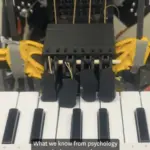
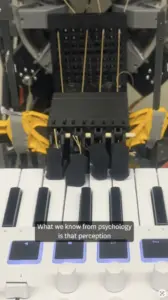
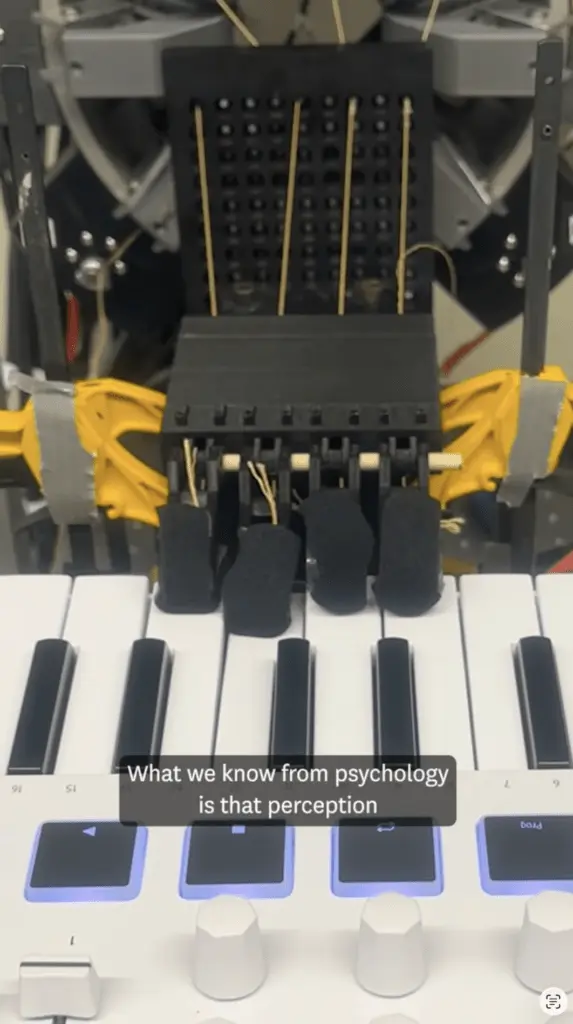
For decades, the robotics industry has grappled with this fundamental limitation: the struggle to bridge the gap between deterministic machine code and the fluid, unpredictable nature of the real world. However, a recent breakthrough emerging from the laboratories of the USC Viterbi School of Engineering is challenging these long-held assumptions. Researchers have successfully developed a novel robotic system known as the "Musician Hand," a simple, tendon-driven apparatus that has achieved something previously thought impossible for unprogrammed machines.
Upon hearing a completely unfamiliar 30-note musical melody, the Musician Hand played it back flawlessly on a standard piano on its very first attempt. Notably, this achievement was accomplished without weeks of grueling machine learning training or access to massive training datasets. Instead, the mechanism required just two minutes of self-taught practice to master the sequence, pointing toward a paradigm shift in how machines interact with their physical surroundings.

While watching a robotic hand play a piano might initially resemble an impressive parlor trick or a technological novelty, the broader implications for the field of assistive technology are profound. This research offers empirical proof that artificial intelligence and robotics can successfully learn from brief, real-world experiences rather than millions of simulated repetitions. By demonstrating an ability to adapt instantly to unpredictable environments, the breakthrough opens the door to a new era of highly personalized, responsive assistive devices that could fundamentally improve the daily lives of individuals with physical and cognitive challenges.
How the Musician Hand Works: The Perception-Action Loop
The core mechanism behind the success of the Musician Hand is rooted in a biological concept known as the "perception-action loop." Rather than relying on traditional software architecture where engineers explicitly program every movement required to press a specific piano key, the USC Viterbi research team designed the system to teach itself how its own physical body operates.
Instead of pre-determining the kinematics of the robotic fingers, the system engaged in a brief period of internal exploration, often likened to motor babbling in biological infants. By moving its tendon-driven fingers and observing the resulting sensory feedback, the robot mapped its own physical limitations, range of motion, and mechanical responses in real time. This continuous loop of perceiving the environment and immediately adjusting its physical actions allowed the device to internalize its mechanical structure within minutes.
Once the Musician Hand understood its own physical capabilities through this rapid self-exploration, it was exposed to the acoustic properties of the 30-note melody. Translating auditory input directly into physical coordination without prior rehearsal, the system successfully executed the complex sequence of keystrokes. This approach bypasses the traditional bottleneck of heavy data collection, demonstrating that machines can achieve high levels of dexterity through efficient, localized interaction with their immediate environment.
Revolutionizing Physical Assistive Tech
The contrast between traditional artificial intelligence models and the architecture of the Musician Hand highlights a major shift in computational efficiency. Modern AI systems, particularly those powering large language models or autonomous vehicles, typically require megawatts of power, extensive server infrastructure, and years of aggregated data to function effectively. In stark contrast, the Musician Hand achieved its sophisticated musical feat using remarkably low-power computing resources, running entirely on a standard, portable laptop.
Because this perceptual robotics model operates with such high efficiency and adaptability, it holds immense promise for the future of physical assistive devices. Traditional prosthetic limbs and robotic braces often require extensive calibration periods, delicate manual adjustments by specialists, and rigid adherence to predetermined movement profiles. If a user encounters an unexpected physical environment or changes their movement pattern, traditional devices frequently struggle to compensate without a complete reprogramming cycle.
Applying the principles behind the Musician Hand could transform prosthetics and orthotics into intuitive extensions of the human body. A robotic prosthetic hand built on these principles could theoretically learn a user’s unique neuromuscular signals and physical habits within minutes of initial use. Rather than forcing a human user to adapt to the rigid limitations of a mechanical device, future assistive technologies could dynamically calibrate themselves to match the specific needs, strengths, and movement patterns of the individual in real time.
Beyond the Physical: Abstract and Cognitive Applications
The significance of this engineering milestone extends well beyond the realm of physical mobility and robotic manipulation. The fundamental concept demonstrated by the research team—utilizing efficient perception to adapt instantly to a user’s immediate context—has the potential to reshape the design of software applications, digital learning tools, and specialized cognitive aids.
In educational technology, adaptive learning software often relies on extensive historical data from thousands of previous students to determine the appropriate pace of instruction. However, a cognitive aid built on rapid perceptual learning principles could assess a user’s comprehension style, attention span, and immediate learning barriers within the first few minutes of interaction. By tailoring educational content dynamically to the individual’s current cognitive state, these tools could provide highly personalized support for students with learning differences or neurodivergent conditions.
Similarly, communication devices and workplace assistive tools could benefit from software architectures that learn user preferences and operational habits on the fly. By continuously observing interactions and adjusting its interface without requiring explicit user configuration, software could reduce cognitive fatigue and provide seamless accessibility support for individuals navigating complex digital environments.
The Future is Adaptable
For decades, the prevailing trajectory of robotics and artificial intelligence has leaned toward demanding that humans conform to the constraints of technology. Users have had to learn specialized command structures, endure lengthy calibration processes, and operate within tightly restricted parameters to make advanced machinery functional.
The successful demonstration of the Musician Hand suggests that the technological landscape is transitioning into a new era. We are moving toward a paradigm where machines are no longer defined by rigid, pre-compiled programming, but by their capacity to quickly, efficiently, and intuitively adapt to human behavior.
By shifting the foundation of robotics away from massive data dependency and toward real-time perceptual learning, the next generation of assistive technology is poised to become something fundamentally different. These advancements signal a future where technological tools do more than merely assist; they will act as intelligent systems capable of understanding the nuances of how human beings move, learn, and navigate the world around them.
Source: USC Viterbi School of Engineering