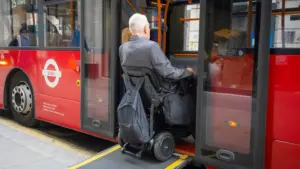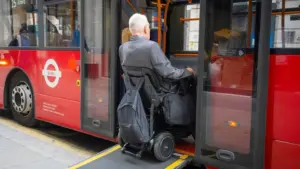






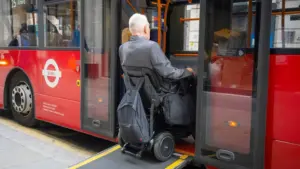


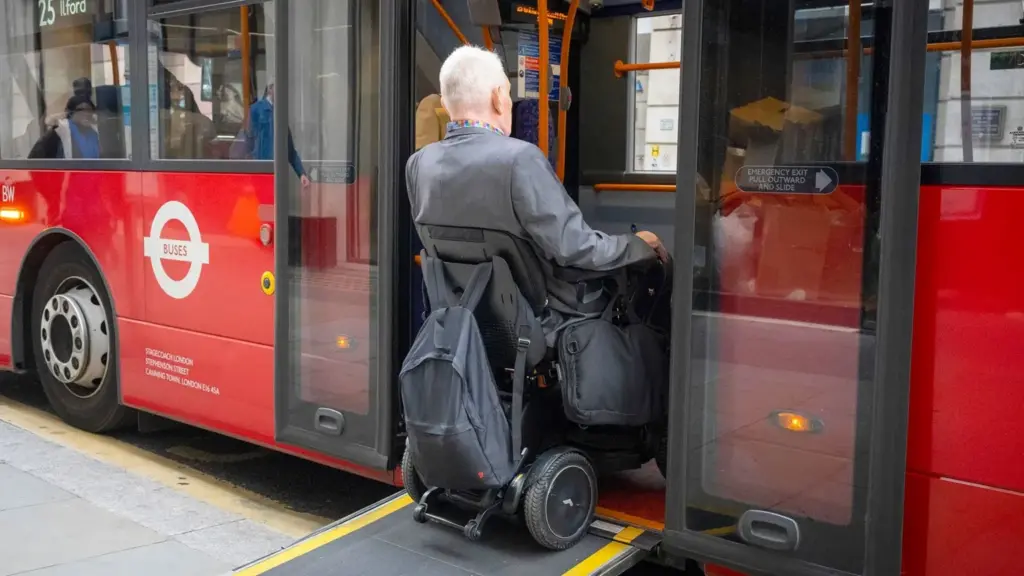
Starting April 1, disabled people across England will be able to travel by bus for free at any time of day, marking a major transformation in public transit accessibility. Previously, free bus passes were restricted to off-peak hours on weekdays, specifically between the hours of 09:30 and 23:00. This historical limitation made it difficult for pass holders to commute to standard morning jobs, attend early educational programs, or participate in late-night social and cultural events. The complete removal of these time limits will benefit an estimated one million people nationwide, effectively turning the concessionary bus pass into a true full-time lifeline for disabled citizens who rely on public transportation for their daily independence and mobility.
The landmark policy follows a successful and widely praised trial conducted within Greater Manchester’s integrated “Bee Network.” The regional pilot demonstrated that removing peak-time restrictions did not destabilize local transit operations, but instead provided essential flexibility for passengers. Furthermore, the nationwide rollout responds to years of persistent campaigning by prominent disability rights organizations, including Scope and Transport for All. Advocates have strongly celebrated the move for eliminating an unfair “postcode lottery,” a system where the practical validity of a concessionary pass previously depended heavily on local municipal rules and regional funding boundaries. However, while disability organizations have praised the government’s decision, they emphasize that this reform is only one step forward, noting that eligibility requirements across different regions still need broader standardization to ensure complete fairness.
To make the program permanent and economically viable, the £60 million scheme is being jointly funded through the Department for Transport and the Department for Work and Pensions. Government officials have framed the sweeping reform as an essential workforce and cost-of-living initiative. This measure joins existing national transit interventions, such as the nationwide £2 single-fare cap, and successfully brings England into alignment with similar 24/7 concessionary transit programs that have been successfully operating in Scotland and Wales for years.
Global Takeaways: How Other Countries Can Make Accessible Commuting Possible
Making daily commuting accessible and affordable for disabled citizens requires a comprehensive combination of policy design, advanced digital systems, and targeted public investment. Public transit networks must be viewed not merely as commercial operations, but as essential public infrastructure that must accommodate every member of society equally.
Why Was the UK Able to Do It?
The ability of the United Kingdom to enact this nationwide reform stems from a combination of centralized policy frameworks, government funding commitments, and sustained advocacy from civil society. By utilizing joint funding from both the Department for Transport and the Department for Work and Pensions, the central government demonstrated that transportation policy is deeply intertwined with employment, social welfare, and economic participation. The successful localized trial within Greater Manchester’s "Bee Network" provided empirical evidence that expanding access was both operationally feasible and socially transformative, giving national policymakers the confidence to implement the change across all of England.
Does It Depend on Existing Infrastructure?
Yes, heavily. Free transit passes only work if the public transport network is physically and technologically accessible to begin with. Without underlying infrastructure that accommodates diverse physical and sensory needs, the financial value of a free pass is significantly diminished. Accessible commuting relies upon several critical physical and digital components:
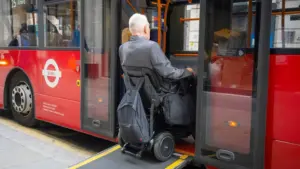
Fleet modernization is a fundamental prerequisite. Buses must be equipped with low-floor designs, functional wheelchair ramps, designated priority seating areas, and secure boarding spaces. Furthermore, mechanical reliability is essential; lifts and ramps must be regularly maintained so that passengers are not stranded unexpectedly.
Clear and multi-modal communication systems are equally vital. Real-time audio and visual announcements inside vehicles and at bus stops ensure that passengers with visual or hearing impairments can navigate routes independently and with confidence. Digital integration, including accessible smartphone applications and real-time tracking boards, helps travelers plan journeys accurately and avoid disruptions.
Driver training also plays an indispensable role. Transport staff must be adequately trained in disability awareness, wheelchair securement procedures, and assisting passengers with hidden disabilities or specific communication needs. Infrastructure is only as effective as the personnel operating it.
What Is Needed to Make Commuting Affordable for People with Disabilities?
Achieving genuine affordability and accessibility in public transportation requires intentional structural measures that go beyond simple fare exemptions.
First, eliminating arbitrary geographic boundaries and inconsistencies is paramount. A national or regionally harmonized pass ensures that citizens do not lose their transit rights simply by crossing municipal or county lines, thereby eradicating the postcode lottery that has historically disadvantaged rural and cross-border travelers.
Second, removing temporal restrictions, as England is now doing by abolishing the off-peak rule, is critical for economic inclusion. Concessionary travel must align with modern working hours, educational schedules, and social rhythms. Restricting free travel to off-peak hours inherently penalizes those who need to travel during standard morning and evening rush hours for employment or professional development.
Third, securing dedicated, long-term government funding ensures that transit authorities can absorb the costs of expanded access without reducing service frequency or cutting routes in vulnerable communities. Collaboration between departments overseeing transport, work, and social welfare ensures that mobility is recognized as a fundamental pillar of economic participation and societal integration.