







As the long, unscripted days of summer replace the structured routines of the school year, families and educators often face a distinct set of challenges regarding children’s daily rhythms and sensory processing needs. While the season offers an abundance of outdoor adventures, trips to the beach, and playground visits, the absence of a traditional schedule can sometimes lead to increased screen time and sensory dysregulation. To help combat this, pediatric occupational therapy experts are highlighting practical, everyday strategies—including sensory circuits, heavy work, and specialized activity packets—designed to keep children regulated, focused, and active throughout the summer months.
The core of effective summer sensory management lies in understanding how children interact with their environment. Pediatric occupational therapists emphasize that parents often mistakenly believe they need expensive equipment or elaborate setups to provide meaningful sensory input. In reality, simple household items and everyday backyard activities can effectively deliver the necessary proprioceptive and vestibular input. By integrating active play naturally into the day, parents can support a child’s attention, emotional regulation, and overall readiness for learning without adding stress to their summer routines.
Summer Sensory Activities by Sensory System
When designing a summer routine, professionals often rely on menu-style lists that allow parents and educators to tailor tasks to a child’s specific needs. These targeted approaches break down sensory experiences into distinct developmental categories, ensuring that children receive balanced input across all sensory systems.

Proprioceptive input, which helps the body understand its position in space, is particularly crucial during the summer when children may spend more time on phones, tablets, or video games. Heavy work activities—such as carrying buckets, digging in the sand, pushing wagons, climbing playground equipment, or helping with yard work—provide the deep muscle and joint input necessary to organize the nervous system. These movement opportunities support attention, emotional regulation, and active environmental exploration.
Similarly, the vestibular system, which governs balance, movement, and head position, thrives during the summer months. Swamping, spinning, rolling down grassy hills, navigating obstacle courses, and swimming offer invaluable vestibular input that helps compensate for the loss of structured school-day movement. Engaging in these active experiences supports balance, coordination, visual attention, and postural control.
Tactile exploration also plays a vital role in fine motor development and emotional regulation. Summer naturally provides countless opportunities for hands-on sensory experiences through sand, water, grass, mud, shaving cream, finger paint, bubbles, and gardening. Activities like digging in a sandbox, washing toys, creating mud kitchens, or collecting nature treasures encourage finger dexterity and confidence with new sensory textures.
Furthermore, oral motor development can be seamlessly integrated into warm-weather routines. Drinking smoothies through straws, blowing bubbles, eating crunchy fruits and vegetables, enjoying frozen treats, or playing with whistles and pinwheels strengthen the muscles used for eating, drinking, speech, and breathing. These oral motor exercises provide calming sensory input, offering an easy way to support regulation during long summer days.
Structuring the Day with Summer Sensory Circuits
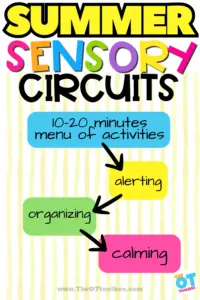
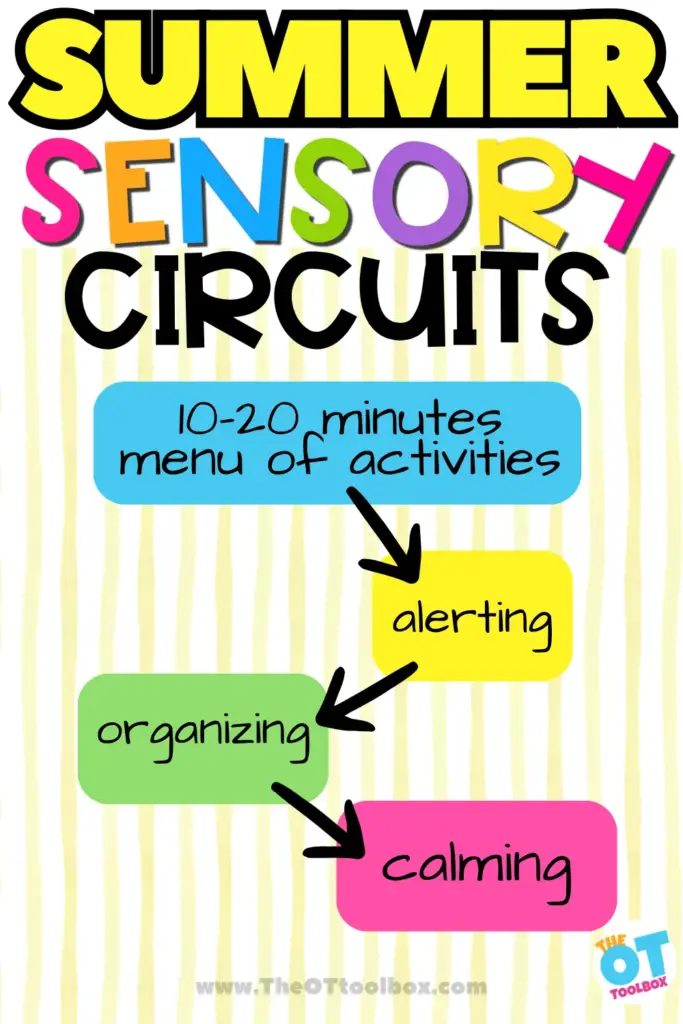
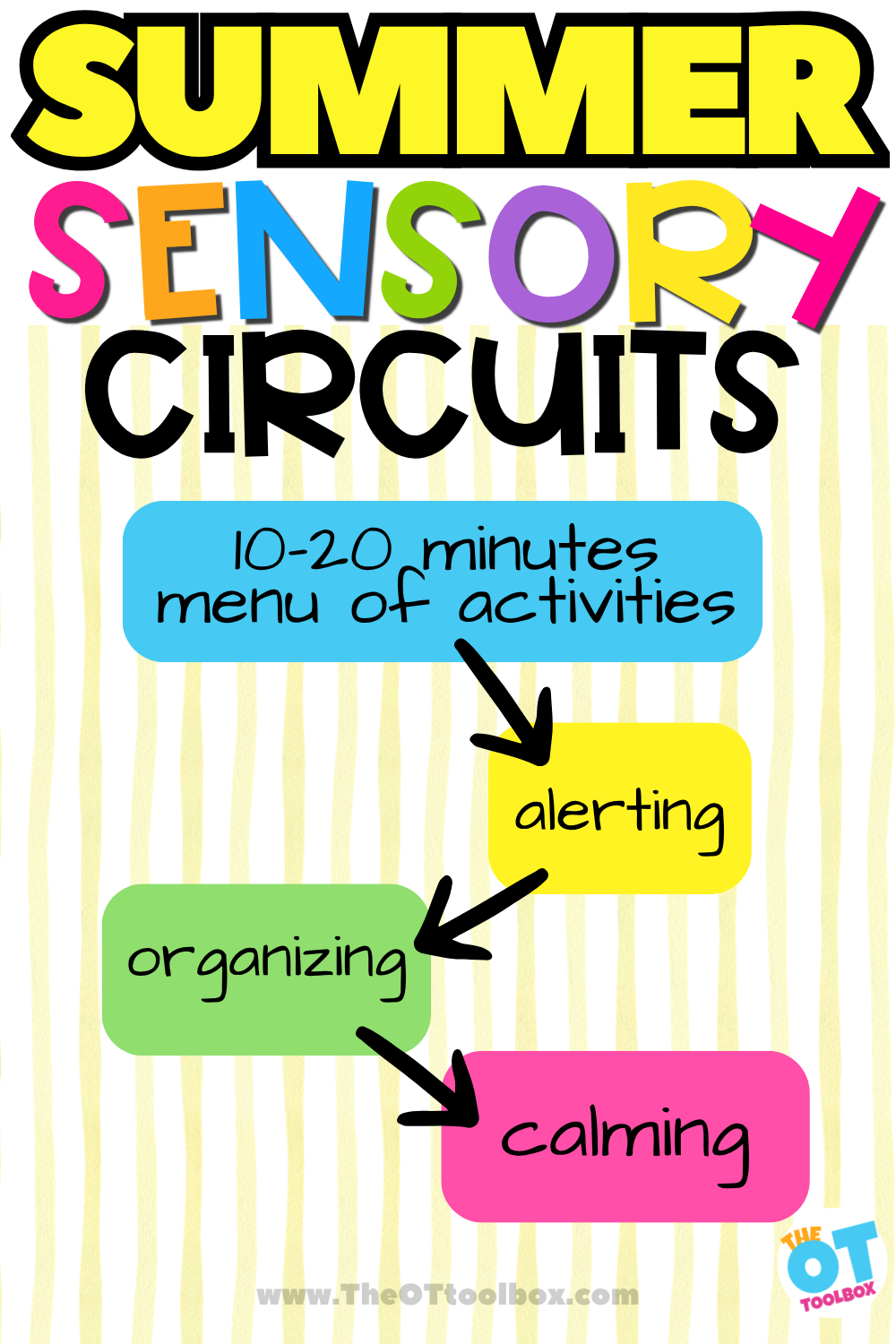
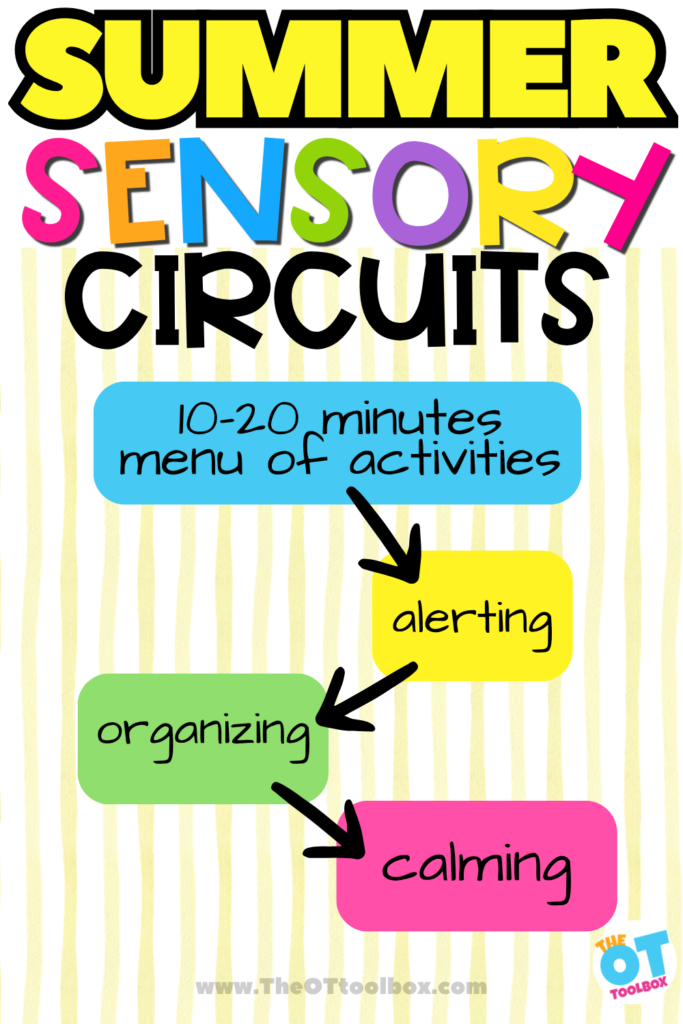
For educators running summer school classrooms, camp counselors, and parents managing busy households, maintaining a consistent routine can be challenging. This is where sensory circuits offer a practical solution. Unlike a traditional sensory diet that weaves strategies throughout the entire day, a sensory circuit simplifies the process into a predictable, continuous 10-to-20-minute routine using a structured activity menu.
The effectiveness of a sensory circuit relies on its intentional progression. By moving sequentially through specific types of sensory input, caregivers can help a child’s nervous system transition step by step from an ungrounded state to a calm, focused one.
The sequence begins with alerting activities designed to wake up the system. Using controlled vestibular and proprioceptive input, such as jumping jacks or light stretching, energizes the brain and body. This is followed by organizing activities that require motor planning, balance, and timing, helping children coordinate their movements and thoughts. Finally, the circuit concludes with calming activities, incorporating deep pressure and resistance to ensure children finish the routine centered, regulated, and ready for quiet time or transitions.
Experts note that completing a circuit first thing in the morning sets a positive tone for the day, while a midday session serves as a helpful reset following a chaotic break. By utilizing visual guides and simple menus, parents and educators can easily adapt these routines to fit individual children’s coping strategies.
Expanding Summer Programming and Resources
Beyond daily sensory circuits, professionals continue to develop comprehensive resources to support summer programming. Specialized guides, such as the Summer Sensory Activity Guide and broader occupational therapy bundles, provide structured ideas for home programs, tutoring sessions, and summer camps. These packets cover essential developmental areas including handwriting, visual perceptual skills, fine motor coordination, and gross motor development.

Created by experienced occupational therapists like Colleen Beck, who has spent decades working in school-based and pediatric settings, these practical tools aim to bridge the gap between clinical therapy and everyday play. By utilizing low-prep, accessible ideas—ranging from pool noodle games and water play to nature collections and sidewalk chalk challenges—parents, teachers, and therapists can ensure that children build foundational skills while enjoying a fun, active, and well-regulated summer season.