








For the vast majority of human existence, the world around us has appeared solid, certain, and undeniable. We move through our daily lives operating under the intuitive assumption that our senses—our eyes, ears, and touch—act as high-definition windows into the external world. We trust that if we see a chair, a building, or a person, it is because they are objectively present, exactly as we perceive them. However, contemporary neuroscience is increasingly converging on a startlingly different conclusion: the brain’s perception of reality is not a direct readout of the world, but rather a complex, calculated estimation.
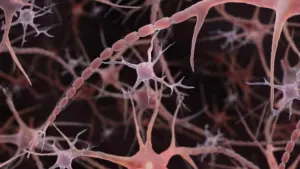
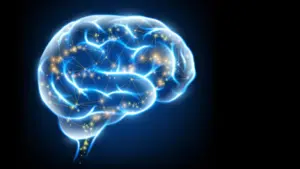
Modern research suggests that the brain is essentially a prediction machine. Rather than passively recording the environment, it uses sensory signals to make constant, high-speed guesses about what is out there, prioritizing survival over objective accuracy. This means that the objects and events we encounter daily, despite their apparent concreteness, may be as much a product of our internal expectations as they are of external stimuli. Philosophers have debated this for centuries, but today, neuroscientists are providing empirical evidence that our reality is often a construction—one that is prone to errors, biases, and profound misinterpretations.
The Predictive Brain: Reality as a Best Guess
To understand how our brains construct this reality, one need look no further than the work of psychologist Lisa Feldman Barrett. In her book, Seven and a Half Lessons About the Brain, Barrett illustrates the fallibility of perception with a harrowing anecdote from the civil wars in southern Africa. A soldier, patrolling a dense forest, suddenly spots a line of camouflaged combatants armed with AK-47s emerging from the brush. His heart rate spikes, his muscles tense, and he raises his rifle, finger hovering over the safety. Before he can fire, a comrade intervenes, grabbing his arm and whispering, "Don’t shoot, it’s just a boy."

In that split second, the soldier’s brain had been primed by the extreme stress and trauma of combat. It had constructed a "prior"—a strong internal expectation based on his past experiences—and imposed that template onto the ambiguous sensory data of the forest. The visual noise of the trees and shadows was forced to fit the narrative of an imminent threat. It was only when his comrade provided new, conflicting information that his brain corrected its prediction, revealing the "enemy" to be a ten-year-old boy herding cows with a wooden stick.
This story is a perfect case study in predictive processing. The brain does not wait for full sensory data to make a decision; it makes a best guess based on past experience and uses sensory input only to refine or correct those predictions. If the environment is ambiguous, the brain’s "prior" can completely override reality.
The Enigma of the Lilliputian Hallucination
The complexity of these internal constructions has recently been brought into sharp focus by a mysterious fungus. Researchers at the University of Utah recently turned their attention to Lanmaoa asiatica, a mushroom found in Yunnan, China, and the Philippines. For centuries, local populations in these regions have known that consuming the mushroom raw or semi-cooked triggers a remarkably specific and surreal experience: the vision of tiny people jumping, climbing, and running around the observer.
The researchers, by sequencing DNA samples from both regions, confirmed that the mushrooms are indeed the same species, regardless of their local names. Most intriguing, however, was the laboratory analysis: the mushrooms do not contain any of the well-known hallucinogenic compounds, such as psilocybin or ibotenic acid, usually associated with psychoactive fungi.
This phenomenon, known as the "Lilliputian hallucination"—named by French psychiatrist Raoul Leroy in 1909 after the tiny islanders in Jonathan Swift’s Gulliver’s Travels—is distinct from the typical experiences induced by psychedelics. While substances like psilocybin often produce subjective, kaleidoscopic patterns, warped geometries, or shifting colors that vary wildly based on a person’s mindset and environment, the Lanmaoa asiatica experience is unnervingly consistent. Users, despite having no communication with one another across different eras and cultures, report the same specific vision of miniature human figures.
A Symptom of the Brain’s Internal Machinery
Lilliputian hallucinations are not exclusive to the ingestion of this mushroom. Medical literature has documented the phenomenon in a variety of disparate conditions, including alcohol withdrawal, specific stages of dementia, Alice in Wonderland syndrome, schizophrenia, and even macular degeneration. In the case of macular degeneration, the hallucinations occur not because of a mental disorder, but because of a failing sensory organ. When the eyes fail to provide sufficient input to the visual cortex, the brain—deprived of its usual data stream—begins to generate its own content, pulling from its internal reservoir of memory and imagery.
The fact that Raoul Leroy himself experienced these visions, and observed the same pattern in his patients, underscores the consistency of the phenomenon. It suggests that the brain possesses an inherent, perhaps "hard-wired," template for these visions. The question remains: why tiny people? Why not geometric shapes, alien landscapes, or abstract visions? The existence of such a specific, recurring hallucination suggests that there are regions in the brain—perhaps related to our evolutionary focus on social interaction and the monitoring of other human beings—that house a dormant reservoir of imagery which can be unlocked by chemical or sensory disruption.
Controlled Hallucination: The Line Between Truth and Illusion
Anil Seth, a neuroscientist at the University of Sussex, argues that what we call "perception" is essentially a "controlled hallucination." In this framework, the solid, stable world we experience is simply the brain’s most plausible prediction, occasionally tethered to reality by sensory feedback. If this is the case, the traditional distinction between a hallucination and ordinary perception begins to collapse. Both are constructs. The only functional difference is that "normal" perception is tightly anchored to incoming sensory data, while a hallucination is a construct that has drifted away from that anchor.
This perspective leads to a provocative, perhaps even unsettling, statistical argument: if a sufficient number of people independently construct the same illusion without having communicated, we stop labeling it as a hallucination and start calling it the truth. If we all see the same sun, the same mountains, and the same colors, we deem them real. But the Lanmaoa asiatica mushroom forces us to ask: what if the "truth" is merely a shared, involuntary construct?
The mushroom’s ability to induce this specific, shared hallucination in unrelated individuals across different continents raises profound philosophical and scientific questions. It challenges the assumption that our collective consensus is a proxy for objective reality. If a chemical compound can reliably pull the same "Lilliputian" image from the human brain, are we seeing a universal aspect of human neurobiology, or are we tapping into a deeper, hidden architecture of the mind?
Previously, reports of supernatural or inexplicable phenomena were easily dismissed as subjective errors or individual hallucinations. However, the study of Lanmaoa asiatica suggests that we may need to reconsider the status of collective experiences. If a hallucination can be shared by so many people, independently and across time, the boundary between "subjective error" and "objective reality" becomes significantly more porous than we once believed.
As we continue to map the brain’s predictive processes, we are left to grapple with a sobering possibility: even when a perception is shared by an entire population, we may still be justified in doubting whether it represents the world as it truly is. In the words of the mystery that surrounds these tiny, jumping figures, we are reminded that our eyes show us not the world itself, but the world as our brains have decided to frame it for our survival. Whether those frames contain truths or merely very convincing illusions remains one of the greatest questions in modern neuroscience.