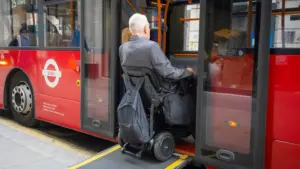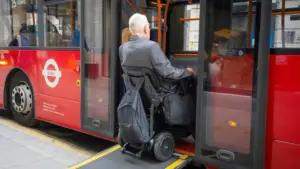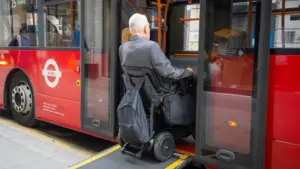







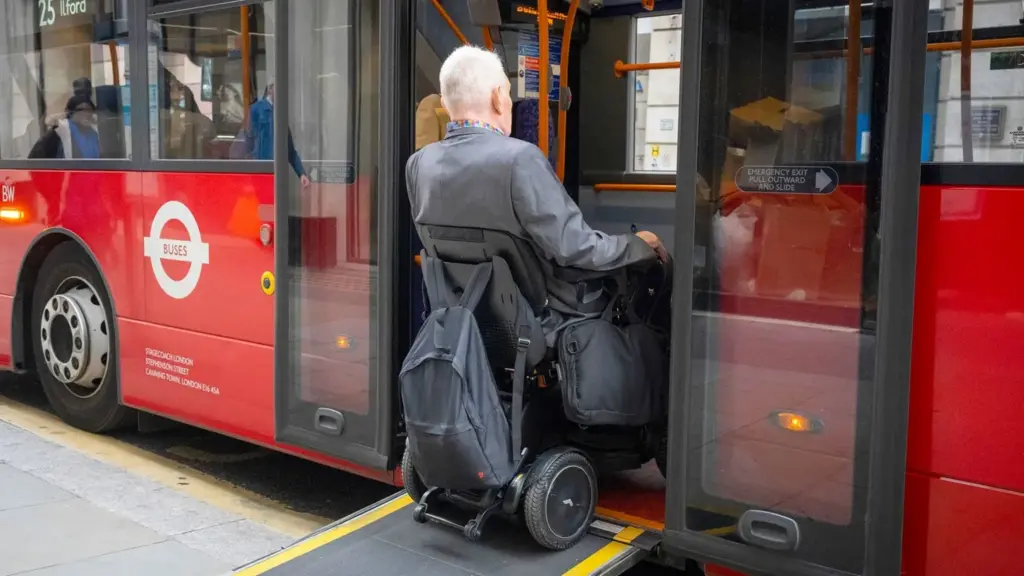
Starting April 1, disabled people across England will be able to travel by bus for free at any time of day, marking a monumental shift in the country’s public transportation accessibility. Previously, free bus passes were restricted to off-peak hours on weekdays—specifically between 09:30 and 23:00. This long-standing limitation created significant barriers for pass holders attempting to commute to standard morning jobs, early appointments, or late-night events, effectively locking many out of the early morning economy and social opportunities.
The removal of these time limits will benefit an estimated one million people nationwide, transforming bus travel from a restricted convenience into a true full-time lifeline. By removing the morning and evening rush-hour barriers, the policy acknowledges that the daily lives, employment schedules, and social commitments of disabled individuals do not conform to off-peak hours.
The nationwide policy follows a highly successful trial in Greater Manchester’s integrated “Bee Network” and responds directly to years of relentless campaigning by disability rights organizations, most notably Scope and Transport for All. Advocates have widely celebrated the move for eliminating an unfair "postcode lottery," a fragmented system where the validity and terms of concessionary bus passes depended heavily on local municipal rules rather than a unified national standard.

Despite the widespread praise for the upcoming change, disability organizations emphasize that this reform is only one crucial step forward. Advocates note that eligibility requirements across various regions still need broader standardization to ensure true equity. Currently, navigating the system can still involve varying local interpretations of disability criteria, meaning that while the hours of use are becoming uniform, the baseline qualification process remains an area targeted for future reform.
To secure the longevity of the program and make the transition permanent, the £60 million scheme is being jointly funded through the Department for Transport and the Department for Work and Pensions. Government officials are framing the major policy reform as an essential workforce and cost-of-living initiative. This investment aligns with existing transit measures designed to ease financial pressures on the public, such as the nationwide £2 single-fare cap. Furthermore, the reform successfully brings England in line with similar 24/7 concessionary transit programs that have been successfully operating in Scotland and Wales for years.
Global Takeaways: How Other Countries Can Make Accessible Commuting Possible
Making daily commuting accessible and affordable for disabled citizens requires a careful combination of deliberate policy design, advanced digital systems, and targeted public investment. The UK’s latest reform highlights how systemic financial backing can reshape national infrastructure to better serve marginalized communities.
Why Was the UK Able to Do It?
The ability to implement a nationwide 24/7 free bus travel policy stems from a combination of centralized funding, political pressure, and proven regional models. By pooling resources from both the Department for Transport and the Department for Work and Pensions to secure a £60 million funding package, the central government demonstrated that large-scale transit concessions are achievable when backed by cross-departmental financial commitments. Furthermore, the policy was not devised in a vacuum; it directly leveraged the empirical success and operational lessons learned from Greater Manchester’s "Bee Network" trial. When combined with sustained, decades-long advocacy from prominent disability rights organizations like Scope and Transport for All, the government faced a clear mandate to eliminate regional disparities and modernize the national concessionary travel scheme.
Does It Depend on Existing Infrastructure?
Yes, heavily. Free transit passes only work if the public transport network is physically and technologically accessible. Concessionary fare policies cannot succeed in isolation; they rely entirely on a robust foundation of accessible infrastructure. This includes not only physical adaptations—such as low-floor buses, functional ramps, audio-visual announcement systems, and wheelchair-accessible spaces—but also digital and technological integration. Reliable real-time passenger information, standardized ticketing systems, and well-maintained transit stops are vital components that ensure disabled passengers can actually board and navigate the system safely. Without these underlying infrastructural investments, free travel passes lose much of their practical value, as physical and systemic barriers would continue to restrict mobility regardless of financial cost.
What Is Needed to Make Commuting Affordable for People with Disabilities?
Achieving true affordability and accessibility in public commuting requires a multifaceted approach that goes beyond simply waiving fares. First, governments must establish universal, standardized eligibility frameworks to eliminate regional disparities, ensuring that a disabled citizen receives the same transit rights regardless of where they live. Second, dedicated public funding models—such as joint investments from transport and welfare departments—are essential to subsidize operators and sustain concessionary schemes over the long term without compromising service quality. Third, continuous collaboration with disability rights organizations and advocacy groups is vital to identify operational bottlenecks, policy blind spots, and evolving commuter needs. Finally, financial affordability must be paired with continuous investments in physical fleet modernization, staff training, and inclusive digital infrastructure to ensure that the entire journey, from planning to arrival, is genuinely accessible to all members of society.