






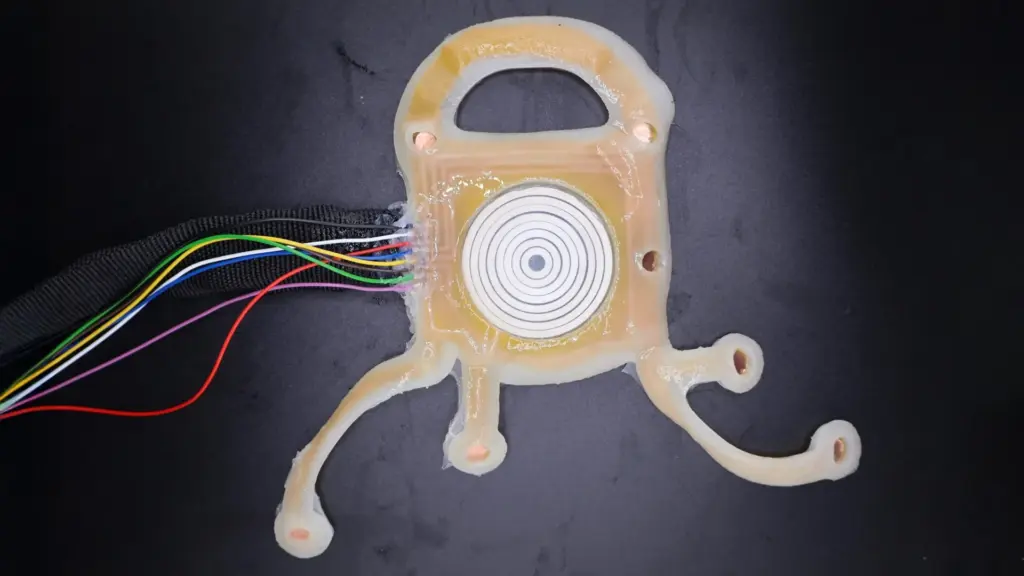
A revolutionary new wearable device, capable of optimizing the most restorative phases of sleep without the need for pharmaceuticals or surgical intervention, has been developed by a team of researchers at the University of Texas at Austin. This novel technology, dubbed NEUSLeeP, utilizes gentle, low-intensity ultrasound waves to stimulate specific deep-brain regions. By doing so, the patch helps individuals transition into Rapid Eye Movement (REM) sleep more rapidly and increases the total duration of time spent in this critical stage of the sleep cycle.
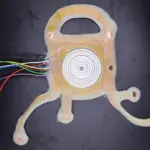
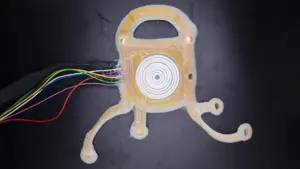
The NEUSLeeP device is a soft, flexible patch designed to adhere comfortably to the skin. Beyond its stimulation capabilities, it integrates high-precision electrodes that monitor neural activity in real time. This dual-action functionality allows the research team to influence the brain’s sleep-regulatory regions while simultaneously tracking how those specific areas respond to the ultrasound input. This closed-loop approach represents a significant leap forward in the field of sleep medicine and neurotechnology.
The Critical Role of REM Sleep
REM sleep is far more than just a period of vivid dreaming; it is a vital biological state during which the brain processes emotions, consolidates memories, and recalibrates its ability to adapt to environmental stressors. Because REM sleep is foundational to cognitive and psychological health, disruptions to this stage are frequently associated with a variety of mental health conditions, including anxiety, depression, and post-traumatic stress disorder (PTSD).
"This is the first time we’ve been able to noninvasively target deep brain regions involved in REM sleep, while simultaneously monitoring brain activity," explained Kai Wing "Kevin" Tang, a recent UT biomedical engineering Ph.D. graduate who spearheaded the research effort. By reaching these deep-seated structures—which were previously difficult to influence without invasive measures—the team has opened a new frontier in sleep science.
Huiliang "Evan" Wang, an assistant professor in the Cockrell School of Engineering’s Department of Biomedical Engineering, served as the principal investigator for the project. He noted that the primary goal was to create a technology that is not only effective but also highly accessible. "Our skin-attached NEUSLeeP patch opens up new possibilities for understanding sleep and treating sleep disorders in home settings," Wang stated. By bringing this technology out of the clinical laboratory and into the bedroom, the team hopes to provide a scalable solution for the millions of people who suffer from chronic sleep disturbances.
Measurable Improvements in Sleep Architecture
The efficacy of the NEUSLeeP device was put to the test in a recent study involving 28 participants, the findings of which were published in the journal Nature Communications. The results were striking: participants wearing the patch entered REM sleep an average of 43 minutes sooner than they did without the intervention. Furthermore, the total duration of their REM sleep increased by approximately 16 minutes per session.
These improvements were observed consistently across a diverse group of volunteers, including both healthy sleepers and individuals who had previously reported difficulties with their sleep quality. Crucially, the participants reported that the device was unobtrusive and comfortable to wear throughout the night, with minimal to no adverse effects.
The mechanism behind this success lies in the unique properties of ultrasound. Unlike pharmacological sleep aids, which often affect the body systemically and can lead to grogginess or unwanted side effects, ultrasound energy can be focused with high precision. By targeting the specific neural circuits responsible for initiating REM sleep, the device acts as a gentle conductor, guiding the brain into its most restorative states. Because the frequencies used are well beyond the range of human hearing, the stimulation is silent and non-disruptive, allowing for a seamless integration into the user’s natural sleep cycle.
While these initial results are highly promising, the research team is quick to emphasize that this was a relatively small study. Future investigations involving larger cohorts will be essential to determine the long-term consistency of the device’s benefits and to establish how the brain adapts to sustained ultrasound intervention over months or years.
Beyond Sleep: Emotional Regulation and Stress Response
One of the most intriguing findings of the study was that the benefits of the NEUSLeeP patch may extend far beyond the sleep cycle itself. Among the healthy participants, the research team observed a measurable improvement in heart rate variability (HRV). HRV is a key physiological metric that indicates how the autonomic nervous system responds to stress and adapts to the fluctuating demands of daily life.
Additionally, functional brain imaging conducted during the study revealed changes in the neural circuits responsible for emotional processing. These findings suggest that by optimizing REM sleep, the device may indirectly bolster a user’s emotional regulation and their resilience against external stress.
"REM sleep is not just about dreaming—it’s about emotional reset and stress adaptation," explained Gregory Fonzo, an assistant professor in the Dell Medical School’s Department of Psychiatry and Behavioral Sciences and a co-principal investigator on the project. "By enhancing REM, we may help people better cope with stress and improve their overall well-being."
This connection between sleep architecture and mental health is of particular interest to clinicians, as many psychiatric conditions—most notably PTSD and chronic anxiety—are characterized by significant deficits in REM sleep. Currently, the medical community relies heavily on behavioral therapies and medications to treat these conditions. While these methods are often helpful, they do not always address the underlying biological dysregulation of sleep. A wearable device that can intervene in these biological processes without the risk of drug dependency or surgical complications represents a potentially transformative addition to the psychiatric toolkit.
A Path Toward Clinical Adoption
As the research progresses, the team is moving toward larger-scale clinical trials designed to evaluate the patch’s efficacy in patients specifically diagnosed with PTSD, depression, and chronic insomnia. If these trials prove successful, the device could redefine how clinicians manage sleep-related mental health disorders.
Beyond its therapeutic potential, the technology offers a robust platform for home-based sleep monitoring, providing scientists with high-fidelity data on how deep-brain structures influence sleep patterns in real-world environments. The researchers are also exploring the potential for personalized therapy, where the ultrasound stimulation patterns could be adjusted in real time to match the unique neurobiology of an individual patient.
"Our vision is a future where patients with mental health disorders can optimize their sleep with a noninvasive and safe treatment," said Dr. Vincent Mysliwiec, a professor at UT Health San Antonio and a leading expert in sleep disorders who also served as a co-PI on the project. "This technology could help millions of people get the restorative sleep they need."
To move the technology from the laboratory toward commercial availability, the researchers are collaborating with the university’s commercialization unit, Discovery to Impact. A patent application covering the NEUSLeeP technology has already been filed, marking a significant step in the effort to bring this innovation to the public.
The research team, which includes a broad coalition of experts from the UT Department of Biomedical Engineering, the College of Natural Sciences, and the Fralin Biomedical Research Institute at Virginia Tech, remains committed to the rigorous testing required to validate this technology. As the project enters its next phase, the prospect of a wearable, noninvasive, and scientifically grounded solution for sleep improvement continues to gain momentum, offering hope to a global population increasingly affected by the consequences of poor sleep.