







A significant breakthrough in neurobiology has identified a protein that acts as a natural guardian of the brain, offering scientists a promising new avenue to combat Alzheimer’s disease and other debilitating forms of dementia. Researchers at Sanford Burnham Prebys have discovered that by increasing levels of a protein known as SORLA, they can effectively reduce the accumulation of toxic protein tangles that drive brain damage, while simultaneously preserving the critical connections required for nerve cells to communicate.
The findings, published in the journal Science Advances, represent a vital step forward in the quest to treat neurodegenerative diseases. For decades, the medical community has sought ways to strengthen the brain’s own intrinsic protective mechanisms. This study provides some of the most compelling evidence to date that such a strategy is not only plausible but could eventually lead to entirely new classes of clinical therapies. By testing their hypothesis in mouse models, the research team demonstrated that boosting SORLA levels mitigated several hallmarks of Alzheimer’s, including brain shrinkage and the buildup of abnormal tau proteins.
The Role of Tau in Brain Health and Disease
To understand the magnitude of this discovery, one must look at the function of tau. Under normal, healthy conditions, tau proteins are essential components of the brain’s structural integrity. They serve as stabilizers for microtubules—the microscopic scaffolding that provides internal support to neurons. These microtubules are the "highways" of the nerve cell, facilitating the transport of vital nutrients and signals across the intricate networks of the nervous system.

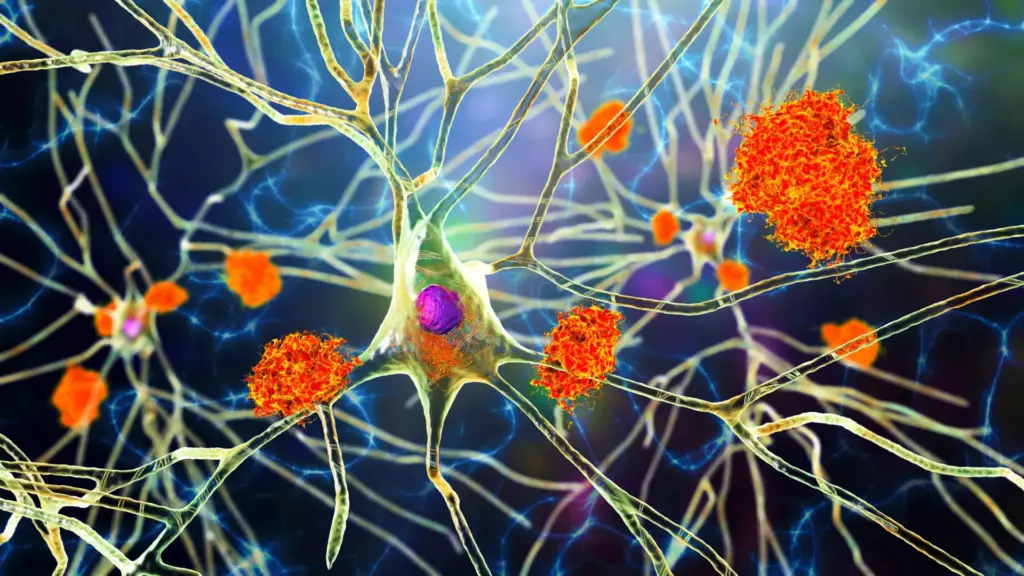
However, in the context of Alzheimer’s disease and a group of related conditions collectively known as tauopathies, this process goes awry. Tau proteins undergo pathological changes, causing them to detach from microtubules and adhere to one another. This "misfolding" results in the formation of harmful clumps known as tau tangles. As these tangles proliferate, they disrupt the normal biological activities of nerve cells, eventually leading to widespread neuronal death and the cognitive decline characteristic of dementia.
SORLA: A Double-Action Defense
The protein at the center of this study, SORLA (sorting-related receptor with A-type repeats), has long been a subject of intense scientific interest. In previous years, researchers established that SORLA plays a crucial role in limiting the production and aggregation of amyloid-beta, another protein notorious for forming the plaques that represent the other primary pathological hallmark of Alzheimer’s disease.
"In the last 15 or 20 years, considerable data has come out from our lab and other groups showing that SORLA can suppress one of the hallmarks of Alzheimer’s disease—amyloid-beta generation and accumulation," said Timothy Huang, PhD, an assistant professor in the Center for Neurologic Diseases at Sanford Burnham Prebys. "Very little was known, however, about whether SORLA affected the tau tangles reflected on the other side of the coin in Alzheimer’s disease."
To bridge this knowledge gap, the team engineered a specialized mouse model. By breeding mice that were genetically modified to produce additional human SORLA with mice prone to developing tau tangles, brain atrophy, and cognitive impairment, the researchers were able to create a unique test environment. This allowed them to observe whether elevating SORLA levels could act as a therapeutic buffer against the progression of tau-related damage.
Boosting SORLA to Curb Neurodegeneration
The results of the experiments were striking. Elevated SORLA levels provided a multi-layered defense against the processes that drive neurodegeneration. One of the most significant impacts involved "hyperphosphorylation." This is a chemical process where an excessive number of phosphate groups attach to tau proteins, effectively changing their shape and behavior, which in turn triggers the formation of toxic tangles. The researchers found that higher levels of SORLA effectively reduced this abnormal modification, preventing the initial steps of the tangling process.
Furthermore, SORLA acted as a deterrent against the "seeding" of tau. Misfolded tau has the ability to act as a template, or seed, that encourages healthy tau proteins to misfold as well. This cascading effect allows toxic tau aggregates to multiply and spread throughout the brain. By inhibiting this seeding process, SORLA helped contain the damage to a localized area.
Beyond the tangles themselves, the protein played a vital role in preserving synapses—the specialized junctions where neurons communicate. By maintaining synaptic plasticity—the brain’s ability to modify and strengthen connections, which is the physical basis of learning and memory—SORLA helped sustain cognitive function despite the presence of disease-related stress.
"When you upregulate SORLA, you can suppress the negative effects found in tauopathies," said Huijie Huang, PhD, a staff scientist in the Huang lab and the study’s lead author. "We found there was less brain atrophy and less tau accumulation, which was very exciting to see."
The Consequences of Deficiency
To confirm that the benefits were directly tied to SORLA, the team performed a counter-experiment by examining mice that lacked the Sorl1 gene, which provides the biological instructions for producing the protein. When these mice were unable to generate SORLA, the researchers observed a marked increase in the severity of neurodegenerative symptoms.
"The opposite turned out to be true when we deleted the ability to produce SORLA proteins," Tim Huang noted. "A lack of SORLA exacerbated the harmful effects observed in tauopathies." These contrasting outcomes serve as a powerful confirmation that SORLA is not merely a bystander, but a critical protective element whose presence or absence dictates the trajectory of tau-related cognitive decline.
Insights into Cellular Signaling and Potential Drug Targets
To understand the mechanics behind these observations, the researchers utilized advanced sequencing technologies and spatial mapping. This allowed them to analyze protein levels and gene activity within individual cells and observe their precise locations within brain tissue.
The analysis revealed that SORLA influences gene activity in glial cells—the brain’s support cells. Glial cells are responsible for maintaining the environment around neurons, and when their activity is disrupted, it can accelerate disease progression. The study found that increasing SORLA levels prevented the dysregulation of these cells.
One of the most intriguing findings involved the plexin-B family of receptors. In the absence of SORLA, these receptors showed increased activity. Plexin-B proteins are involved in cellular signaling, and their overactivation in the absence of SORLA suggests a pathway that could be targeted to slow disease progression. Because existing pharmacological compounds already exist that target this class of receptors, the discovery opens a potential shortcut to developing new treatments.
"There are unique drugs that can target this class of receptors that we may be able to apply to tau-related dementia disorders," said Tim Huang. "One potential future direction is to repurpose these drugs to target overactivation of glial cells and perhaps reverse some of the phenotypes in tauopathies."
Toward Human-Centric Research
While the findings in mice are highly encouraging, the research team remains cautious, emphasizing that the complexities of the human brain differ significantly from those of a rodent. The next phase of their work will focus on examining how different types of human brain cells respond to SORLA modulation.
The researchers are planning to utilize advanced techniques, such as transplanting human neurons or glial cells into mouse brains. This "humanized" model will allow the team to observe how SORLA mutations function within a living brain environment that more closely mimics the human disease state.
By gaining a granular understanding of how SORLA shields neurons from toxic tau, the team hopes to pave the way for novel therapeutic strategies. Whether these strategies involve enhancing the body’s natural production of SORLA or leveraging existing drugs to block the harmful signaling pathways identified in the study, the ultimate goal remains the same: to develop effective interventions for Alzheimer’s disease and other forms of dementia.
The study was supported by the National Institutes of Health, the National Cancer Institute, and the National Institute on Aging, reflecting the broad scientific interest in these findings as a potential turning point in the battle against neurodegeneration.