









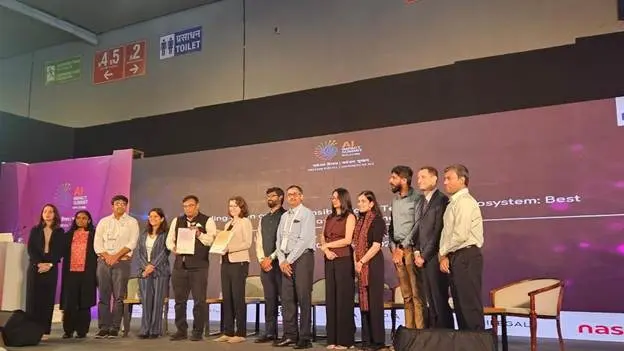
NEW DELHI — In a landmark development for the global assistive technology and accessibility community, the Ministry of Electronics and Information Technology has officially unveiled a comprehensive and ambitious strategy to transform India’s predominantly text-heavy digital landscape into an expansive, inclusive voice-first ecosystem. The sweeping initiative was launched during the high-profile India AI Summit Expo, drawing attention from technologists, policymakers, and accessibility advocates worldwide who are closely monitoring how the country addresses the persistent hurdles of the digital divide.
The strategy is formally anchored by two monumental foundational documents: a comprehensive policy report focused on building open, responsible, and secure voice technology ecosystems, and a practical developers’ toolkit designed to guide creators in implementing these innovations responsibly. For professionals working within the accessibility and assistive technology space, this announcement represents far more than a routine technical upgrade. Instead, it marks a fundamental paradigm shift in how millions of individuals—particularly those living with limited literacy, visual impairments, or physical disabilities—will interact with modern digital infrastructure, government services, and the broader online world.
Breaking the Literacy Barrier Through Voice

For well over a billion people across the globe, the concept of the digital divide extends far beyond a simple lack of internet connectivity or hardware access. At its core, the divide represents a profound lack of quality of use. The vast majority of contemporary digital interfaces, applications, and web services are designed from the ground up for literate, English-speaking users, leaving a massive segment of the population struggling to navigate basic digital tools. India’s newly introduced roadmap aims to dismantle these invisible barriers by establishing voice not merely as a convenient feature, but as essential Digital Public Infrastructure.
By prioritizing voice recognition and natural language processing tailored to diverse linguistic contexts, the initiative seeks to bypass traditional literacy constraints. When digital systems can understand and respond to spoken queries in native languages and regional dialects, the requirement for typing or reading complex text vanishes. This transformation opens up critical digital services—ranging from banking and healthcare to education and governance—to populations that were previously marginalized by text-centric design paradigms. Experts note that treating voice as a public utility democratizes access in a way that traditional desktop and mobile interfaces have historically failed to achieve.
The Practical Guide: A Toolkit for Inclusive Building
Translating visionary policy into everyday digital realities requires concrete, actionable guidance for the people who build software and hardware. To bridge this gap, the newly released developers’ toolkit provides a comprehensive manual for creators of assistive technology and mainstream digital applications alike. Rather than treating ethical considerations, privacy safeguards, and accessibility as secondary thoughts or final-stage compliance checks, the toolkit establishes them as foundational requirements from the very inception of a project.
The guidance embedded within the toolkit helps software engineers and product designers navigate the complexities of building inclusive voice interfaces that respect user privacy, resist algorithmic bias, and accommodate diverse speech patterns, including those of individuals with speech disabilities or heavy regional accents. By providing clear methodologies for inclusive design, the government aims to empower a new generation of developers to create products that are inherently accessible, ensuring that innovation and inclusivity advance hand in hand.

The Elephant in the Room: Funding and Sustainability
Despite the immense promise and visionary scope of the initiative, the architects behind the strategy are candid about the massive hurdles that lie ahead. Transitioning a nation of over a billion people into a voice-first ecosystem is described by stakeholders as a humungous undertaking. The accompanying policy report addresses the realities of scaling such a project, emphasizing that building and maintaining an inclusive digital ecosystem requires vastly more than initial technological innovation. It demands long-term financial stamina, sustained public-private partnerships, and continuous investment in research and development.
Securing sustainable funding models remains a central challenge as developers and institutions work to build robust speech datasets, maintain low-latency infrastructure, and ensure that voice technologies remain accessible and affordable for low-income communities. Without ongoing financial commitment and strategic resource allocation, even the most promising technological frameworks risk faltering before achieving their full societal impact. The policy report’s transparent acknowledgment of these financial and logistical realities has been widely praised by industry observers as a necessary step toward building a resilient and enduring framework.
A Global Blueprint for Multilingual Nations
The profound linguistic and cultural challenges that India seeks to address through its new roadmap are by no means unique to the region. Across the globe, numerous developing nations in Africa, Southeast Asia, and Latin America grapple with remarkably similar hurdles involving extreme linguistic diversity and varying levels of digital literacy. In nations where dozens or even hundreds of distinct languages and dialects are spoken daily, standardizing digital access through traditional text-based interfaces has proven nearly impossible.
Countries such as Nigeria, which boasts over five hundred distinct languages including Hausa, Yoruba, and Igbo; South Africa, with its eleven official languages; as well as Ethiopia and Kenya, stand to benefit immensely from the frameworks and methodologies established by India’s new initiative. By observing how a complex, multilingual democracy successfully integrates voice AI into its public and private digital infrastructure, other nations can adapt these proven models to suit their own unique sociolinguistic landscapes.
Conclusion: A Global Mission for Accessibility
The official launch of these comprehensive reports marks a defining turning point for the future of digital inclusion. India is effectively demonstrating to the international community that advanced voice technology is no longer a mere convenience for tech-savvy consumers, but rather a fundamental human right in an increasingly digital age. By confronting the difficult questions surrounding sustainable funding, robust legal frameworks, and inclusive technical standards, this initiative provides a viable, scalable blueprint for global digital inclusion.
If developers and policymakers can successfully master voice artificial intelligence within the remarkably complex linguistic and cultural landscape of India, the same methodologies can realistically be applied anywhere in the world. This milestone serves as a compelling call to action for innovators, engineers, and government leaders globally to examine these newly established documents, adapt their core principles to local contexts, and ensure that the future of the internet is one designed to listen to every single voice, regardless of language proficiency or literacy level.