






Why do some skills seem to click almost instantly, becoming second nature within a few sessions, while others remain frustratingly out of reach despite hours of diligent practice? For decades, the conventional wisdom focused on individual talent, the intensity of focus, or the sheer volume of repetition. However, new research from Tohoku University suggests that the secret to mastering a new skill may not lie solely in the brain’s cognitive processing power, but in the physiological "readiness" of the brain to cement those memories after the practice session has concluded.
In a study published on August 25, 2026, in the journal iScience, researchers have demonstrated that the body plays an active, previously overlooked role in the consolidation of new motor skills. By stimulating the vagus nerve—a primary communication highway between the body’s internal organs and the brain—scientists were able to significantly strengthen long-term motor learning in mice. This discovery challenges the notion that learning occurs in a vacuum, suggesting instead that the brain requires a specific, "tuned" internal environment to transition short-term practice into durable, long-lasting knowledge.
The Vagus Nerve as a Learning Conduit
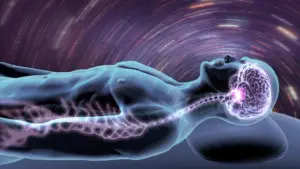
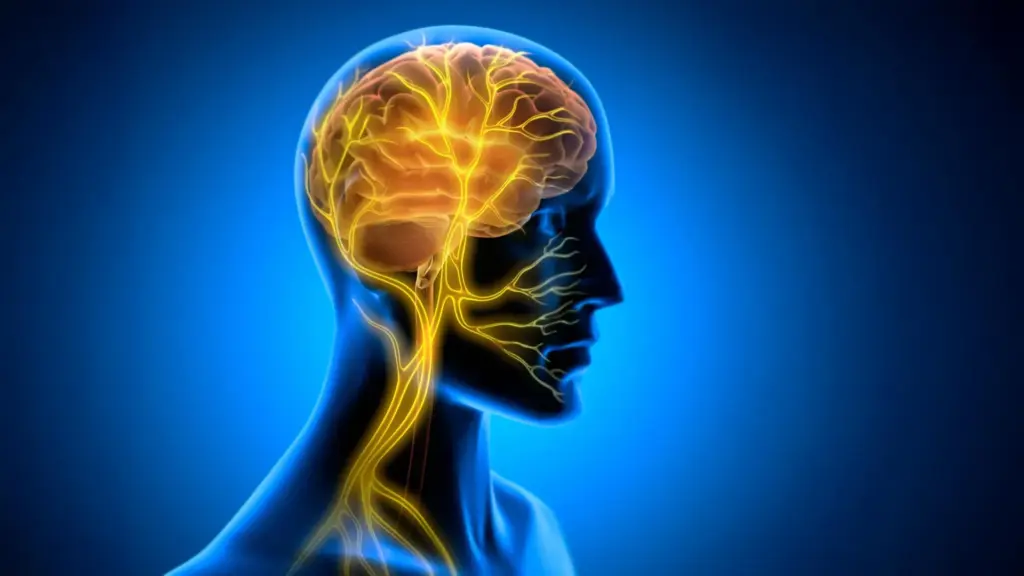
The vagus nerve is one of the most vital components of the human nervous system. It acts as a bidirectional information superhighway, carrying a constant stream of sensory data from the viscera—the internal organs—up to the brain, while simultaneously transmitting regulatory instructions from the brain back down to the body. Because of its wide-reaching influence, the vagus nerve has become a primary target for Vagus Nerve Stimulation (VNS), a clinical technique already approved for treating conditions ranging from epilepsy to treatment-resistant depression.

Historically, the scientific community has viewed VNS through the lens of neuromodulation. The prevailing theory held that by stimulating this nerve, researchers could trigger the release of specific neurotransmitters—such as norepinephrine or acetylcholine—which modulate neural activity and heighten attention. While this mechanism is well-documented, the new findings from Tohoku University suggest that VNS may operate through an entirely different, perhaps more fundamental, biological pathway: the rhythmic regulation of blood flow within the brain.
To investigate this, the research team, led by Professor Ko Matsui, utilized a sophisticated experimental setup. They implanted a small, custom-designed cuff electrode onto the left cervical vagus nerve of mice. With the hardware in place, the team set out to observe the effects of VNS on a specific type of motor learning known as the horizontal optokinetic response (HOKR). This task requires mice to coordinate eye movements to track moving visual stripes—a process analogous to the involuntary, automatic stabilization movements a human makes when watching a train pass by while standing on a platform.
The Strategic Window of Post-Training Stimulation
One of the most significant aspects of the study was the timing of the intervention. Unlike previous experiments that attempted to boost performance by delivering stimulation during the learning task itself, the Tohoku team applied VNS exclusively after the training sessions.
The results were striking. The stimulation provided no immediate "performance boost" while the mice were actually practicing the task. There was no sudden jump in accuracy or speed while the training was underway. However, the benefits became abundantly clear in the days that followed. Mice that received VNS exhibited significantly stronger long-term retention of the skill compared to the control group.
This specific timing suggests that the stimulation does not necessarily make the brain better at "learning" in the moment, but rather optimizes the subsequent "consolidation" phase—the critical biological process where the brain stabilizes new information and integrates it into permanent memory structures.
"The key point is that VNS was delivered only after training," Professor Matsui explained. "Our findings suggest that VNS may open a hidden window of opportunity for enhanced learning by making the brain environment more receptive to long-lasting change." By intervening during this post-training consolidation window, the researchers essentially provided the brain with a signal to prioritize the stabilization of the practiced skill.
Rhythmic Vascular Changes: A New Mechanism for Plasticity
To uncover how this post-training stimulation translates into improved memory, the researchers turned their attention to the physical changes occurring within the brain. Using advanced fiber photometry, the team monitored blood volume activity near the cerebellar flocculus, a region of the brain specifically involved in HOKR learning and motor coordination.
The imaging revealed a fascinating two-phase vascular response. Following a single round of VNS, local blood volume in the cerebellar region briefly decreased, followed by a delayed, significant rise. When the stimulation was repeated, these fluctuations stabilized into rhythmic oscillations.
The team found a compelling correlation between these vascular rhythms and the speed of learning. Mice that exhibited larger, more pronounced oscillations in blood volume were the same mice that demonstrated superior learning outcomes by the fifth day of the experiment. This suggests that the vagus nerve’s influence on the brain is not just about chemical signaling; it is about the physical, metabolic environment. By inducing these rhythmic vascular movements, the VNS appears to create a state of high plasticity, allowing the brain to more effectively "wire in" the motor patterns practiced during the training session.
Lead author Junyu Chen noted the profound implications of these findings for our understanding of the brain-body connection. "Our brains may be more strongly influenced by the body than we imagine," Chen said. "By tuning the brain’s metabolic environment, including rhythmic vascular movements, we may eventually unlock capacities that would otherwise remain latent."
Broadening the Horizon of Neural Plasticity
The research at Tohoku University opens a new chapter in neuroscience, moving away from the idea that the brain is a closed system. Instead, it positions the brain as an organ that is deeply sensitive to the physiological state of the body it inhabits. If the brain’s ability to learn is tied to the vascular environment, then the internal "chatter" of the vagus nerve acts as a regulator of that environment, essentially telling the brain when it is safe or optimal to engage in deep, permanent structural changes.
The implications for future applications are wide-ranging. While currently restricted to controlled laboratory settings, the potential for refining these stimulation protocols is significant. If researchers can determine the exact parameters—such as the frequency and duration of stimulation—that best support human learning, it could revolutionize approaches to neurorehabilitation. For patients recovering from strokes or those with motor control disorders, the ability to "open a window" for learning could be the difference between limited recovery and the successful acquisition of new, compensatory skills.
However, the team emphasizes that this is only the beginning. Future research will need to focus on mapping the precise signaling pathways that connect the vagus nerve to these vascular oscillations. Scientists are particularly interested in determining if this "two-way" communication pathway is universally applicable to all types of learning—such as cognitive or emotional learning—or if it is primarily restricted to motor-based tasks.
As the scientific community continues to peel back the layers of how the body supports the mind, the divide between "talent" and "practice" continues to blur. It appears that the capacity for mastery may be as much about the physical integrity of our internal communication networks as it is about the hours spent at the task. By studying the vagus nerve in greater detail, researchers are not just learning how the body talks to the brain; they are learning how the body helps the brain remember, one rhythmic heartbeat at a time.