







Why do some new skills seem to click almost instantly, becoming second nature after only a few attempts, while others remain frustratingly elusive even after hours of dedicated practice? For decades, the consensus in neuroscience has focused heavily on the interplay between innate talent, repetitive effort, and the inherent plasticity of the brain’s neural circuits. However, groundbreaking new research from Tohoku University suggests that the secret to mastering a new skill may lie far outside the cranium. The difference, it appears, may depend on whether the body is in the optimal physiological condition to lock in practice, effectively turning fleeting experience into lasting, durable memory.
According to a study published on August 25, 2026, in the journal iScience, learning does not occur in a vacuum, isolated from the rest of the body. Instead, it is a deeply integrated process where internal organs constantly relay information to the brain through the vagus nerve—one of the most critical communication pathways in the nervous system. By demonstrating in mice that stimulating this nerve immediately following a training session can significantly strengthen long-term motor learning, researchers have uncovered a previously overlooked role for body-to-brain communication in the persistence of new skills.
The Vagus Nerve as an Information Highway
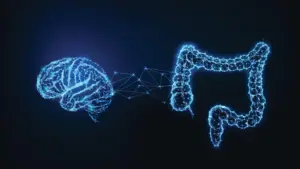
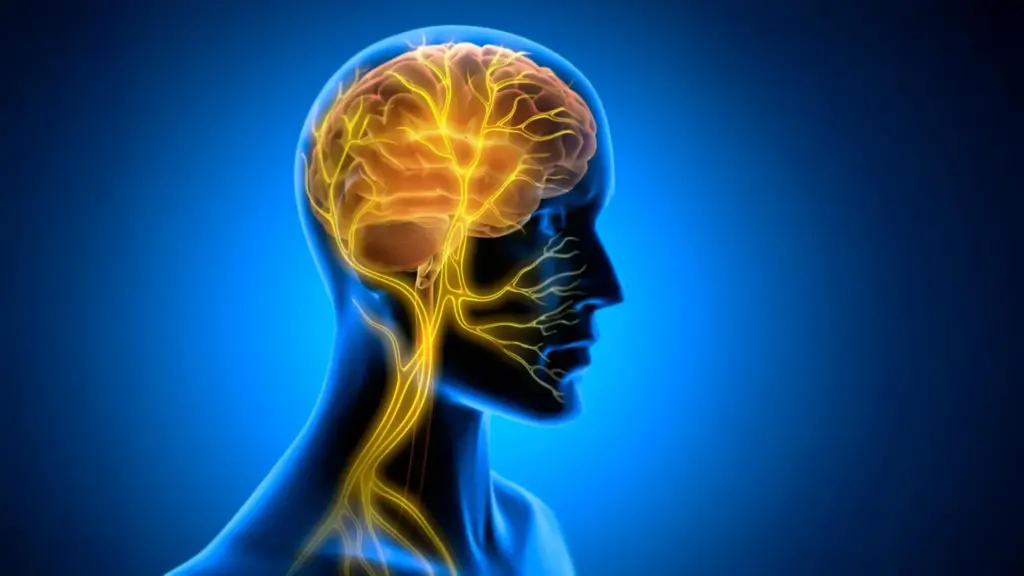
The vagus nerve is a sprawling, complex network that serves as a primary information superhighway between the brain and the body’s internal organs. It is a two-way street; it carries vital sensory information from the heart, lungs, and digestive tract to the brain, while simultaneously transmitting regulatory instructions from the brain back to those organs to maintain homeostasis. Because of its expansive reach and influence over autonomic functions, scientists have long been able to influence this pathway using vagus nerve stimulation (VNS). This technology is already clinically approved and currently in use for the treatment of several medical conditions, including epilepsy and treatment-resistant depression.

Historically, research into VNS has centered on its capacity for neuromodulation—the process by which the stimulation alters activity within various neurotransmitter systems. By tweaking the chemical balance of the brain, VNS has been thought to "prime" the neural environment. However, the team at Tohoku University, which specializes in the study of super-network brain physiology, hypothesized that there might be an entirely different, mechanical mechanism at play: the influence of rhythmic changes in the blood vessels inside the brain.
To test this theory, the researchers developed a specialized, miniaturized cuff electrode, which they surgically attached to the left cervical vagus nerve in mice. With the technology in place, the team set out to measure its impact on horizontal optokinetic response (HOKR) learning. The HOKR is a cerebellum-dependent eye movement task that requires mice to improve their ability to track moving visual stripes. This specific movement is remarkably similar to the automatic, compensatory eye movements that humans perform daily—such as the involuntary adjustments made while standing on a subway platform and watching a train glide past.
The Strategic Timing of Stimulation
A pivotal aspect of the study was the timing of the intervention. Rather than applying VNS during the learning task itself, the researchers chose to deliver the stimulation only after each training session had concluded. The results were striking: the stimulation provided no immediate boost to the mice’s performance while they were in the midst of the training task. Instead, the benefits were entirely latent, manifesting only in the long term.
In the days following the training, the mice that had received the post-training VNS exhibited significantly stronger retention and mastery of the task compared to the control group. This clear temporal separation suggests that the stimulation does not improve the "doing" of the task, but rather enhances the "remembering" of it. It implies that VNS influences the biological processes that occur after the physical practice has stopped—the critical window when the brain is actively consolidating fresh, fragile information into more durable, long-term memory.
"The key point is that VNS was delivered only after training," explains Professor Ko Matsui of Tohoku University. "Our findings suggest that VNS may open a hidden window of opportunity for enhanced learning by making the brain environment more receptive to long-lasting change." By intervening during this consolidation phase, the researchers believe they have tapped into a mechanism that allows the brain to solidify neural pathways that might otherwise fade over time.
Rhythmic Changes in Brain Blood Volume
To understand how the stimulation was actually altering the brain’s internal state, the research team looked for physiological changes occurring in the cerebellar flocculus, an area of the brain known to be deeply involved in HOKR learning. Using a sophisticated imaging technique known as fiber photometry, the team monitored blood volume activity in real-time.
The data revealed that a single round of VNS triggered a distinct, two-phase vascular response. Initially, local blood volume within the cerebellum briefly decreased, followed by a delayed rise. When the team repeated the stimulation, they observed the creation of rhythmic oscillations in blood volume. These rhythmic pulses were not merely a side effect; they appeared to be intrinsically linked to the learning outcomes. The mice that exhibited larger, more pronounced blood volume oscillations during the stimulation protocol consistently demonstrated superior learning performance by the fifth day of the experiment.
This discovery points to a profound conclusion: the vascular environment of the brain is not a static backdrop, but an active participant in the learning process. By tuning this environment through rhythmic vascular movements, the brain may be optimizing the metabolic conditions necessary for plasticity.
"Our brains may be more strongly influenced by the body than we imagine," says lead author Junyu Chen. "By tuning the brain’s metabolic environment, including rhythmic vascular movements, we may eventually unlock capacities that would otherwise remain latent."
Implications for the Future of Neuroplasticity
The findings from the Tohoku University team represent a significant shift in how scientists conceptualize the relationship between the body’s autonomic state and the brain’s cognitive architecture. By treating the brain-body connection as a functional unit rather than two separate systems, researchers are beginning to map out how the vagus nerve might be leveraged to optimize the way we acquire and retain complex skills.
Looking ahead, the researchers intend to focus their efforts on refining these stimulation protocols. A major challenge remains in determining the precise parameters—such as intensity, duration, and frequency—that yield the most effective outcomes for long-term plasticity. Furthermore, the team aims to better understand the granular details of how the two-way communication pathway between the brain and the peripheral organs supports the complex transition from short-term practice to long-term expertise.
As the scientific community continues to explore the mechanisms of this brain-body dialogue, the implications for human health and education are substantial. While the current findings are confined to controlled laboratory models, they provide a compelling roadmap for future clinical research. If the biological mechanisms identified in mice can be translated to human subjects, it could open new doors for therapeutic interventions, potentially helping individuals with learning difficulties or those recovering from brain injuries to more effectively consolidate and retain the skills they work so hard to acquire. By studying this two-way communication pathway in greater detail, scientists hope to move closer to a comprehensive understanding of how learning becomes permanent, and how that delicate process might eventually be guided, supported, or enhanced.