









The first sip of black coffee is rarely a pleasant experience. For the uninitiated, its sharp, intense bitterness triggers an instinctive biological alarm—a flavor profile that the human brain is evolutionarily hardwired to avoid, often associating such pungent tastes with potential toxins. Yet, for millions of people worldwide, that same bitter beverage becomes a cherished morning ritual, a flavor they crave and look forward to with anticipation. The question of what drives this profound shift in preference—how a biological aversion transforms into a learned indulgence—has long remained one of the great mysteries of human behavior.
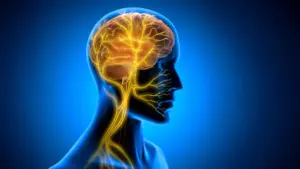
Now, researchers at the University of California, San Francisco (UCSF), have uncovered a critical piece of this physiological puzzle. Their groundbreaking research, published in the journal Nature on November 4, reveals the existence of a previously misunderstood dopamine pathway that serves as a direct communication line between the digestive system and the brain. This pathway, the study suggests, is the engine behind our ability to develop a preference for specific flavors through the lens of repeated experience, effectively teaching our brains to value what was once rejected.
Beyond Rapid Reward: The Slow Path to Learning
Dopamine is widely recognized in neuroscience as the "chemical messenger" of motivation, reward, and reinforcement learning. For decades, the prevailing scientific understanding of dopamine has focused on its "rapid" signaling—the near-instantaneous bursts of activity that occur within milliseconds of encountering a visual cue or a sensory reward, such as the sight of a decadent dessert or the aroma of a favorite meal. This system is designed to help the brain identify and pursue immediate opportunities for gratification.
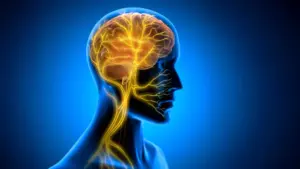
However, the team at UCSF, led by senior author and professor of physiology Zachary Knight, PhD, has shed light on a significantly different, slower system. This auxiliary pathway responds to information originating from deep within the body, allowing the brain to process and learn from the nutritional benefits of food long after the initial act of consumption has ended.
"We’ve shown that this slow dopamine system is what drives us to learn to like certain foods over time, and we can see where and how that happens," Knight explained. The implications of this finding are transformative: it provides a tangible biological explanation for how the brain gradually recalibrates its preferences. Once the brain begins to associate the initial bitterness of coffee with the subsequent stimulating effects of caffeine—a physiological "reward" delivered by the gut—the coffee itself begins to be perceived as inherently more rewarding. In short, the coffee starts to taste better because the brain has been taught to value the outcome it produces.
Decoding the Gut’s Signal to the Brain
The mechanism of this slow dopamine response operates largely beneath the surface of our conscious awareness. As food enters the gastrointestinal tract, specialized sensors within the gut detect the presence of essential nutrients, such as fats and sugars. This chemical information is then transmitted to the brain, triggering a dopamine response that does not peak and vanish in an instant, but rather develops gradually over the course of several minutes.
To map this process, Knight collaborated with James Grove, PhD, who served as a graduate student during the research. The team employed an experimental model involving mice, delivering nutrients—specifically sugar water or a substance formulated to mimic the nutritional profile of a milkshake—directly into the animals’ stomachs. By bypassing the mouth and throat, the researchers were able to isolate the systemic, nutritional impact of the food from the sensory, gustatory experience of tasting it.
The data revealed a powerful and notably prolonged dopamine surge within a specific region of the brain known as the anterior basolateral amygdala (BLA). While the amygdala is famously known for its role in emotional processing and fear conditioning, it also acts as a critical hub for learning, particularly in forming associations between environmental experiences and their physical consequences. Scientists had long observed dopamine activity in this area, but its specific function in the context of digestion had remained a persistent mystery until now.
"We could see that this dopamine is part of a different system and begin to understand its role," Knight noted, confirming that this localized signal is essential for the brain to recognize which flavors are reliable predictors of nutritional reward.
Rewiring Preferences: Experimental Evidence
The discovery of the signal was only the first step. To verify that this dopamine pathway was indeed responsible for modifying behavior, the researchers performed a series of controlled experiments. First, they inhibited the identified pathway in mice. The results were telling: while the animals continued to eat and survive normally, they completely lost the capacity to learn that an unfamiliar, neutral flavor was linked to the intake of calories. The "teaching" mechanism had been effectively silenced.
In a follow-up experiment, the team tested the inverse. They exposed mice to a flavor that contained no nutritional value, and while the animals tasted it, the researchers used optogenetics to artificially activate the dopamine fibers in the BLA. The result was remarkable: the mice developed a distinct preference for the calorie-free flavor. By artificially stimulating the pathway, the scientists had successfully replicated the learning signal that would normally be triggered by real nutrients. This proved that the dopamine system in the BLA is not just a passive reporter of nutrition, but an active instructor that teaches the brain which flavors are worth pursuing.
An Unexpected Lateralization in the Brain
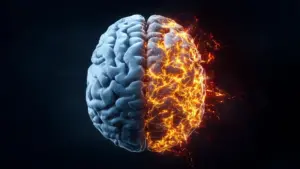
Perhaps the most surprising aspect of the study was the discovery of a structural asymmetry in how the brain processes these signals. In both mice and humans, the nutrient-driven dopamine response was significantly more concentrated in the left side of the BLA than in the right.
To investigate whether a similar process occurs in humans, Knight collaborated with psychologist Dana Small, PhD, of Yale University, who re-analyzed data from an earlier positron emission tomography (PET) study involving 13 male participants. Those who consumed a milkshake showed a concentrated dopamine release in the left BLA, a finding corroborated by a separate study led by Marc Tittgemeyer, PhD, using functional magnetic resonance imaging (fMRI) on 38 adults.
For Knight, this lateralization—the dominance of the left hemisphere in a primary, survival-based function like feeding—was entirely unexpected. Traditional models of neural networks responsible for homeostatic functions like eating often assume a symmetrical organization. The discovery that the left side of the brain plays a disproportionately large role in this gut-brain communication loop has opened new avenues of inquiry, with Knight’s laboratory currently working to determine why this unique asymmetry exists and how it influences our dietary choices.
The Future of Appetite and Dietary Health
The identification of this pathway offers a fresh perspective on the complex relationship between the gut and the brain, raising significant questions about the potential for clinical applications. Researchers are now looking at how this knowledge might eventually be used to address cravings or help individuals modify their eating habits.
One focal point of modern medical research is the class of drugs known as GLP-1 agonists, which mimic the hormones naturally released by the gut to signal fullness. While Knight’s team did not study these specific medications, the findings suggest a new hypothesis: if these drugs work by altering the dopamine signals generated when nutrients hit the gut, they may be inadvertently reducing the "reward" that the brain receives from food. If the brain receives a weaker reinforcement signal, certain foods might, over time, become less appealing.
While this remains a hypothesis, it points toward a future where interventions for eating disorders or obesity could move beyond simple appetite suppression. By targeting the neural processes that connect flavors to their physiological consequences, scientists might one day develop methods to "fine-tune" these connections, helping people develop healthier preferences rather than simply forcing them to feel less hungry.
"By understanding the steps between nutrient detection in the gut and learning in the brain, it might be possible to fine-tune them to subtly change our preferences for different foods," Knight concluded.
This research, supported by various grants from the National Institutes of Health, fundamentally alters our understanding of taste. It suggests that our favorite foods are not merely a result of palate or culture, but the product of a quiet, persistent, and highly sophisticated conversation between the digestive tract and the brain—a conversation that continues long after the first bite, shaping our desires in ways we are only just beginning to comprehend.