








By Jorn Bettin
Core ideas within Buddhist and Daoist spiritual traditions are deeply reflective of the commonalities found across many human-scale indigenous cultures. A compassionate framework of love as vulnerable mutual knowing is profoundly compatible with a panpsychic relational philosophy. Everyone wants their experience to be taken seriously. We are embodied spirits, compelled to make sense of this world, and we can only do so in good company.
Life
Life creates conditions conducive to life, as Janine Benyus famously observed. This simple observation strongly hints at the fact that the dynamic process of life consists entirely of feedback loops.

Life is entirely relational, sacred, cyclical, fleeting, compostable, nested, regenerative, and it forever remains mysterious for all participants. At any high-dimensional space that provides a reasonable description of Gaia—meaning all of life, including the potential of homo ecologus—the system is best conceptualised entirely relationally, from the very bottom layers of physics upwards.
Life consists entirely of relationships, which operate as feedback and learning loops. In aggregate, these loops constitute the building blocks of what our human animal-scale perception experiences as consciousness. There is no shortage of thinkers who conceptualise life this way, a reality that becomes especially obvious when studying Eastern spiritual and philosophical texts.

As humans with inherent biological and cognitive limitations, we will never be able to scientifically prove to any quantifiable level of certainty that consciousness emerges in this exact way. However, science will also never be capable of disproving that consciousness emerges and exists through these relational dynamics. This in no way renders science useless; it simply highlights the inherent limits of scientific inquiry, which form part of the broader limits of human comprehensibility. In a parallel fashion, within the abstract symbolic universe of mathematics, there are statements that can never be proven true or false, and human observers are not even equipped to identify all such statements.
At the spatial and temporal scales relevant to biological and ecological systems, the smallest feedback loops emerge between molecules, resulting in the mind-boggling complexity found in cell biology and molecular genetic codes. These feedback loops scale upward into massive interactions between bioregional terrestrial and marine ecosystems across Gaia. Popular anthropocentric conceptions of consciousness at best generalise to animals equipped with brains, while systematically excluding all other feedback loops in living systems that contribute to the lived experiences of consciousness at both microscopic and macroscopic scales.
Powered-up or positive feedback loops represent processes where, over time, information—whether molecular or encoded abstractly—accumulates in specific living cells or organisms more than in others. Such powered-up feedbacks are always temporary phenomena relative to the lifespans of the entities involved. Human animal bodies grow to a certain physical scale and then remain intact for a lifetime. During this span, internal molecular feedback loops between cells and organs are maintained in a balanced, de-powered state, fueled by external energy from living food, and yielding waste products ready to be reassembled into new life by the thermonuclear energy of the sun.
Similarly, social feedback loops between human animals grow into relationships, and healthy relationships remain intact for a lifetime. Throughout this journey, the internal feedback loops of a healthy relationship are maintained in a de-powered state, sustained by shared lived experiences and mutual understanding. This results in cultural output composed of building blocks ready to be absorbed by a local ecology of care and integrated into new relational networks.
A universe conceptualised entirely in terms of dynamic feedback and learning loops naturally leads to a panpsychic philosophy where consciousness is omnipresent across all scales, aligning closely with Eastern spiritual traditions like Buddhism and Daoism. This perspective invites non-anthropocentric viewpoints, alerts observers to the cultural biases inherent in modern industrialised notions of intelligence and success, and draws attention to the cognitive and emotional boundaries of the human scale.

Spirits
Buddhism, also known as Buddha Dharma, is an Indian religion and philosophical tradition based on teachings attributed to the historical Buddha, a wandering teacher who lived in the sixth or fifth century BCE. As the world’s fourth-largest religion with over 520 million followers, it arose in the eastern Gangetic plain as a Śramaṇa movement and gradually spread throughout Asia before reaching the West in the twentieth century. According to tradition, the Buddha instructed followers on a path of development leading to awakening and full liberation from dukkha, defining this Middle Way as a balance between asceticism and sensual indulgence.
The Buddhist focus on minimising suffering and unease corresponds directly to the active desire of hypersensitive neurodivergent people to minimise cognitive dissonance. It also illuminates the social friction that arises when a culture insists on normalising and maintaining high levels of cognitive dissonance over extended periods.
Similarly, Taoism or Daoism is a diverse philosophical and religious tradition indigenous to China that emphasises harmony with the Tao, an enigmatic process of transformation underlying reality. Taoist thought informs practices such as meditation, qigong, feng shui, and internal alchemy, with self-cultivation as a primary goal. Its ethics emphasise effortless action, naturalness, simplicity, and the three treasures of compassion, frugality, and humility. These virtues align closely with the sensitivity profiles of many neurodivergent people and offer a timeless critique of anthropocentric empire-building dating back to the early Warring States period.
Taken together, these traditions reflect commonalities found across human-scale indigenous cultures and egalitarian hunter-gatherer societies. Foundational texts such as the Zhuangzi even emphasise humor as a tool for subverting anthropocentric overreach.
Love
The extent to which we are alive emerges directly from products of mutual trust, commitments, and shared understanding across all our relationships. By virtue of their scale and design, so-called relationships with abstract, super-human scale anthropocentric institutions are entirely devoid of genuine shared understanding and experiences. The more a culture forces people to invest in such institutional relationships, the less capacity remains for authentic connections with living beings, leaving individuals feeling less alive.

Once these dynamics are understood, and human lives are consciously reoriented toward a human scale, the prospect of institutional collapse can be viewed soberly as the expiration of an inherently invalid social license. Indigenous societies that have resisted the myth of homo economicus offer vital lessons here, expanding anthropology beyond human-centric boundaries.
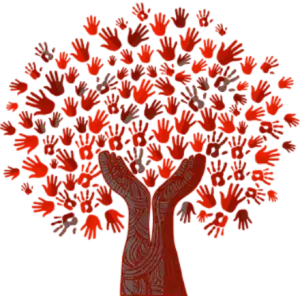
Relationships can be understood as continuous, multi-modal, de-powered dialogues within ecologies of care. Reframing evolution in collaborative terms—akin to collaborative niche construction—highlights a compassionate framework of conscious evolutionary design that aligns with Peter Kropotkin’s historical observations on mutual aid. This relational philosophy is rooted in a life-affirming language of care rather than relentless competition.
Sensitivity Profiles
All humans possess unique sensitivity profiles shaped by neurological baselines and lived experiences within specific ecological contexts. This is particularly true for hypersensitive neurodivergent people, many of whom have experienced trauma in a social world that systematically marginalises, pathologises, and criminalises difference.
Individual nervous systems evolve across a lifetime. Studies show that a significant majority of neurodivergent adults frequently feel overwhelmed, misunderstood, disrespected, or unsafe. Overall wellbeing depends heavily on the alignment between an individual’s sensitivity profile and their surrounding ecology of care. Diagnostic criteria for conditions like autism are deeply entangled with symptoms of complex trauma, making it difficult to separate innate neurodivergent baselines from lifelong trauma responses in a hypernormative industrialised society.
Simplistic diagnostic labels centred on decontextualized individuals fail to capture the richness of human experience. Intersectionally marginalised activists are increasingly advocating for solidarity beyond rigid diagnostic categories, challenging standard classifications that gloss over individual realities.

Unbalanced feedback loops between humans generate cognitive dissonance, experienced as a deep dis-ease that demands resolution. Suppressing cognitive dissonance over long periods leads to mental, spiritual, and physical illnesses. Hypersensitive individuals often maintain a conscious awareness of this dissonance and feel compelled to act to reduce it, whereas others may tolerate it indefinitely while suffering its hidden physiological tolls.
Culture Co-Evolution
All major evolutionary milestones in the history of Gaia feature co-evolutionary characteristics, exemplified by the emergence of biological cells and multi-cellular organisms. Cell biology teaches vital lessons about the complementary roles of abstract symbol systems and semantics in ecological processes. Semi-permeable cellular membranes provide a road-tested model for co-evolutionary interactions between multiple living organisms.
Cultural co-evolution at human scales relies on collaborative niche construction rather than wasteful, head-to-head competition. Egalitarian hunter-gatherer societies have prioritised these collaborative values for hundreds of years, demonstrating the enduring viability of life-affirming cultural practices. Preventing and de-escalating conflicts between cultural organisms requires respecting the cognitive and emotional limits of human scale, applying lessons from indigenous traditions to the design of future digital and social tools.
The Human Spirit Within Gaia
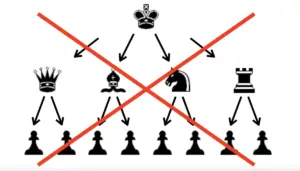
Humans evolved to make sense of the world at human scales. Transparent and appropriately designed digital technological guardrails can extend the reliability of human collaborative niche construction without centralising decision-making power in the hands of authoritarian figures. Radical egalitarianism forms the architectural foundation of human adaptive intelligence, differing fundamentally from the nervous systems of other primates.
Attempting to define normal or adaptive behavior at the level of the isolated individual is fundamentally absurd. Western, Educated, Industrialized, Rich, and Democratic (WEIRD) societies have become detached from evolutionary roots, surrounded by what Guy Debord termed the Spectacle. In the absence of trust-based human-scale ecologies of care, institutionalised corporate entities often become the only accessible anchor points for the social world. Yet, in the ongoing cultural metamorphosis, Gaia remains the ultimate and true authority.

Becoming Aware of Cultural Bias
Critically examining human endeavors requires distinguishing between cultural outputs and empirical attempts to understand Gaia. Academic disciplines across the humanities, mathematics, and engineering operate under distinct cultural assumptions. Mathematics stands out for its rigorous insistence on making all assumptions explicit, whereas certain engineering and data-driven disciplines frequently rely on unexamined, WEIRD-centric assumptions that normalise violence and exploitation.
Furthermore, modern economic systems enforce a narrow definition of human utility, treating individuals primarily as economically productive units between the ages of 20 and 65. This framework devalues intergenerational dialogues and fosters stratified, competing age cohorts designed to consume commercial products rather than build cohesive communities.
Reviving Trust in Humanity
In an atomised modern world, human-scale cultural organisms and their life-sustaining importance have been eroded from living memory. The competitive frame of homo economicus normalises the compulsion to appear independent and strong, creating a culture of ubiquitous mistrust and widespread mental health challenges. Research clearly shows that while neurodivergent individuals deeply wish to help others in need, many remain hesitant or afraid to ask for help themselves.
The widespread internalisation of economic doctrines often leads to an epidemic of self-hate, shame, and suppressed guilt. When individuals succeed within a toxic competitive system, they must rationalise ethical compromises and suppress their innate compassion. Overcoming these patterns requires dismantling the ideology of homo economicus and supporting the organic growth of human-scale ecologies of care.
As society navigates the UN International Year of Cooperatives, cooperative models offer essential solutions for global challenges. By aligning with Buddhist and Daoist values of compassion, frugality, and harmony, emerging ecologies of care can foster genuine human connection and provide viable exit paths from dying institutional structures.

We are all compelled to make sense of this world, and we can only do so in good company at human scales. Wisdom lies in recognising the difference between human capabilities for advanced tool design and genuine ecological understanding. Gaia is calling for a conscious paradigm shift toward a life-affirming existence, where well-designed tools amplify the noblest impulses of humanity on a collaborative journey toward a sustainable future.