




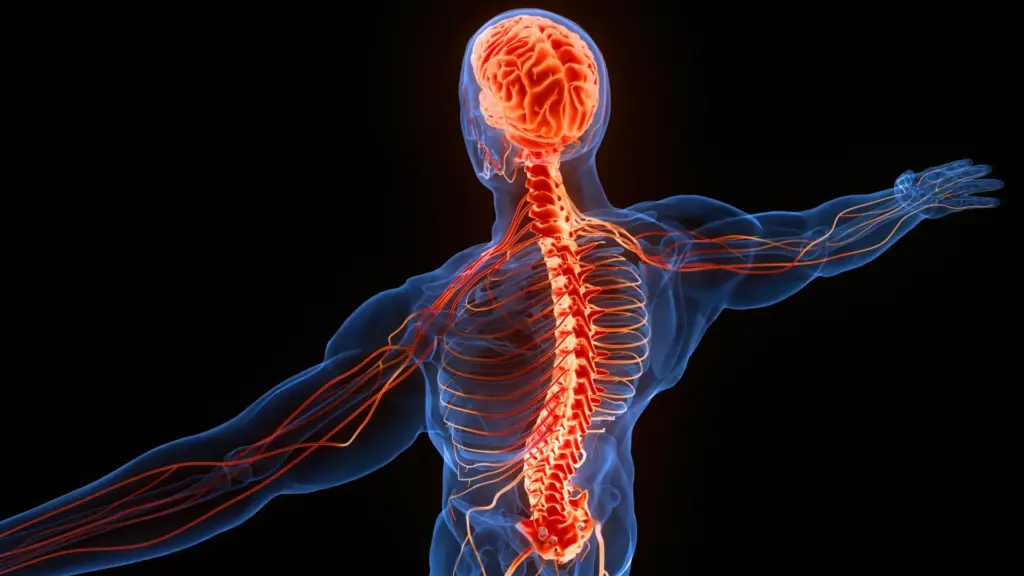
Why does the left side of your brain control the right side of your body, while the right side of your brain governs the left? This contralateral arrangement—a hallmark of the vertebrate nervous system—has long been one of biology’s most enduring puzzles. For centuries, researchers have debated whether this cross-wiring provides a specific evolutionary advantage or if it is merely a quirk of biological development. Now, a new hypothesis proposed by neuroscientists suggests that the answer lies not in a sudden, deliberate adaptation, but in the deep evolutionary history of our visual systems, stretching back over half a billion years.
Dr. Martin Wessendorf, a neuroscientist and associate professor emeritus at the University of Minnesota, and cognitive neuroscientist Daniel Wang have collaborated to re-examine the origins of these neural pathways. Their research, recently published in the journal Frontiers in Neuroanatomy, posits that the brain’s crossed connections are not an isolated development, but rather a structural legacy established by the ancient visual systems of early vertebrates. By mapping the evolution of sensory and motor circuits in tetrapods—the four-limbed animals that include mammals, birds, reptiles, and amphibians—the researchers suggest that evolution "built" newer brain functions around an existing, cross-wired foundation.
The Visual Roots of the Crossed Brain
The key to understanding this arrangement may begin with the physics of light. When light passes through the lens of an eye, it is inverted. Consequently, objects appearing in the right visual field are projected onto the left side of the retina, while objects to the left are projected onto the right. As this information travels along the optic nerve, it reaches a junction known as the optic chiasm. Here, the nerve fibers are reorganized so that visual information from the right field is delivered to the left hemisphere of the brain, and vice versa.
This initial reversal is the starting point for a series of crossed connections that permeate the nervous system. Once the visual signals are sorted at the optic chiasm, they are routed to an ancient midbrain structure known as the optic tectum (or the superior colliculus in mammals). This region is responsible for the rapid, instinctual responses to visual stimuli, such as flinching when a shadow moves suddenly in your peripheral vision. Because the optic tectum is present across virtually every vertebrate species, it is considered a relic of early vertebrate evolution. The researchers suggest that because this structure is inherently organized to map the opposite visual field, it may have set a "template" for how other sensory and motor systems evolved.
Sensory Pathways and the Tetrapod Inheritance
To test the idea that the visual system influenced broader neural architecture, Wessendorf and Wang analyzed two primary pathways that transmit sensation from the body to the brain: the dorsal column pathway and the spinothalamic tract.
The dorsal column pathway is responsible for relaying information about gentle touch, vibration, and proprioception—the body’s awareness of its position in space. Signals from the limbs and torso travel up the dorsal section of the spinal cord to the brainstem before crossing over to the opposite side. While this specific pathway is absent in fish, it is found in amphibians, reptiles, birds, and mammals. Its prevalence across these diverse groups indicates that the cross-wiring of the dorsal column was a foundational development in the transition of life to land.
In contrast, the spinothalamic tract—which carries signals related to pain, itching, and temperature—crosses the midline within the spinal cord itself before ascending to the thalamus. This arrangement is even more ancient, appearing in some cartilaginous fish such as sharks and rays. The consistency of these crossed sensory pathways across millions of years of evolution suggests that once a crossed circuit was established, it became a standard template for the vertebrate nervous system, rarely abandoned by evolution.
Coordinating Movement Across the Midline
The crossed organization is not limited to sensory input; it is equally fundamental to the control of skeletal muscles. The researchers identified three major motor pathways that connect one side of the brain to the opposite side of the spinal cord, each revealing different layers of evolutionary complexity.
The first is the tectospinal pathway, which facilitates rapid motor responses based on environmental cues. When you hear a sudden noise or catch sight of a movement to your side, the optic tectum processes this information and triggers an immediate physical turn. Because the tectum organizes sensory information into maps aligned with the opposite side of the body, the tectospinal pathway naturally follows this crossed orientation. Like the sensory systems, this pathway is found in most tetrapods and some ancient cartilaginous fish.
The second circuit, the rubrospinal pathway, originates in the red nucleus of the midbrain and is primarily associated with limb control. While this pathway is most prominent in mammals, it exists in other tetrapods and certain fish, further reinforcing the idea that crossed motor control is an ancient, conserved feature of the vertebrate body plan.
Fine Motor Control and the Evolution of the Cortex
The most complex of these circuits is the corticospinal tract, which is of particular importance to humans. This pathway facilitates the precise, fine motor control of our fingers and hands. However, its evolutionary history is distinct from the other systems because it is tied to the development of the cerebral cortex—the wrinkled, six-layered outer shell of the brain that defines mammalian intelligence.
While all vertebrates possess a telencephalon, only mammals evolved the six-layered cortex capable of complex tasks like memory integration, language, and high-level motor planning. In most mammals, the corticospinal tract primarily serves to regulate incoming sensory information. However, in primates and humans, the pathway has been adapted to provide direct control over skeletal muscles, enabling the sophisticated, delicate manual dexterity required for tool use and fine motor tasks.
The researchers hypothesize that humans did not evolve an entirely new, independent system for these fine movements. Instead, evolution appears to have "repurposed" an older neural circuit—one that was originally designed to regulate sensory input—and granted it new authority over motor function. This thriftiness is a hallmark of evolution: rather than engineering a system from scratch, the nervous system often iterates upon existing structural foundations.
An Evolutionary Inheritance
The broader implication of this research is that the crossed wiring of the brain may not be a deliberate "design" chosen for its efficiency, but an evolutionary inheritance. If the optic chiasm and optic tectum were already present in the jawless fish of the Cambrian Period—some 500 million years ago—then the fundamental "crossed" logic of the nervous system was established long before limbs or complex cognitive functions even existed.
This theory challenges the assumption that every feature of the human brain must provide a direct, modern survival benefit. Instead, it suggests that the nervous system is a historical record. Once the visual system locked into a crossed arrangement, it likely created a structural blueprint that subsequent sensory and motor pathways were forced to follow. As new circuits evolved, they were integrated into this existing scaffolding, resulting in the strange, inverted reality of our neural architecture.
The researchers believe their hypothesis is testable. By analyzing the fossilized skulls of ancient jawless fish, scientists may one day find the anatomical evidence needed to confirm that the optic chiasm and optic tectum existed in these early ancestors. If confirmed, it would prove that our most sophisticated movements and our most basic sensations are governed by a logic established in the primordial oceans of the Cambrian, an enduring testament to how evolution favors the refinement of the old over the invention of the new. The relationship between our left brain and right body is, ultimately, a half-billion-year-old echo of the first creatures to ever process the world through eyes that saw the world in reverse.