





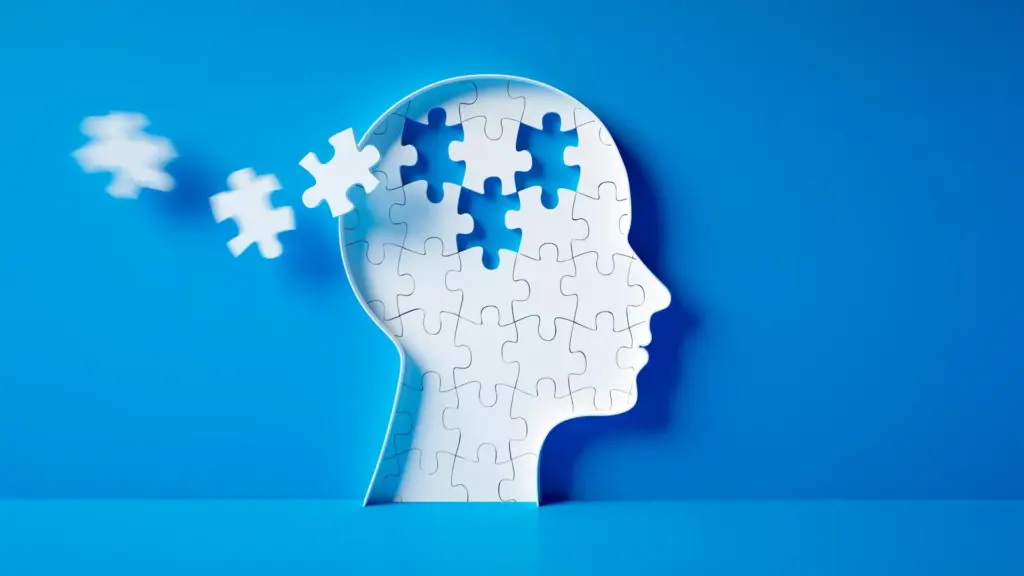
For generations, the narrative surrounding human aging has been defined largely by loss: the fading of memory, the slowing of mental processing, and the gradual erosion of cognitive sharpness. We have long viewed the aging brain as a vessel slowly losing its capacity to hold information—a steady, inevitable march toward decline. However, a groundbreaking new perspective from researchers at the University of Arizona suggests that this view may be fundamentally flawed. By looking at cognitive aging through the lens of evolutionary biology and brain imaging, scientists are proposing that what we perceive as deterioration is, in fact, a sophisticated, natural stage of human development.
In a study published in Perspectives on Psychological Science, researchers outline the "adaptive aging hypothesis," a framework that posits the brain does not simply degrade as we grow older. Instead, it undergoes a strategic recalibration, shifting its priorities from the accumulation of new, granular data to the synthesis of lifelong wisdom. Rather than becoming less capable, the aging brain is evolving to serve a different, critical function: the preservation and transmission of accumulated expertise to younger generations.
The Biological Shift: From Memory to Meaning
To understand this transition, it is necessary to examine the architecture of the brain itself. Two distinct regions play pivotal roles in how humans navigate the world: the hippocampus and the frontal cortex. The hippocampus, often described as the brain’s librarian, is primarily responsible for the encoding of specific, episodic details—the "who, what, when, and where" of our daily experiences. It is the engine of precise recall.
In contrast, the frontal cortex operates as an architect, tasked with extracting broader meaning, identifying patterns, and distilling the "gist" of complex experiences. It is here that raw data is transformed into wisdom. The adaptive aging hypothesis suggests that as individuals move through their adult lives, the brain undergoes a systematic shift in emphasis. It begins to dial down the hippocampal activity that prioritizes the recording of every minute detail and instead amplifies the role of the frontal cortex, which is better suited for contextualizing information based on a vast, existing mental library.
Fabian-José Fernandez, an associate professor of cognition and neural systems at the University of Arizona and a coauthor of the study, argues that framing aging as a story of decline is a profound misunderstanding of human biology. "If we look at normative aging as a story of just decline, we are really missing the boat," Fernandez explains. "The older brain is optimized for different things than the younger brain, predominantly the sharing of stored expertise and social relationships."
This shift is not a failure of the brain’s machinery, but a functional adaptation. In early life, the brain must be a sponge, capturing as much specific, high-resolution information as possible because the individual lacks a foundational understanding of the world. A child must learn the mechanics of their environment—how objects behave, how language works, and how social dynamics unfold. During these formative years, the hippocampus is hyper-active, ensuring that every new experience is etched into memory to build a comprehensive archive. By the time a person reaches later adulthood, that archive is already vast. Adding new, specific details becomes less critical than integrating new information into the deep, conceptual framework already established over decades.
Evolutionary Priorities and the Role of Wisdom
The researchers suggest that this developmental transition is driven by evolutionary forces, noting that similar patterns are observed in various animal models. This indicates that the shift is not an accident of biology but a purposeful design. From an evolutionary standpoint, the survival of a species depends on more than just the immediate processing of new environmental cues; it relies on the collective knowledge passed down through generations.
As individuals reach later adulthood, their value to the social group shifts. They are no longer just explorers or hunters gathering raw data; they become the keepers of the collective history, the mentors, and the stabilizers of the community. The ability to draw on decades of trial, error, and success is essential for guiding younger members of the group, making complex social judgments, and maintaining cultural continuity.
"Given those goals, it makes sense that you aren’t interested in nitty-gritty details," Fernandez notes. "You are interested in safeguarding the vast knowledge you already have. Evolution may be saying that if you make it long enough, there’s a need to transmit this information, so we put into motion biological changes that enforce and protect your semantic and autobiographical memories."
Under this framework, the "forgetfulness" associated with aging—the inability to recall where one left their keys or the name of a distant acquaintance—is not necessarily a sign of a broken system. Instead, it may be the byproduct of the brain prioritizing the preservation of meaningful, semantic knowledge over the maintenance of fleeting, episodic details. The brain is decluttering its workspace to focus on the wisdom that has been earned over a lifetime.
Distinguishing Aging from Pathology
A significant portion of the researchers’ work is dedicated to distinguishing these natural, healthy transitions from the onset of neurodegenerative diseases, such as Alzheimer’s. Historically, there has been a tendency to treat Alzheimer’s as an exaggerated form of normal aging—a "worst-case scenario" on a linear spectrum of decline. Fernandez and his colleagues strongly reject this notion, arguing that the two processes are fundamentally distinct.
In typical, healthy aging, the brain gradually eases its reliance on the hippocampus. However, in the case of Alzheimer’s, pathological processes—often involving the accumulation of proteins like amyloid and tau—severely disrupt this transition. While the healthy older brain might "de-emphasize" hippocampal activity, the Alzheimer’s-affected brain may exhibit pathological hyperactivity in the same region, suggesting a failure of the brain’s internal regulatory mechanisms.
"When I was in grad school, people thought about Alzheimer’s as a more intense version of cognitive aging, but that is just not the case," Fernandez says. "They are completely different." By identifying these neurological markers and understanding the healthy developmental trajectory, scientists may be better equipped to distinguish between the natural evolution of the aging mind and the disease states that require medical intervention. This clearer distinction is essential for developing accurate diagnostic tools and, eventually, more effective treatments for dementia.
Reimagining Society’s Approach to Aging
The implications of the adaptive aging hypothesis extend well beyond the laboratory; they call for a societal shift in how we perceive and treat our older populations. If we continue to judge the success of an older brain by its ability to perform "young" tasks—such as rapid recall of isolated facts—we are effectively testing the brain on its least optimized functions. This approach can lead to feelings of inadequacy in older adults and the marginalization of their most valuable contributions.
Instead, the researchers advocate for an environment that honors the strengths of the aging brain. This includes creating more opportunities for intergenerational engagement. When older adults are given platforms to mentor, tell stories, and share expertise, they are engaging in the very activities that their brains have evolved to prioritize.
"People see older individuals and look at them as not being on par with younger individuals across a lot of metrics," Fernandez observes. "The way I look at it is that you’ve got someone with a brain that has been active for several decades and has seen a lot. There is tremendous value there, and we don’t do a good job of unlocking it."
By shifting the narrative from a model of decline to one of adaptation, we can begin to see the later stages of life not as a period of intellectual sunset, but as a unique developmental phase defined by deep comprehension and the transmission of human experience. The aging brain, with its vast, complex internal map of the world, remains a powerhouse of cognitive utility—provided society is willing to recognize and value the wisdom that can only be forged by the passage of time. As the adaptive aging hypothesis gains traction, it offers a more optimistic and, quite possibly, more accurate reflection of the human life cycle, turning our attention away from what is being lost and toward the profound wealth of what remains.