By Michelle Diament | October 16, 2026
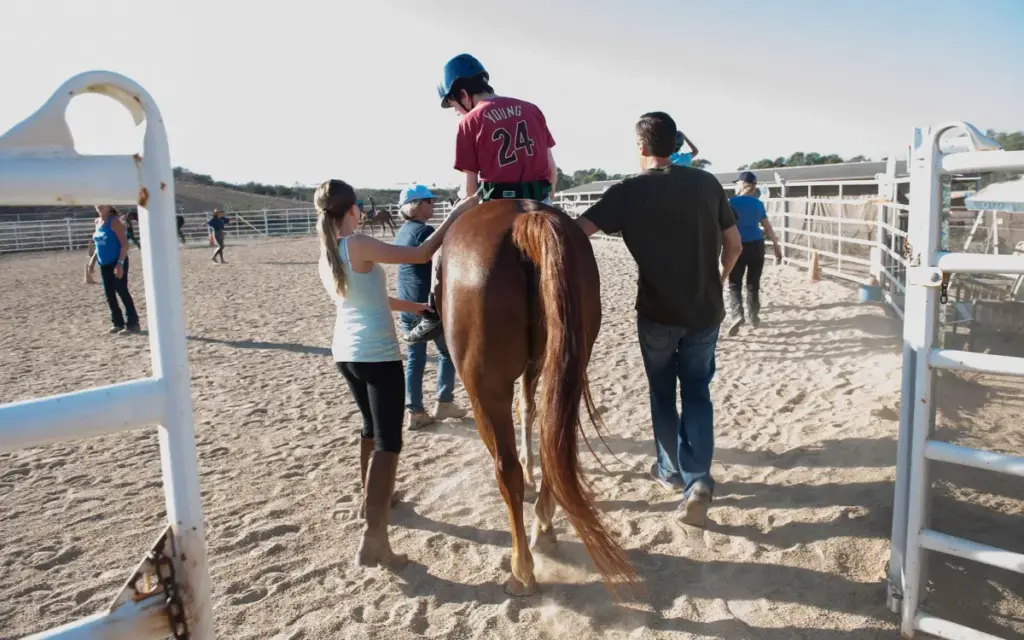
Spending time around horses and participating in structured horseback riding programs can yield substantial therapeutic benefits for children with autism, helping to curb hyperactivity, reduce irritability, and foster stronger social skills, according to newly published research.
The findings, featured this month in the prominent medical journal Pediatrics, offer fresh insight into how non-traditional, animal-assisted interventions can complement conventional clinical therapies for youth with developmental and psychiatric conditions. The study evaluated 236 children between the ages of 6 and 16 who lived with autism spectrum disorder alongside co-occurring psychiatric conditions. By examining the behavioral shifts in these young participants, researchers sought to quantify the psychological and social impacts of equine-related activities in a controlled setting.

To test the efficacy of the programs, the research team divided the participants into different groups. Some children were assigned to take part in therapeutic horseback riding lessons once a week for a duration of 10 weeks. Others were placed in a barn activity control group, where they visited stables to observe horses and participate in environmental barn tasks, but did not physically mount or directly interact with the animals. A third cohort experienced a waiting period before participating in five weeks of barn activities followed by five weeks of active riding lessons.
Upon analyzing the behavioral outcomes across all groups, the researchers documented notable improvements. Both the active riding program and the passive barn activity groups experienced significant reductions in irritability and hyperactivity. Furthermore, the children demonstrated measurable enhancements in emotional regulation, coping mechanisms, and overall social engagement.
However, the study also revealed a distinct advantage to being in the saddle. While simply being in the vicinity of the animals and engaging in barn life proved beneficial, the children who actively rode horses experienced the greatest reduction in hyperactivity overall.
"There is something about riding a horse that is particularly helpful for kids with hyperactivity," said Robin Gabriels, a professor of psychiatry at the University of Colorado who led the comprehensive study.
The physical mechanics of managing and riding a horse require focus, balance, and coordination, which may demand a level of sensory integration and attention that helps channel high-energy behaviors in children with neurodevelopmental differences. Gabriels and her colleagues emphasized that while horseback riding should not be viewed as a standalone cure-all or a replacement for existing medical and behavioral treatments, the data strongly supports its use as a powerful supplemental therapy.
The researchers pointed out that traditional clinical environments—often characterized by sterile rooms, structured desk work, and repetitive behavioral interventions—can sometimes present barriers to engagement for children who struggle with severe hyperactivity or attention deficits. In contrast, equine programs offer a dynamic, multisensory environment that naturally encourages participation.
"Working with horses gives these kids a chance to do something active, social, and engaging," Gabriels explained. "For some children, that may be a particularly effective way to help them develop skills that can be difficult to teach in a traditional clinical environment."
The study adds to a growing body of literature examining the therapeutic value of animal-assisted activities for pediatric populations with complex developmental needs. As families and healthcare providers continuously look for holistic, engaging ways to manage symptoms associated with autism and co-occurring psychiatric challenges, structured equine programs are increasingly being recognized as a viable pathway to improved emotional and behavioral well-being.