






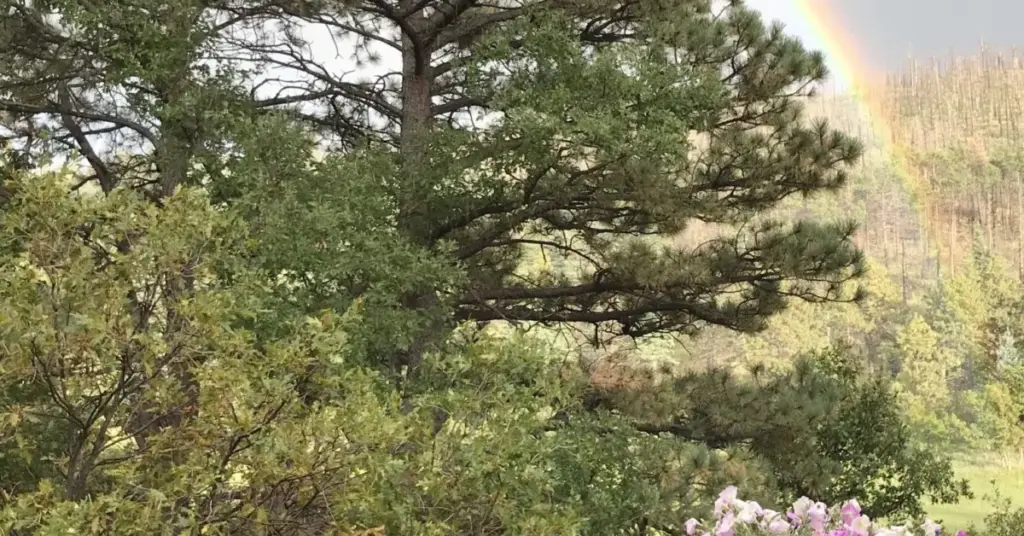
For years, the routine remained steadfast and simple: lace up walking shoes, step out the door, and observe the minute details of neighborhood architecture, a nearby pond, or the hardy evergreens surrounding a family mountain cabin. For the author, who describes herself as a lifelong walker and watcher, these daily excursions have long served as an essential anchor for physical energy and mental well-being. Without them, the internal system quickly turns, as she puts it, to "ick."
Yet, a subtle but profound shift recently took place in how those daily walks are shared with the wider world. For a long time, the ritual included documenting the strolls with smartphone photographs posted to Facebook, routinely captioned with a straightforward, descriptive label: "morning walk." A few months ago, however, that caption changed to something more deliberate and reflective: "morning prayer."
The evolution did not happen in a vacuum. The idea emerged, as many lifestyle shifts do, over a casual lunch with a friend. The companion was deeply distraught over the current sociopolitical climate, expressing a heavy sense of despair and feeling that traditional acts of civic resistance had grown entirely futile. Throwing her hands up, the friend lamented that she felt all she had left was prayer. The author realized immediately that she had been harboring the exact same sentiment, navigating a shared cultural exhaustion that has left many citizens searching for deeper, more personal forms of solace.

Mulling over the conversation in the days that followed, the author decided to put the concept into action by deliberately reframing her nature photography as visual prayers and sharing them online.
Initially, the transition was met with a degree of personal hesitation and discomfort. The author worried about being perceived by her digital network as a religious eccentric. This reflects a broader cultural tendency, particularly among political liberals, to deliberately conceal personal spirituality out of a sense of moral politeness or social decorum. Ironically, this hesitation exists despite the reality that many like-minded individuals are regular churchgoers for whom a spiritual community remains a vital, sustaining part of daily life.
The author’s own relationship with formal religion is complex and deeply rooted in her upbringing. She is not someone who would describe herself as overtly prayerful in a traditional, vocal sense, though prayer has always existed in her life in one form or another. Her foundational years included a strict Catholic education spanning from the first grade through high school. As a child, she attended church services faithfully on most Sundays and even many weekdays, carrying a small white leather prayer book until the inevitable onset of teenage adolescence made her feel she had grown "too cool" for such items. During long Sunday Masses, she typically found herself daydreaming, yet she always followed along with the spoken prayers, discovering early on that the repetitive structures offered a comforting, meditative quality.
Despite years of formal religious education, the author humorously admits she remains entirely unqualified to engage in any sort of high-level theological discussion. Instead, her spiritual outlook has been shaped and enriched by the wisdom of numerous holy women she counts among her close friends. These relationships have taught her a liberating truth: while prayer can certainly be formal, it does not need to be. It can function as an essential component of an organized religious service, but it also exists entirely outside the walls of institutional religion. For the author, that independent space is perhaps where prayer lives most strongly and authentically.
When the practice first began on Facebook, the morning prayers took the form of quiet sunrises captured from her balcony. The winter months offered limited opportunities for extensive outdoor walks, and the surrounding natural world was stark, cold, and monochromatic. Yet, those early morning bursts of light against the horizon felt undeniably like an act of grace. As the weeks progressed, she began adding evening shots of lingering sunsets or the pale moon as a form of evening prayer.
With the arrival of spring, the digital altar expanded to include vibrant irises, blooming roses, shimmering neighborhood ponds, and newly budding trees. On days when the natural world offered an abundance of sights, an afternoon prayer was occasionally added to accommodate the spillover of beauty. Now, as the seasons turn once again, those daily visual offerings sparkle with the rich, warm gold of autumn.
For the author, these photographs serve as intentional pauses in a fast-paced world—moments to stop, breathe deeply, offer gratitude, ask for guidance, express sorrow, or simply process whatever emotional and spiritual needs the day brings. Viewers on her friends list are given complete freedom to engage with the posts or simply scroll right past them. There is no evangelical mandate or instruction directed at her audience; rather, the posts are simply an authentic sharing of what prompts her own sense of prayerfulness.
This distinction is important to the author, who remains acutely aware that institutional religion has not always been a force for goodness and virtue throughout human history. In fact, she acknowledges, religion has frequently served as the exact opposite. However, she believes that the act of prayer itself belongs to everyone, stripped of dogmatic requirements. Her daily documentation of nature’s quiet majesty provides a reliable, grounding reason to pause, inhale deeply, and give thanks.
That simple act of appreciation offers a welcome antidote to the modern digital experience. It stands in stark contrast to the anger, outrage, and online toxicity that so frequently floods social media feeds. Instead of inhaling the digital venom that permeates contemporary screens, the author finds herself breathing in the tranquility of the natural world.
The power of this quiet shift was recently underscored by a real-world interaction stemming from one of her posts. A former student reached out via a direct message to express her gratitude for a photo of a flower that had been shared as a daily prayer. The image had struck a deep chord, vividly reminding the young woman of her mother, who had passed away a couple of years prior. The message arrived in the evening hours, sparking a warm, comforting virtual conversation between the former teacher and student just as the author was preparing for bed.
Reflecting on the exchange later, the former student remarked on how glad she was that the two had reconnected. The author echoed the sentiment wholeheartedly. In her view, that meaningful late-night conversation was nothing short of an answered prayer. She drifted off to sleep that night comforted by the memory of a beloved mother, the image of a delicate peony, and the connection to a treasured student.
When morning arrived bringing the usual temptation to linger in bed and embrace laziness, the memory of that connection won out. She quickly put on her clothes, stepped outside into the crisp air, and headed directly to the local park with her phone in hand, eager to look for new prayers.