








KENT COUNTY, Mich. — At just 5 years old, Dahlia Swanson has already experienced a lifetime of extraordinary milestones. She has undergone intensive spinal neurosurgery, defied the cautious predictions of medical professionals by walking out of a hospital, traveled across the country to advocate for accessibility, and even taken her place on the runway during New York Fashion Week.
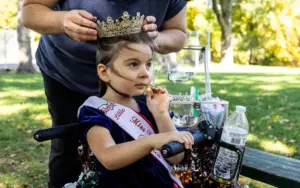
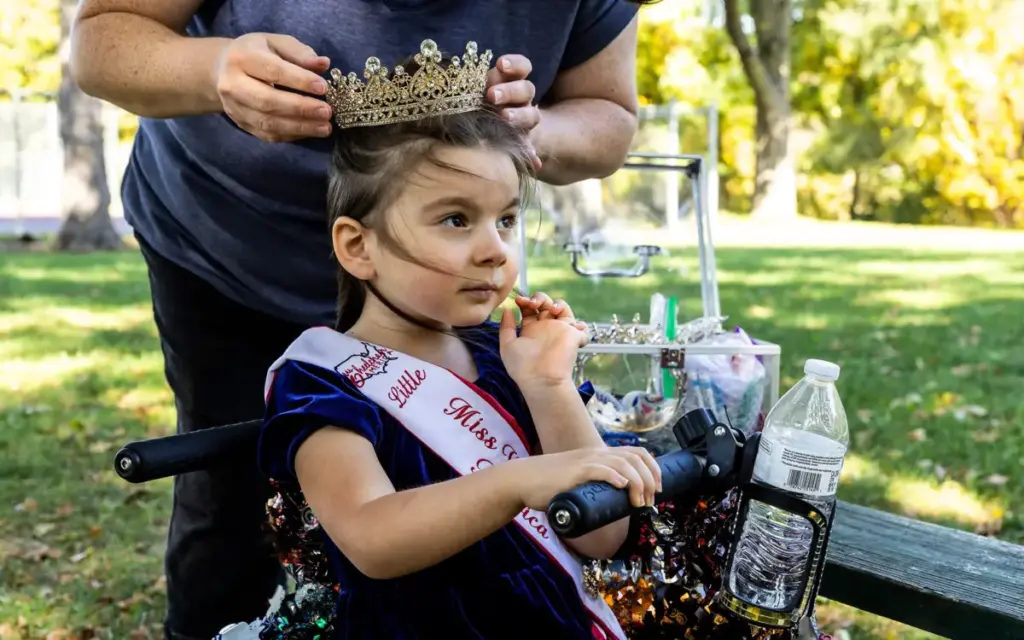
Residing in Alto, Michigan, Dahlia made history last year when she was crowned the very first Little Miss Wheelchair America. Since taking on the title, she has embraced her platform with unmatched enthusiasm, utilizing her national visibility to champion a more inclusive and accessible world for individuals of all ages. Born with cerebral palsy, a neurological condition that affects movement and muscle tone, Dahlia possesses a fierce and unwavering determination to help others with disabilities realize that they can achieve whatever they set their minds to.
"I’m proud of how I can do anything I want, and it’s awesome that I can show people that you can do anything with a disability, adult or kid," Dahlia said.

From her earliest years, her parents recognized a resilient spirit within their daughter, noting that she consistently refused to let physical obstacles define or limit her potential.
"Now the ice is in my veins"
Dahlia was formally diagnosed with cerebral palsy at the age of 2. The condition primarily impacts the movement in the lower half of her body as well as her left arm, presenting daily challenges that require adaptation, therapy, and immense physical effort.
The turning point in her young medical journey came on the day before her fourth birthday. Medical specialists at Helen DeVos Children’s Hospital performed a complex spinal neurosurgery known as selective dorsal rhizotomy. During the procedure, surgical teams severed specific targeted nerves in her lower spine, an intervention designed to significantly reduce muscle spasticity and loosen tight muscles that impede mobility.
What followed was a grueling period of recovery that tested the limits of a toddler. Dahlia underwent six weeks of intensive rehabilitation at Mary Free Bed Rehabilitation Hospital. During this time, she had to relearn fundamental motor skills, such as how to crawl and how to roll over. It was, as her 32-year-old father, Brandon Swanson, described it, "starting back from square one, essentially."
At that juncture, medical professionals advised the family to brace themselves for a long-term reality. Doctors told them to prepare for a period where Dahlia would likely be wheelchair-bound for the foreseeable future while she slowly relearned those basic physical functions, her 34-year-old mother, Chelsey Lovett, recalled.
Dahlia, however, had entirely different plans. With a steadfast mindset, she insisted to her family and medical team that she was going to walk straight out of that hospital upon her discharge.
"They were like, ‘We love that that’s what you want to do, but we also don’t want there to be an unrealistic expectation set where it could be a negative thing for her,’" Lovett said, recalling the medical staff’s cautious optimism.
True to her word, Dahlia did walk out, providing an unforgettable moment that vividly demonstrated her refusal to be bound by conventional limitations.
"She had confidence in herself that she was going to do it, whether they told her she could or couldn’t," her father said.
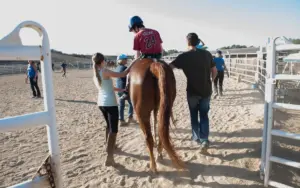
Today, the 5-year-old navigates her world using a walker for mobility support, and she is even beginning to take her first unassisted steps, according to her dad. Growing stronger by the day, she refuses to sit on the sidelines of childhood, actively participating in a variety of adaptive sports, including karate and skateboarding.
Lovett fondly recalled the first time her daughter tried sled hockey with the Grand Rapids Sled Wings, a local nonprofit organization dedicated to funding and facilitating adaptive hockey programs for youth.
"We sat her in the sled, and I believe the exact words were, ‘Now the ice is in my veins,’" Lovett said. "And then she did whatever she could to keep going."
Being the first Little Miss Wheelchair America
Dahlia’s journey into advocacy reached a national stage in May 2025, when she was crowned Little Miss Wheelchair Michigan. Following that success, she was selected last fall as the inaugural Little Miss Wheelchair America for the 2026-27 term, marking a historic milestone as the very first child to wear the national crown.
Mary Zendejas, president of Ms. Wheelchair America, explained that she established the new youth extension of the established national organization specifically to help empower young girls. The goal of the program is to encourage participants to embrace their voices, build confidence, and become effective advocates for the broader disability community.
When Zendejas first met Dahlia, she was immediately struck by the young girl’s remarkable charisma and steadfast determination. It quickly became evident that the then-4-year-old possessed the exact qualities needed to inaugurate the role.
"She was a ray of sunshine who brought joy to everyone at our national competition," Zendejas recalled. "She was the first to arrive at activities and the last to leave, eager to participate in everything. Everyone wanted to spend time with her. Her energy was undeniable, and her ability to bring a room together was remarkable."
As the reigning titleholder, Dahlia’s official responsibilities extend far beyond symbolic representation. She travels extensively to events across the United States to represent the Ms. Wheelchair America organization, spreading a message of inclusivity. Her duties have already taken her to California, New York, Chicago, New Jersey, Pennsylvania, and numerous communities across her home state of Michigan.
In September, her travels brought her to New York City, where she walked the runway in a New York Fashion Week show. Dahlia noted that she believes she was the only person with a disability on the runway during the event. Expressing a deep passion for fashion, she plans to continue advocating for the creation and widespread availability of adaptive clothing options designed specifically for people with disabilities.
"It means so much, because you can do things with a disability, even like fashion, anything, if you put your heart and hard work into it," she said.
Inspiring others to dream big
Central to Dahlia’s reigning platform as Little Miss Wheelchair America is the simple yet powerful motto: "Play! Learn! Grow!" The initiative is intentionally designed to inspire other children living with disabilities by demonstrating that, with proper adaptations, accessible resources, and dedication, they can actively pursue and achieve their personal goals.
"I want to let everybody know… that you need to adapt and you need to put your heart and hard work into it to make it happen," she said.
A passionate advocate for physical activity, she loves encouraging other children with disabilities to get involved in adaptive sports, which are carefully engineered to accommodate the unique needs of participants with varying physical abilities.
Her parents emphasize that they hope other families see Dahlia’s journey and realize the vast array of opportunities available within the disability community. They noted that Dahlia’s growing platform has already served as a vital bridge, connecting numerous families to local programs and athletic opportunities—such as adaptive skateboarding—that they were previously unaware existed.
"They still can be a kid," Brandon Swanson said. "They still can go out and experience all that they want to. It may not be the same as some of their friends or some of their family, but if they want to, they still can have that childhood."