








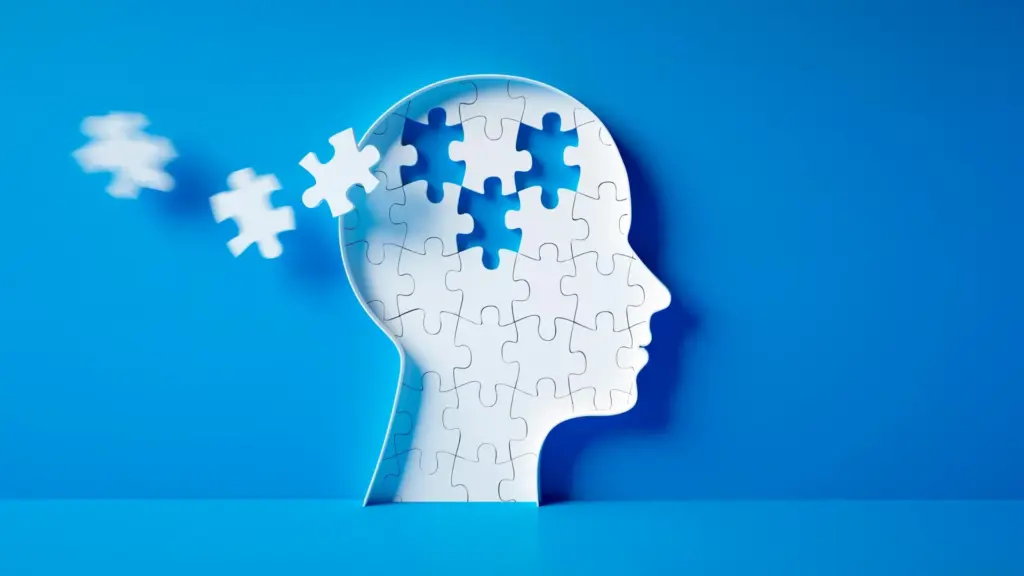
For generations, the narrative surrounding human aging has been dominated by a singular, somber theme: the gradual, inevitable erosion of the mind. Memory lapses, slowed processing speeds, and the diminishing ability to recall specific details have long been framed as the defining characteristics of growing older. However, a growing body of research from the University of Arizona is challenging this perspective, suggesting that what we often interpret as a decline may actually be a sophisticated biological transition—an evolutionary adaptation that shifts the brain’s focus from the acquisition of new, granular information to the preservation and transmission of a lifetime of wisdom.
The Adaptive Aging Hypothesis
Researchers at the University of Arizona have proposed a new framework for understanding the aging brain, which they have termed the "adaptive aging hypothesis." Their findings, recently published in Perspectives on Psychological Science, argue that the neurological changes observed in older adults should not be viewed solely through the lens of deterioration. Instead, they suggest that these changes represent a natural, necessary stage of human development designed to optimize the brain for a different set of priorities.
Rather than becoming "less capable," the aging brain appears to be reorganizing its resources to better leverage a vast, lifetime repository of knowledge, experiences, and social understanding. This hypothesis provides a compelling alternative to the traditional model of aging, suggesting that the brain is not failing, but rather shifting its operational focus to better serve the individual’s role in society as a teacher, mentor, and custodian of collective wisdom.
Fabian-José Fernandez, an associate professor of cognition and neural systems at the University of Arizona and a coauthor of the study, emphasizes that the scientific community may have been misinterpreting the evidence for years. "If we look at normative aging as a story of just decline, we are really missing the boat," Fernandez said. "The older brain is optimized for different things than the younger brain, predominantly the sharing of stored expertise and social relationships."
The Shift From Memory to Meaning
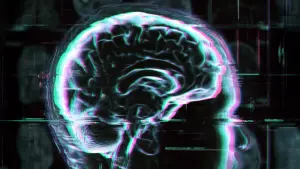
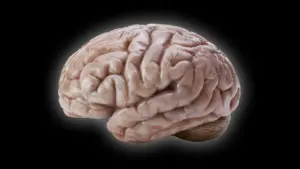
To understand this transition, it is necessary to examine the interplay between two critical regions of the brain: the hippocampus and the frontal cortex. In the standard neurological model, the hippocampus is primarily responsible for the encoding of episodic memories—the specific "who, what, when, and where" of our daily experiences. It is the librarian of the brain, cataloging individual events with precise detail.
Conversely, the frontal cortex acts as the brain’s executive suite, responsible for higher-order tasks such as pattern recognition, long-term planning, and the synthesis of information into broader concepts. This region is the primary engine for extracting the "gist" or the central meaning from an experience, rather than its minute components.
The adaptive aging hypothesis suggests that as individuals move through middle age and into their later years, the brain undergoes a subtle but profound recalibration. Activity in the hippocampus begins to recede, while the frontal cortex takes on a more dominant role. This shift, the researchers argue, is a functional adjustment. A young person, who has yet to accumulate a library of life experience, must function like a sponge, soaking up every available detail to build a foundational understanding of the world. By contrast, an older individual possesses an extensive, well-developed internal archive. For them, the ability to rapidly record the precise color of a car they saw last Tuesday is far less beneficial than the ability to synthesize decades of experience to navigate a complex social situation or provide sage advice to a younger peer.
"One could argue you are developing your entire life, and development occurs in lockstep with the needs of your brain," Fernandez explained. "When you’re younger, the hippocampus turns on because you don’t have a knowledge base or know how the world works. A kid absorbs information like a sponge because they are building an archive of information. In early life, the balance is tilted toward recollecting declarative memories with precision, detail, and context."
Evolutionary Drivers and the Value of Wisdom
The observation that this neurological transition occurs not only in humans but also across various animal models suggests that this process is driven by evolutionary forces. From an evolutionary standpoint, the survival of a species depends on more than just the physical survival of the individual; it depends on the successful transfer of knowledge between generations.
If an individual survives into later life, they have successfully navigated the challenges of their environment. By the time they reach old age, they possess a wealth of survival-relevant information—from social dynamics to environmental patterns. The adaptive aging hypothesis posits that the brain undergoes biological changes to protect and consolidate this knowledge, ensuring it remains accessible for transmission to younger generations.
"Given those goals, it makes sense that you aren’t interested in nitty-gritty details," Fernandez noted. "You are interested in safeguarding the vast knowledge you already have. Evolution may be saying that if you make it long enough, there’s a need to transmit this information, so we put into motion biological changes that enforce and protect your semantic and autobiographical memories."
In this light, the "loss" of memory for minor, irrelevant details is not a bug in the system, but a feature. By clearing the clutter of extraneous information, the brain prioritizes the structural integrity of its most meaningful insights. This facilitates the older adult’s role as a mentor and storyteller, positions that have been vital to the survival of human communities throughout history.
Distinguishing Healthy Aging from Alzheimer’s
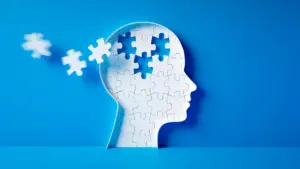
A critical component of the University of Arizona study is its attempt to provide a clearer framework for distinguishing normal, healthy cognitive aging from neurodegenerative conditions like Alzheimer’s disease. For decades, many researchers inadvertently conflated the two, often treating Alzheimer’s as an extreme, accelerated form of the standard aging process.
Fernandez and his colleagues argue that this is a fundamental misconception. "When I was in grad school, people thought about Alzheimer’s as a more intense version of cognitive aging, but that is just not the case," Fernandez said. "They are completely different."
In healthy aging, the shift away from hippocampal reliance is a controlled, developmental process that typically unfolds gradually between the fifth and seventh decades of life. In contrast, Alzheimer’s disease is defined by the accumulation of pathological proteins, such as amyloid and tau, which disrupt the brain’s natural functions.
The distinction is particularly visible in the hippocampus. While healthy aging involves a natural "de-emphasis" of hippocampal activity, Alzheimer’s often causes the region to become hyperactive in a disorganized, destructive way. This hyperactivity is not a sign of enhanced cognitive function, but rather a disruption of the circuits required for memory and identity. This pathological process interferes with the very networks that allow an individual to access their own life history, lexicon, and vocabulary. By clearly identifying how healthy adaptive shifts differ from disease-driven pathologies, researchers may eventually develop more accurate diagnostic tools and, potentially, more effective interventions.
Reconsidering Society’s View of Aging
The implications of the adaptive aging hypothesis extend well beyond the laboratory. If the brain is naturally evolving to prioritize wisdom over rote recall, then society’s current methods of evaluating older adults—often based on metrics derived from younger populations—may be deeply flawed.
The researchers argue that expecting older adults to perform in the same way as younger people is not only unrealistic but counterproductive. By forcing an emphasis on the retention of precise, nitty-gritty details, society may be distracting the aging brain from its primary, more valuable tasks: synthesizing experience and providing guidance.
"For many individuals, the weight of how you process information should probably not be so hippocampal-centric by the sixth or seventh decade," Fernandez suggested. Instead of lamenting the loss of short-term memory speed, he advocates for a societal shift that creates more opportunities for intergenerational exchange. When older and younger individuals interact, the older adult can offer the "gist"—the broader, meaning-laden perspective—while the younger adult provides the fresh energy and detailed focus necessary for the current task.
This collaborative model of social interaction could be the key to unlocking the untapped potential of the aging population. As it stands, there is a tendency to view older individuals through a deficit-based model, ignoring the decades of accumulated insight that lies dormant.
"People see older individuals and look at them as not being on par with younger individuals across a lot of metrics," Fernandez said. "The way I look at it is that you’ve got someone with a brain that has been active for several decades and has seen a lot. There is tremendous value there, and we don’t do a good job of unlocking it."
The adaptive aging hypothesis offers a more optimistic and nuanced understanding of the human lifespan. It suggests that the aging brain is not simply running out of steam, but rather undergoing a deliberate, biologically programmed transformation. By acknowledging these strengths, society can move toward a more inclusive view of cognitive health—one that honors the importance of both the rapid, detail-oriented mind of the youth and the profound, meaning-centered wisdom of the elder. In doing so, we may find that the true capacity of the human mind is not defined by its ability to remember everything, but by its ability to understand the value of what it has learned.