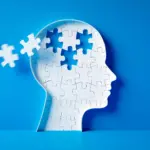






For generations, the narrative surrounding human aging has been dominated by a singular, somewhat grim perspective: it is a story of inevitable decline. We are taught to view the passage of time through the lens of diminishing returns—fading memory, slowed reaction times, and the gradual erosion of mental acuity. However, a growing body of research from the University of Arizona is challenging this conventional wisdom. Scientists are now proposing that what we perceive as "cognitive decline" may actually be a sophisticated, biologically driven shift in how the brain functions, prioritizing the synthesis of a lifetime of experience over the rote memorization of minute details.
This new framework, detailed in a study published in Perspectives on Psychological Science, introduces what researchers call the "adaptive aging hypothesis." By synthesizing insights from molecular biology, neuroscience, and brain imaging, the team argues that the aging brain is not merely breaking down; it is recalibrating itself to serve a different, perhaps more essential, role in the human experience. Rather than struggling to function like a younger brain, the older brain is optimized for the preservation and transmission of accumulated wisdom, mentorship, and social connectivity.
Redefining the Aging Brain
"If we look at normative aging as a story of just decline, we are really missing the boat," explains Fabian-José Fernandez, an associate professor of cognition and neural systems at the University of Arizona and a coauthor of the study. According to Fernandez, the older brain operates under a different set of priorities than the younger brain. While youth is characterized by the need to absorb and index vast amounts of new information to build a foundational understanding of the world, later life is defined by the need to synthesize that information into meaningful patterns.

The hypothesis suggests that this transition is an evolutionary adaptation. Just as a child’s brain is biologically wired to be a "sponge," soaking up raw data to form a personal archive, the mature brain is wired to extract the "gist" of life experiences. This allows older adults to act as repositories of knowledge, capable of providing context, guidance, and social cohesion that are vital for the survival and success of younger generations.
The Shift from Memory to Meaning
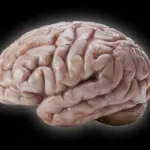
To understand how this transition occurs, one must look at the interplay between two critical regions of the brain: the hippocampus and the frontal cortex. The hippocampus is the brain’s librarian; it is responsible for encoding, storing, and retrieving specific, detailed episodic memories—the "where," "when," and "how" of our experiences. The frontal cortex, by contrast, is the brain’s strategist. It is responsible for higher-level cognitive functions, such as pattern recognition, decision-making, and the extraction of broader meaning from complex situations.
The researchers propose that during healthy aging, the brain naturally shifts its "processing weight" from the hippocampus toward the frontal cortex. In early life, the hippocampus is highly active, precisely because an individual has little stored knowledge and must record every new experience in detail to learn how the world operates. By the time a person reaches their fifth, sixth, or seventh decade, however, the brain possesses a massive, well-indexed library of concepts and experiences.
In this later stage, the cognitive cost of recording every new event with high-fidelity detail—like the exact color of a shirt someone wore at a dinner ten years ago—becomes less valuable than the ability to instantly connect a current situation to a lifetime of relevant patterns. The brain stops acting like a high-resolution camera and starts acting like a highly sophisticated interpretive engine, focusing on the "gist" of events and their underlying social or practical significance.
Evolutionary Drivers and the Wisdom of Age
The fact that these neurological shifts are observed not just in humans but across various animal models suggests that this transition is deeply rooted in our evolutionary history. Fernandez argues that there is an undeniable evolutionary advantage to having individuals in a community who are experts at interpreting life rather than just recording it.
"Evolution may be saying that if you make it long enough, there’s a need to transmit this information, so we put into motion biological changes that enforce and protect your semantic and autobiographical memories," Fernandez notes. By prioritizing the preservation of meaningful knowledge over the nitty-gritty details, the brain ensures that the accumulated wisdom of an individual remains accessible for the benefit of the group. This supports the distinct role that older adults play in human society: that of the teacher, the mentor, and the storyteller. By filtering out the noise of trivial details, the aging brain becomes more efficient at delivering the "big picture" advice that is essential for social and familial stability.
Distinguishing Healthy Aging from Pathology
A significant portion of the researchers’ work is dedicated to clarifying the distinction between normal cognitive aging and neurodegenerative diseases like Alzheimer’s. For years, there was a tendency in clinical settings to view Alzheimer’s simply as an accelerated or more severe form of typical aging. Fernandez and his colleagues argue that this is a fundamental misconception.
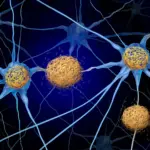
In healthy aging, the shift away from hippocampal reliance is a controlled, adaptive process. However, in Alzheimer’s disease, this transition is violently disrupted by the buildup of pathological proteins, such as amyloid and tau. While the healthy brain "deemphasizes" hippocampal activity, the brain affected by Alzheimer’s often exhibits the opposite: abnormal, unproductive hyperactivity in the hippocampus.
This internal chaos destroys the very circuits that allow for the successful transition to a more meaning-centered cognitive style. When these networks are compromised, the individual loses the ability to access their hard-won store of knowledge, vocabulary, and personal history. By identifying this "beautiful developmental transition" in healthy aging, researchers hope to better understand exactly how and why disease states deviate from the norm, potentially leading to more targeted diagnostic and therapeutic approaches.
Embracing the Hidden Strengths of the Aging Brain
The implications of the adaptive aging hypothesis extend well beyond the laboratory, touching on how society views and supports its older population. If we continue to measure the success of an aging brain by the same metrics we use for a younger brain—specifically, the ability to recall specific, granular details—we will inevitably conclude that the older brain is failing.
The researchers argue that this is a flawed approach. By forcing older adults to focus on memory-centric tasks that no longer align with their brain’s natural strengths, we may be suppressing their most valuable contributions. Instead, society should prioritize environments that leverage the strengths of the mature mind, such as mentorship roles, intergenerational social programs, and opportunities for older adults to synthesize and share their experiences.
"People see older individuals and look at them as not being on par with younger individuals across a lot of metrics," says Fernandez. "The way I look at it is that you’ve got someone with a brain that has been active for several decades and has seen a lot. There is tremendous value there, and we don’t do a good job of unlocking it."
The adaptive aging hypothesis offers a hopeful, evidence-based reframing of the human life cycle. It suggests that while the biological clock does indeed bring change, those changes are not necessarily a path toward obsolescence. Instead, they represent a transformation into a final, highly specialized stage of development—a transition from the raw collection of data to the masterful, meaningful application of a lifetime of wisdom. By recognizing and valuing these distinct cognitive strengths, we may find that the aging brain is not losing its utility, but rather shifting its focus toward the very things that make human experience worth sharing.