







By Jorn Bettin
Core ideas within Buddhist and Daoist spiritual traditions reflect the commonalities found across many human-scale indigenous cultures. A compassionate framework of love as vulnerable mutual knowing is deeply compatible with a panpsychic relational philosophy. Everyone wants their experience to be taken seriously. We are embodied spirits, compelled to make sense of this world, and we can only do so in good company.
Life
Life creates conditions conducive to life — Janine Benyus. This simple definition or observation strongly hints at the fact that the dynamic process of life consists entirely of feedback loops.

Life is entirely relational, sacred, cyclical, fleeting, compostible, nested, regenerative, and it forever remains mysterious for all participants. At any high-dimensional space that provides a reasonable description of Gaia—meaning all of life, including the potential of homo ecologus—it is best conceptualized entirely relationally, from the very bottom layers of physics upwards.
Life consists entirely of relationships, which operate as feedback and learning loops. In aggregate, these loops constitute the building blocks of what, in our human-animal scale perception, is experienced as consciousness. There is no shortage of people who conceptualize life this way, and this becomes exceptionally obvious when studying Eastern spiritual and philosophical texts.
As humans with inherent limitations, we will never be able to scientifically prove to any quantifiable level of certainty that consciousness emerges in this exact way. However, science will also never be capable of disproving that consciousness emerges and exists through these relational mechanics. This in no way means that science is useless; it simply highlights the limits of science, which are fundamentally part of the limits of human comprehensibility. In the same way, within the abstract symbolic universe of mathematics, there are statements that can never be proven true or false, and we are not even equipped to identify all such statements.

At the spatial and temporal scales relevant to biological and ecological systems, the smallest feedback loops emerge between molecules, resulting in the mind-boggling complexity found in cell biology and the molecular genetic code. These feedback loops scale up to the largest feedback loops between bioregional terrestrial and marine ecosystems within Gaia. Widely popular anthropocentric conceptions of consciousness at best generalize to animals with brains, while excluding all other feedback loops in living systems that contribute to the lived experiences of consciousness at much smaller and much larger spatial and temporal scales.
Powered-up, or positive, feedback loops are those in which, over time, more information—whether molecules or more abstract codes—piles up in some living cells or beings than in others. Such powered-up feedbacks are always temporary phenomena relative to the lifespans of the living cells or beings involved. The bodies of human animals grow to a certain scale and then stay intact for a lifetime. During this time, all molecular feedback loops within the body are maintained in a de-powered or balanced state, fed by external energy from living food, resulting in waste consisting of building blocks ready to be reassembled into new life by the thermonuclear energy of the sun.
Similarly, social feedback loops between human animals grow into relationships, and healthy relationships stay intact for a human lifetime. Throughout life, feedback loops within a healthy relationship are maintained in a de-powered state, fed by shared lived experiences and mutual understanding, resulting in cultural output ready to be absorbed by the local ecology of care and integrated into new relationships.
Spirits
A universe conceptualized entirely in terms of dynamic feedback and learning loops leads to a panpsychic philosophy in which consciousness is omnipresent at all levels of scale. This perspective is deeply compatible with Eastern spiritual traditions such as Buddhism and Daoism. It invites us to consider non-anthropocentric viewpoints, alerts us to the cultural bias inherent in modern industrialized notions of intelligence and success, and draws attention to the lower and upper limits of human scale, including our cognitive and emotional boundaries.
Buddhism, also known as Buddha Dharma, is an Indian religion and philosophical tradition based on teachings attributed to the Buddha, a wandering teacher who lived in the sixth or fifth century BCE. As the world’s fourth-largest religion, it has over 520 million followers comprising seven percent of the global population. It arose in the eastern Gangetic plain as a Śramaṇa movement and gradually spread throughout Asia before reaching the West in the 20th century. According to tradition, the Buddha instructed his followers in a path of development leading to awakening and full liberation from dukkha, or suffering and unease. He regarded this path as a Middle Way between extremes such as asceticism and sensual indulgence.
The Buddhist focus on minimizing suffering and unease corresponds directly to the active desire of hypersensitive neurodivergent people to minimize cognitive dissonance. It also points to the social problems that arise when a culture insists on maintaining high levels of cognitive dissonance over extended periods.

Similarly, Taoism or Daoism is a diverse philosophical and religious tradition indigenous to China, emphasizing harmony with the Tao, an enigmatic process of transformation ultimately underlying reality. Taoist thought has informed practices such as meditation, astrology, qigong, feng shui, and internal alchemy, with a common goal of self-cultivation. Taoist ethics emphasize effortless action, naturalness, simplicity, and the three treasures of compassion, frugality, and humility. These virtues align with the sensitivity profiles of many neurodivergent people and offer a timeless critique of anthropocentric empire-building attempts, calling for disengagement from such structures.
Taken together, the core ideas within Buddhist and Daoist spiritual traditions reflect the commonalities found across human-scale indigenous cultures, including the virtues and operating principles of egalitarian hunter-gatherer societies. Foundational Daoist texts like the Zhuangzi also emphasize the vital role of humor in subverting and weakening anthropocentric empire-building.
Love
The extent to which we are alive emerges from the products of mutual trust, commitments, and shared understanding across all our relationships. By virtue of their scale and design, relationships with abstract, super-human scale anthropocentric institutions are devoid of genuine shared understanding and experiences. The more a culture forces people to trust and invest in such institutions, the less capacity we have for genuine relationships with living beings, the less our lives are shaped by mutual trust, and the less alive we are.
Once we understand these dynamics and consciously reorient our lives toward human scale, the prospect of institutional collapse can be understood from a sober perspective as the expiry of a social license that was inherently invalid all along. There is immense value in learning from indigenous societies that have not yet been fully crushed by the myth of homo economicus.
Relationships can be understood as continuous, multi-modal, de-powered dialogues within ecologies of care, including the resulting entanglements of our inner worlds. Reframing evolution in collaborative terms—akin to collaborative niche construction and compassionate evolutionary design—has become rare in the modern world, even though thinkers like Pyotr Kropotkin wrote about mutual aid quite eloquently over a century ago. The compassionate frame of love as vulnerable mutual knowing is entirely compatible with a panpsychic relational philosophy of the universe based on feedback and learning loops.
Sensitivity Profiles
All humans possess unique sensitivity profiles shaped by neurological baseline dispositions and lived experiences within specific ecological contexts. This is particularly true for hypersensitive neurodivergent people, many of whom have been sensitized by traumatic experiences in a social world where they are systematically marginalized, pathologized, and sometimes criminalized.

Our individually unique nervous systems and sensitivities develop and evolve throughout our lives. Research indicates that a vast majority of neurodivergent adults frequently feel overwhelmed, misunderstood, disrespected, and unsafe. Overall well-being is determined by alignment between our sensitivity profiles and the ecology of care in which we are embedded.
The official diagnostic criteria for autism are deeply entangled with symptoms of complex trauma. Autistic and neurodivergent individuals clearly have uncommon baseline sensitivity profiles from birth, upon which traumatic lived experiences in a hypernormative industrial world accumulate. Ultimately, it is impossible to separate where autism stops and trauma responses begin.
The modern medical model, focused on diagnosing and treating atomized individuals, is fundamentally limited. Unless these limits are acknowledged, this paradigm can cause significant harm, especially to intersectionally marginalized populations. Simplistic diagnostic labels and therapies centered on decontextualized individuals fail to capture the reality that everyone wants their experience to be taken seriously.
Powered-up relationships—persistent, unbalanced feedback loops between humans—generate cognitive dissonance, experienced as a dis-ease that demands resolution. Ignoring or suppressing cognitive dissonance for extended periods results in mental, spiritual, and bodily ailments. Hypersensitive individuals often maintain a conscious awareness of cognitive dissonance and feel compelled to take or avoid actions to reduce it, whereas others may tolerate it for longer periods while suffering unacknowledged health consequences.
Culture Co-Evolution
All major evolutionary milestones in the history of Gaia possess co-evolutionary characteristics, exemplified by the emergence and co-evolution of biological cells and multi-celled organisms. Empirical knowledge of cell biology teaches us about the complementary roles of abstract symbol systems and semantics in co-evolutionary processes, revealing evolution to be inherently ecological rather than species-specific.
The semi-permeable membranes of cells provide a model for co-evolutionary processes between multiple living organisms that has been road-tested by Gaia for billions of years. Utilizing category theory, model theory, and denotational semantics, we can precisely articulate the interdependencies between abstract symbol systems and semantics.

Cultural co-evolution at human scales relies on conscious collaborative niche construction rather than wasteful, head-to-head competition. From a co-evolutionary standpoint, head-to-head competitions are short-term, energy-wasting distractions that should be clamped down upon whenever they arise within or between cultural organisms. These cultural foundations are prioritized in egalitarian hunter-gatherer societies and are the product of 300,000 years of cultural co-evolution, demonstrating the core values of life-affirming cultures.
Beyond human scale, we can relax and trust Gaia’s wisdom. Where invited, we can provide palliative care to dying super-human scale institutions while providing relevant education toward safe and viable exit paths for those trapped within them.
The Human Spirit Within Gaia
Humans evolved to make sense of the world at human scales. As part of an open-source human-scale heritage for future generations, transparent and appropriately designed digital technological guardrails can extend human collaborative niche construction to larger scales without centralizing decision-making power in the hands of authoritarian strongmen.
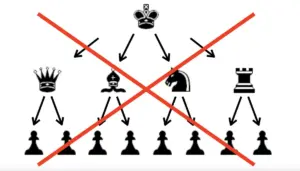
It is time to replace a 10,000-year-old misguided faith in power-drunk strongmen with a scientifically enlightened faith in more than four billion years of Gaia’s evolved wisdom. Radical egalitarianism forms the architecture of human adaptive intelligence, differing significantly from the nervous systems of other primates due to our unique capacities for language and culture. Consequently, attempting to define "normal" or "adaptiveness" at the level of the isolated individual is fundamentally absurd.
Western, Educated, Industrialized, Rich, and Democratic (WEIRD) societies have become detached from the evolutionary roots of our capacity for culture. Surrounded by spectacles and institutionalized corporate structures, individuals anchor themselves in non-human biological realities while treating cultural constructions with deep suspicion. In the ongoing cultural metamorphosis, Gaia remains the true authority, speaking with increasing clarity to us all.
Becoming Aware of Cultural Bias
To become consciously aware of cultural bias across human endeavors, it helps to examine academia as a system connected via learning and feedback loops between human cultural output and human attempts to understand Gaia. Critically examining the humanities, mathematical disciplines, statistics, and engineering reveals the cultural assumptions underpinning modern science. Mathematics stands out as uniquely dedicated to making all assumptions explicit.

Distinguishing human cultural outputs from empirical scientific attempts to understand Gaia brings internalized ableism into sharp focus. This lens exposes the dangerous levels of pseudoscience within the digital economy, artificial intelligence, and related technical disciplines. The social license for these WEIRD disciplines is often constructed by referencing internal metrics while utilizing language that normalizes violence and suppresses the precautionary principle.
Furthermore, internalized ableism manifests in the narrow age bracket—roughly between 20 and 65—in which homo economicus is considered economically productive or useful. Those outside this bracket are often labeled economic burdens. The religion of economics has legitimized an obsession with maximizing quantifiable economic utility, leading to the absurd notion of net worth and stratified age cohorts that diminish intergenerational learning.
Reviving Trust in Humanity
Nothing in the atomized modern social world makes sense anymore because human-scale cultural organisms and their adaptive importance have been eroded from living memory. The competitive frame of homo economicus normalizes the compulsion to appear independent and strong, while fears of exposing vulnerability pave the path for ubiquitous mistrust and mental health crises.
Research clearly shows that while neurodivergent individuals deeply wish to help others, many are afraid to ask for help themselves. Indoctrination in the myth of homo economicus causes people to internalize failure, leading to an epidemic of self-hatred, shame, and suppressed guilt masked by narcissistic behaviors necessary for survival in a toxic society.
These toxic patterns will persist until the ideology of homo economicus is discarded. As 2025 marks the United Nations International Year of Cooperatives, showcasing how cooperative models help build a better world, we are reminded that human-scale ecologies of care offer a viable path forward. Buddhist and Daoist values provide overarching guidance in minimizing suffering, sharing relational reasoning, and nurturing trusted human-scale connections.
As we navigate this transition, we are reminded of the wisdom shared by researchers and cultural thinkers: the real struggle is not between East and West or right and left, but between those who wish to move toward a caring, equitable world and those who believe cruelty and domination are inevitable. By embracing partnership social structures, human-scale relationships, and the deep wisdom of Gaia, we can step away from the destructive cycles of domination and cultivate a truly life-affirming future.