






The core concepts underpinning ancient Buddhist and Daoist spiritual traditions bear a striking resemblance to the foundational philosophies of human-scale indigenous cultures across the globe. At the heart of these traditions is a compassionate framework of love defined as vulnerable, mutual knowing—a concept that fits seamlessly within a panpsychic relational philosophy. Across modern societies, people harbor an underlying desire for their lived experiences to be taken seriously. As embodied spirits, human beings are fundamentally compelled to make sense of the world around them, a task that can only be achieved successfully in good company.
Life
As environmental thinker Janine Benyus famously observed, life creates conditions conducive to life. This simple yet profound observation hints at the underlying truth that the dynamic processes of life consist entirely of continuous feedback loops. Life is entirely relational, sacred, cyclical, fleeting, compostable, nested, and regenerative, while forever remaining a deep mystery for all who participate in it.
When examining the high-dimensional spaces that describe Gaia—encompassing all of life, including the ecological potential of homo ecologus—the system is best conceptualized entirely through relationships, stretching upward from the very bottom layers of physics. Life consists of relationships that act as feedback and learning loops, which in aggregate form the building blocks of what human perception experiences as consciousness. While science may never be able to empirically prove or disprove how consciousness emerges from these relational networks, this limitation highlights the boundaries of human comprehensibility rather than any inherent uselessness of the scientific method.
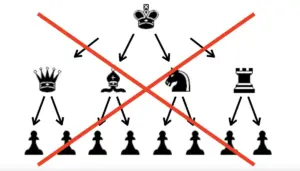

At biological and ecological scales, the smallest feedback loops emerge between molecules, generating the staggering complexity found in cell biology and molecular genetics. These loops scale upward into vast interactions among bioregional terrestrial and marine ecosystems. Popular anthropocentric definitions of consciousness typically restrict the phenomenon to animals equipped with brains, systematically excluding the countless feedback loops operating within living systems at both micro and macro scales.
Spirits
Within living cells and organisms, positive or powered-up feedback loops occur temporarily as information accumulates over time. Conversely, the physical bodies of human animals maintain molecular feedback loops in a balanced, de-powered state throughout a lifetime, fueled by external energy from living food and ultimately leaving behind biological building blocks ready to be reassembled by the sun. Healthy social feedback loops function similarly, maintaining balance through shared experiences and mutual understanding before yielding cultural outputs that integrate back into local ecologies of care.
This relational framework naturally leads to a panpsychic philosophy where consciousness is omnipresent across all scales, aligning closely with Eastern traditions such as Buddhism and Daoism. These traditions invite modern societies to look beyond anthropocentric viewpoints and recognize the cultural biases deeply embedded in industrial notions of intelligence and success.

Buddhism, originating as a philosophical and spiritual tradition rooted in the teachings of the historical Buddha, places central emphasis on minimizing suffering and existential unease, known as dukkha. This objective corresponds directly to the active desire among hypersensitive neurodivergent individuals to minimize cognitive dissonance—and exposes the societal strains that emerge when modern cultures normalize prolonged cognitive dissonance. Similarly, Daoist traditions emphasize harmony with the Dao, advocating for effortless action, naturalness, simplicity, compassion, frugality, and humility. These virtues serve as a timeless critique of anthropocentric empire-building and align closely with the sensitivities of neurodivergent populations.
Love
As activist Vandana Shiva has noted, deep ecological work is rooted in caring for and loving the Earth, recognizing that life is interconnected through countless layers of consciousness. The extent to which human beings feel truly alive emerges directly from mutual trust, shared commitments, and mutual understanding within their relationships.
In contrast, relationships mediated by abstract, super-human scale anthropocentric institutions are largely devoid of genuine shared experience. When cultures compel individuals to invest trust in such abstract systems, people lose the capacity for authentic relationships with living beings. Viewed through this lens, the institutional collapses frequently observed in modern society can be understood as the natural expiration of social licenses that were invalid from their inception.

Relationships can be understood as continuous, multi-modal, de-powered dialogues within ecologies of care. Reframing evolution through collaborative niche construction rather than relentless, wasteful competition offers a compassionate path forward, echoing the mutual aid principles articulated by Petr Kropotkin over a century ago.
Sensitivity Profiles
Every human being possesses a unique sensitivity profile shaped by neurological baselines and lived experiences within specific ecological contexts. This reality is particularly pronounced among hypersensitive neurodivergent individuals, many of whom navigate traumatic experiences in a social world that frequently marginalizes and pathologizes them.
Data indicates that a significant majority of neurodivergent adults frequently feel overwhelmed, misunderstood, disrespected, or unsafe. Overall wellbeing depends heavily on whether an individual’s sensitivity profile aligns with their surrounding ecology of care. Because official diagnostic criteria for conditions like autism frequently overlap with complex trauma responses, it becomes impossible to neatly separate innate neurological differences from trauma-induced coping mechanisms.

Simplistic diagnostic labels focused entirely on decontextualized individuals fail to capture the richness of human experience. Advocates within the neurodiversity movement increasingly call for intersectional solidarity beyond rigid diagnostic categories, pointing out that modern psychological frameworks frequently pathologize human sensitivities that fall outside narrow cultural norms.
Culture Co-Evolution
Major evolutionary milestones across the history of Gaia share distinct co-evolutionary characteristics, demonstrated by the emergence of biological cells and multi-celled organisms. Cell biology illustrates the complementary roles of abstract symbol systems and semantics within evolutionary processes, pointing to a model of semi-permeable membranes that Gaia has tested for billions of years.
Cultural co-evolution at human scales relies on collaborative niche construction rather than wasteful head-to-head competition. Egalitarian hunter-gatherer societies have practiced these collaborative priorities for hundreds of years, offering a blueprint for life-affirming cultures that prioritize omni-directional learning and mutual support.

Recognizing the limits of human scale helps societies design digital and social tools that foster collaboration rather than centralizing power. By moving away from the life-denying ideologies of homo economicus and embracing the life-affirming principles of homo ecologus, communities can begin to land industrial civilization gently and sustainably.
Reviving Trust in Humanity
In the atomized modern social world, human-scale cultural organisms have been largely eroded from living memory, leaving many individuals isolated and distrustful. The competitive framework of modern economics normalizes the compulsion to appear invulnerable, driving an epidemic of self-hate, guilt, and mental health struggles.
Therapeutic practices that attempt to adjust individuals to toxic environments often exacerbate these issues by reinforcing compliance over genuine healing. However, as international movements like the Year of Cooperatives highlight, cooperative models offer an essential pathway toward global resilience. By fostering human-scale ecologies of care, sharing relational frameworks, and embracing Buddhist and Daoist values of compassion and humility, communities can restore trust, reduce suffering, and build a more equitable, life-affirming world.