








The core ideas within ancient Buddhist and Daoist spiritual traditions are increasingly seen as reflective of the profound commonalities found across human-scale indigenous cultures worldwide. In a modern era dominated by hyper-industrialized systems, scholars and advocates are pointing toward a compassionate framework of love—defined as vulnerable, mutual knowing—that is deeply compatible with a panpsychic relational philosophy. At the center of this perspective is the understanding that everyone wants their experience to be taken seriously. Humanity consists of embodied spirits compelled to make sense of a complex world, a task that can only be achieved in good company and at a human scale.
Life
Observing that life creates conditions conducive to life, as sustainability expert Janine Benyus famously noted, strongly hints at the fundamental reality that the dynamic process of existence consists of continuous feedback loops. Life is entirely relational, sacred, cyclical, fleeting, compostible, nested, regenerative, and forever mysterious for all who participate in it.
Rather than viewing life through a purely transactional lens, contemporary thinkers examining cultural evolution emphasize that these relational feedback loops form the building blocks of what human-animal perception experiences as consciousness. This viewpoint aligns closely with Eastern philosophical texts. While humanity’s biological limitations prevent us from scientifically "proving" to a quantifiable degree of certainty that consciousness emerges through these relational networks, science is equally incapable of disproving it. This limitation highlights the boundaries of human comprehensibility, much like the abstract universe of mathematics, where certain statements can never be definitively proven true or false.
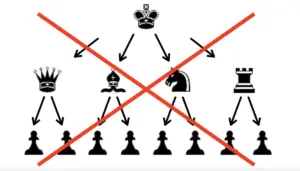
At the scales relevant to biological and ecological systems, the smallest feedback loops emerge between molecules, generating the mind-boggling complexity found in cell biology and molecular genetics. These loops scale upward into bioregional terrestrial and marine ecosystems within Gaia. Popular anthropocentric definitions of consciousness typically generalize only to animals equipped with brains, systematically excluding the countless feedback loops operating within living systems at both micro and macro spatial and temporal scales.

Spirits
Any high-dimensional space providing a reasonable description of Gaia—the totality of life, including the potential of homo ecologus—is best conceptualized entirely relationally, starting from the foundational layers of physics upward. Powered-up feedback loops, where information accumulates over time in specific living cells or beings, remain temporary phenomena relative to the lifespans of the entities involved.
Human bodies grow to a specific scale and remain intact for a lifetime, during which molecular feedback loops between cells and organs are maintained in a balanced, de-powered state. Fueled by external energy from living food, this biological process generates waste that is readily reassembled by the sun’s thermonuclear energy. Similarly, healthy social feedback loops between humans grow into lasting relationships sustained by shared experiences and mutual understanding, ultimately producing cultural outputs that integrate naturally back into local ecologies of care.
This universe of dynamic feedback and learning loops underpins a panpsychic philosophy where consciousness is omnipresent across all scales, aligning seamlessly with Buddhist and Daoist traditions. Such a perspective invites non-anthropocentric viewpoints, challenges the cultural biases inherent in modern industrial notions of success, and draws critical attention to the cognitive and emotional boundaries of human scale.
Love
The depth of our aliveness emerges directly from mutual trust, shared commitments, and mutual understanding across our relationships. By contrast, relationships with abstract, super-human scale anthropocentric institutions are fundamentally devoid of genuine shared experiences. When a culture forces individuals to invest trust in such institutional structures, people lose their capacity for authentic connection with living beings, leading to a diminished sense of vitality.

Recognizing these dynamics allows for a sober perspective on institutional collapse: it represents the expiration of a social license that was inherently invalid from the outset. Indigenous societies that have resisted the myth of homo economicus offer vital lessons for navigating this transition. Relationships can be understood as continuous, multi-modal, de-powered dialogues within ecologies of care, deeply entangling our inner worlds.
Reframing evolution through collaborative niche construction rather than ruthless competition is not entirely new. Scholars note that figures like Pyotr Kropotkin wrote eloquently about mutual aid as a factor in evolution over a century ago. Embracing a compassionate framework of love as vulnerable mutual knowing bridges panpsychic relational philosophy with the life-affirming language of care ecologies.
Sensitivity Profiles
Every human possesses a unique sensitivity profile shaped by neurological baselines and lived experiences within specific ecological contexts. This is particularly true for hypersensitive neurodivergent individuals, many of whom navigate traumatic experiences in a social world that frequently marginalizes, pathologizes, and criminalizes them.
Research indicates that a vast majority of neurodivergent adults frequently feel overwhelmed, misunderstood, disrespected, or unsafe. Overall wellbeing depends heavily on the alignment between an individual’s sensitivity profile and their surrounding ecology of care. Diagnostic criteria for autism often entangle genuine neurodivergent neurological baselines with complex trauma responses born of living in a hypernormative industrial society. Consequently, simplistic medical models focused solely on pathologizing decontextualized individuals often cause significant harm, particularly to those who are intersectionally marginalized.

Activists within the neurodiversity and disability movements advocate for intersectional solidarity beyond rigid diagnostic labels, challenging the cookie-cutter categories of the Diagnostic and Statistical Manual of Mental Disorders (DSM) that erase individual lived experiences. Persistent, unbalanced feedback loops between humans generate cognitive dissonance, experienced as a discomfort that demands resolution. Ignoring this dissonance over extended periods can manifest in mental, spiritual, and physical illness.
Culture Co-Evolution
Major evolutionary milestones in the history of Gaia possess deeply co-evolutionary characteristics, exemplified by the emergence of biological cells and multi-celled organisms. The empirical knowledge of cell biology demonstrates the complementary roles of abstract symbol systems and semantics, revealing that evolution is fundamentally an ecological process rather than a species-specific competition.
Semi-permeable cellular membranes offer a road-tested model for co-evolutionary processes among multiple living organisms. By utilizing category theory and denotational semantics, researchers can articulate the interdependencies between symbol systems and semantics, shifting away from wasteful head-to-head competition and toward conscious collaborative niche construction.
Egalitarian hunter-gatherer societies have practiced these priorities for hundreds of years, demonstrating that healthy, life-affirming cultures prioritize mutual aid, open-source learning, and consensus-building approaches. Expanding this collaborative framework to relationships beyond the human realm allows societies to envision digital communication and collaboration tools designed for the next two centuries and beyond.

The Human Spirit Within Gaia
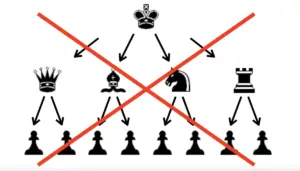
Humans evolved to make sense of the world at human scales. As part of an open-source heritage for future generations, transparent and thoughtfully designed digital technological guardrails can extend human collaborative niche construction to larger scales without centralizing decision-making power in the hands of authoritarian figures.
Radical egalitarianism forms the architecture of human adaptive intelligence, differing fundamentally from the nervous systems of other primates due to humanity’s unique capacity for language and culture. Consequently, defining "normalcy" or "adaptiveness" at the level of the atomized individual is deeply flawed. Western, Educated, Industrialized, Rich, and Democratic (WEIRD) societies have grown detached from these evolutionary roots, surrounded instead by spectacle and institutionalized systems that leave individuals isolated.
In the ongoing cultural metamorphosis, Gaia remains the ultimate authority. By distinguishing between human cultural outputs and empirical scientific efforts to understand the living planet, communities can critically examine the cultural assumptions underpinning modern academic disciplines, statistical models, and technological developments.
Reviving Trust in Humanity
In an atomized modern world, human-scale cultural organisms and the memory of their adaptive importance have been heavily eroded, leaving faith in humanity and Gaia deeply shaken. The competitive framework of homo economicus normalizes the compulsion to appear independent and invulnerable, fostering ubiquitous mistrust and mental health crises.

Data from research initiatives demonstrates that while neurodivergent individuals deeply desire to help others and strangers in need, many harbor significant anxiety about asking for help themselves. Deep indoctrination in the myth of homo economicus breeds widespread self-hatred and shame, as individuals internalize the systemic failure to achieve culturally prescribed metrics of success.
Overcoming these toxic patterns requires discarding the ideology of homo economicus and embracing human-scale ecologies of care. As UN initiatives and global cooperatives demonstrate, building better, more collaborative structures offers a viable path forward. By sharing these frameworks within emerging ecologies of care, communities can nurture human connections, honor emotional and cognitive limits, and foster wisdom—defined as the capacity to distinguish advanced recursive tool design from true ecological understanding.
Gaia calls for a conscious paradigmatic shift away from life-denying economic doctrines and toward life-affirming ecologies. By grounding future endeavors in trusted human relationships, communities can lay the groundwork for a sustainable and compassionate coexistence on a living planet.