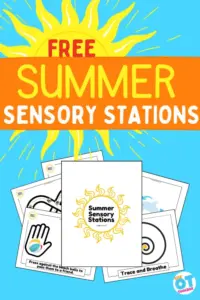







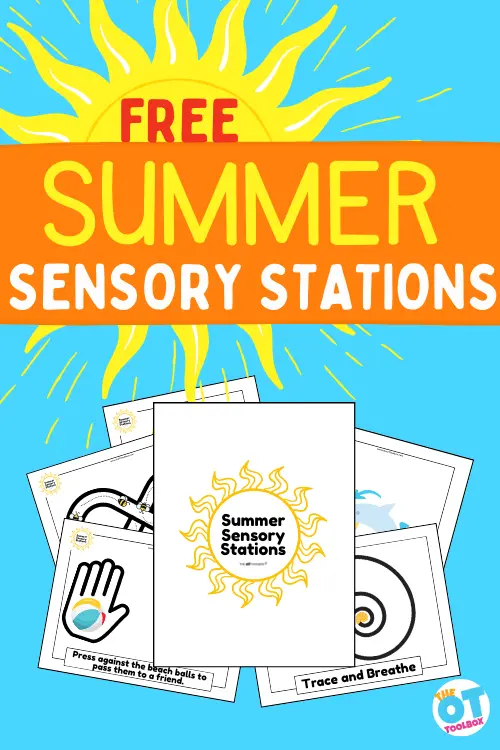
Therapy professionals, educators, and parents looking for effective ways to manage children’s energy and attention during the warmer months have a new resource at their disposal. The OT Toolbox has officially released its all-new Summer Sensory Stations set, a collection of printable self-regulation and movement activities designed to help kids stay balanced, focused, and calm during long summer days.
The newly launched resource joins a popular lineup of seasonal sensory station sets created by pediatric occupational therapist Colleen Beck, OTR/L. Engineered for easy implementation, the printable activities can be printed, laminated or placed in page protector sleeves, and hung along hallways, classroom walls, or clinic corridors. This setup creates an accessible, DIY sensory path that requires no specialized equipment beyond standard printing supplies and a designated wall or floor space.
Summer inherently brings changes to daily routines, camp schedules, and classroom environments. While these months offer countless opportunities for outdoor play, extended downtime or shifts in structure can sometimes make it difficult for children to maintain emotional and physical regulation. Occupational therapists and educators frequently turn to sensory movement to support attention, body awareness, emotional regulation, and motor planning when routines are disrupted.
The Summer Sensory Stations set addresses these challenges by offering purposeful movement breaks that can be integrated seamlessly into summer school programs, occupational therapy sessions, camp schedules, or home routines. Rather than requiring children to sit through long, uninterrupted periods, the stations encourage short bursts of movement that help reset the nervous system. This approach provides structured opportunities for children to burn off excess energy or transition smoothly between tasks.
Unlike random movement breaks, printable sensory paths are designed to engage multiple sensory systems simultaneously. The activities combine vestibular input, proprioception, visual processing, and deep breathing exercises. By following visual cues on the floor or wall, children are guided through sequences of movements that foster executive functioning and motor planning while improving balance, coordination, and overall self-regulation.
The newly released summer packet features a series of thoughtfully designed stations, each focusing on a distinct developmental skill and a fun, warm-weather theme. The first activity in the sequence is the bee path infinity loop, a station tailored for mindfulness, deep breathing, crossing the body’s midline, and hand-eye coordination. By tracing the infinity loop, users follow the path of summer bees, an exercise intended to foster visual attention, self-awareness, and concentration. Therapists can modify this station by having children stand on uneven surfaces—such as gymnastics mats, slant boards, or balance pods—or perform the tracing while kneeling or lunging to further challenge balance and stability.
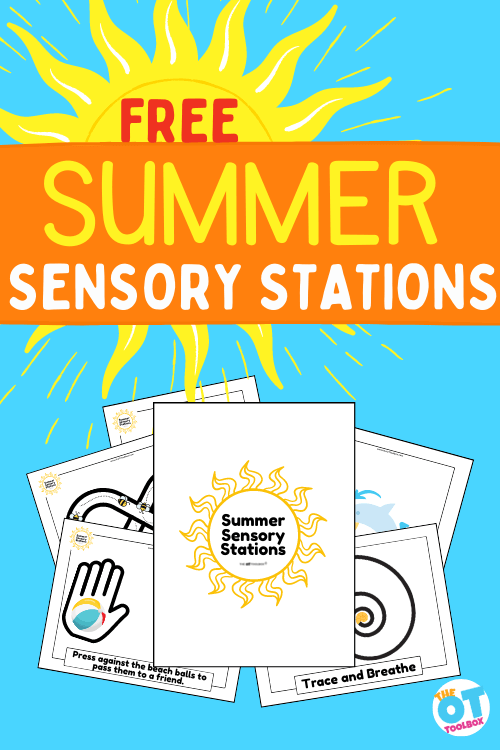
The second stop on the path invites children to leap like a dolphin, providing powerful vestibular input, motor planning challenges, and proprioceptive heavy work. Proprioception helps wake up the joints and muscles, giving the body crucial feedback regarding position, weight, pressure, stretch, and movement in space. This leaping activity can be adapted for standing, kneeling, or floor-based movements depending on the developmental needs of the child.
Upper-body strength and stability are targeted at the third station, which features a beach ball wall push-up exercise. This activity delivers whole-body proprioceptive input through the shoulder girdle, elbows, wrists, and the arches of the hands while simultaneously working the core. The wall push-up can be easily modified by adjusting the height on the wall to accommodate a lunge position or by allowing seated participants, including wheelchair users, to perform the movement and challenge their seated balance.
To support calming strategies and interoceptive awareness, the fourth station offers a seashell trace and breathe printable. Users follow a spiral path from a crab to a seashell while inhaling deeply, then retrace the path to exhale. This visual breathing exercise encourages full lung expansion, serving as an effective mindfulness and self-regulation tool that helps children tune into internal bodily signals.
The final station in the summer packet introduces summer sand squats, a balance and coordination exercise paired with a seasonal visual. This open-ended activity allows practitioners to incorporate additional challenges, such as asking children to pick up an object from the floor or maintain visual focus on a specific target to enhance visual attention.
From an occupational therapy perspective, these printable stations function as much more than a simple movement game. Every stop along the path is structured to strengthen foundational skills necessary for success in academic environments and daily life. Practitioners note that sensory paths can significantly improve postural control, bilateral coordination, spatial awareness, and stress management. By organizing the body and calming the nervous system, these activities prepare children to engage more successfully in subsequent learning, reading, handwriting, or seated tasks.
The Summer Sensory Stations are accessible through digital download options provided by The OT Toolbox, with materials also integrated directly into the platform’s Member’s Club dashboard for subscribers. The release continues a broader effort by pediatric specialists to provide accessible, low-preparation tools that support child development across clinical, educational, and home environments throughout the year.