









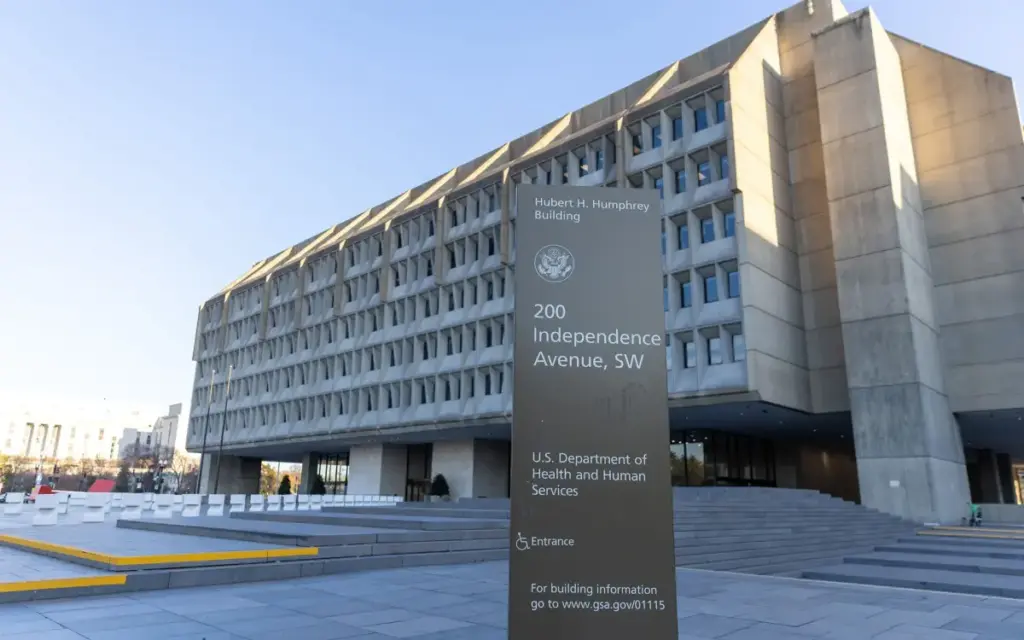
Federal health officials are moving forward with a controversial update to a cornerstone regulation designed to bar disability discrimination in healthcare, narrowing the scope of who qualifies for federal protections.
The U.S. Department of Health and Human Services (HHS) finalized changes this month to regulations implementing Section 504 of the Rehabilitation Act. The update tweaks language in a sweeping 2024 rule finalized during the Biden administration. That original regulation explicitly prohibited healthcare providers from making treatment decisions based on biases or stereotypes about disabilities, while also mandating an increased availability of accessible medical equipment and technology across federally funded medical facilities.
With this latest administrative action, the Trump administration is explicitly specifying that “gender identity disorders not resulting from physical impairments” do not qualify as a disability under the rule.

“This clarification is necessary to resolve ambiguity introduced in the preamble to the 2024 Final Rule and to ensure compliance with the best reading of the governing statute,” HHS officials stated regarding the revision.
Because the update alters Section 504 enforcement parameters, the revised language applies broadly to any medical program, hospital, clinic, or entity that receives financial assistance from the federal health agency.
The regulatory revision marks the latest chapter in a long-running and complex legal saga that has wound its way through the federal court system. Shortly after the 2024 rule was finalized, the state of Texas, joined by 16 other states, filed a lawsuit against the federal government. The primary objective of the litigation at the time was to ensure that gender dysphoria would not be classified as a disability under federal healthcare regulations. Initially, the challenging states went a step further, asking the court to strike down Section 504 in its entirety.
However, the legal landscape shifted as the litigation progressed. The coalition of states later backed off their broader demand to completely overturn Section 504, though they maintained their ongoing challenges to specific provisions within the updated regulations.
As the legal battle continued, intense pressure from disability rights advocates prompted several states to drop out of the multi-state lawsuit. Yet, a dramatic shift occurred in September, when federal officials chose to switch sides in the case. The administration’s pivot was anchored by a June memo issued by the Department of Justice’s Office of Legal Counsel. That memo indicated that neither the Americans with Disabilities Act (ADA) nor Section 504 required states to treat mentally disabled patients in the "most integrated setting appropriate to their needs." Capitalizing on this legal interpretation, the federal government ultimately reached an agreement with the remaining states involved in the lawsuit to remove references to the "most integrated setting" standard from the regulations.
HHS officials noted that the agency received and reviewed hundreds of public comments before finalizing the latest regulation change this month. While public feedback was sharply divided on the proposed revision, the agency ultimately decided to proceed with the modification as drafted.
Supporters of the adjustment argue that the change brings administrative definitions back into alignment with congressional intent.
“For decades, HHS’s Section 504 regulations have defined disability consistently with the words Congress chose. This rule ensures recipients of HHS funding follow those definitions, eliminating confusion for the people they serve and restoring confidence in the statute,” said Paula M. Stannard, director of the HHS Office for Civil Rights.
Conversely, disability rights advocates are sounding the alarm. While acknowledging that the latest update will hit transgender individuals the hardest by stripping away specific healthcare protections, advocates emphasize that the action carries much wider, more systemic implications for the entire disability community.
“It sets a dangerous precedent,” said Michelle Uteza, executive director of the Disability Rights Education & Defense Fund.
Uteza pointed to legislative history to underscore her concerns about the agency’s approach, noting that in 2008, Congress explicitly instructed federal agencies and courts to interpret the term “disability” broadly. Lawmakers intended for legal focus to remain centered on whether unlawful discrimination actually occurred, rather than forcing individuals to prove whether they were “disabled enough” to merit protection.
“This rule goes the other way: an agency writing a diagnosis out of the law by category instead of looking at the individual,” Uteza said. “If an agency can define one group out of Section 504, no one’s coverage is secure.”
Uteza also stressed that while administrative agencies have considerable leeway in rewriting regulations, these updates do not legally alter the underlying statute passed by Congress.
“The statute is intact, but the rights it guarantees are being stripped away without Congress and without a court ruling against them,” she said. Looking ahead, she added that safeguarding these protections will require decentralized vigilance. “But for now, enforcing them is up to us: private litigation, state law and the same organized pressure that won Section 504 in the first place.”