






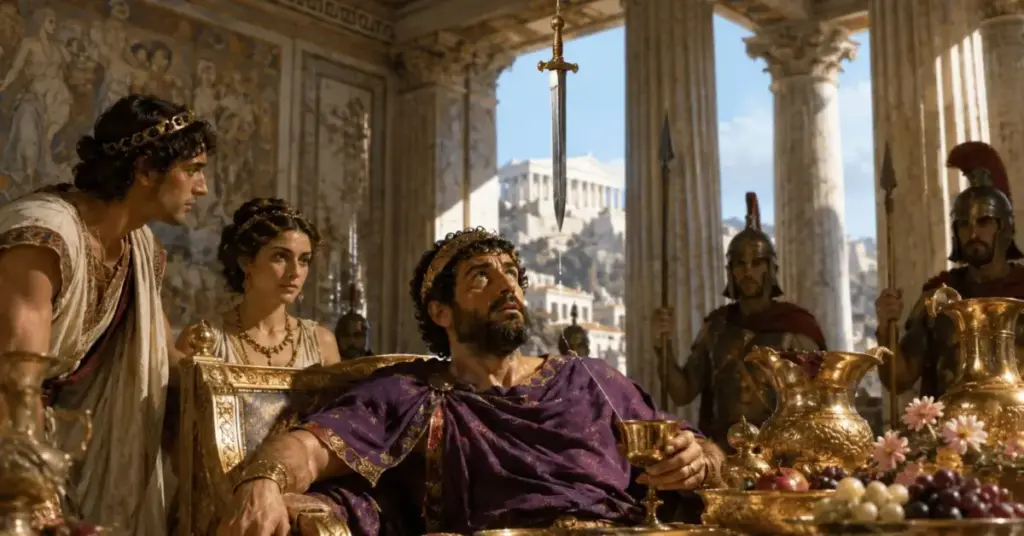
We live in a world that often defies our deepest moral intuitions—an inherently and stubbornly unjust reality where malevolent individuals frequently climb to positions of immense wealth, fame, and power, while virtue, honesty, and genuine goodness carry no absolute guarantee of security or worldly success. History and daily observation alike show us that bad actors frequently prosper. Yet, a fundamental philosophical distinction must be drawn between merely prospering in the material sense and truly flourishing as a human being.
Injustice and ruthless ambition can successfully secure the external goods of life. They can build mansions, accumulate vast fortunes, and amass terrifying political clout. However, what injustice cannot do is bestow wisdom, internal tranquility, or genuine contentment. These deeper states of being are entirely internal, residing in the realm of character rather than circumstance. To understand the true cost of unchecked power and systemic unfairness, one must examine the ultimate archetype of the unjust life: the tyrant.
While not every unjust person ascends to absolute dictatorship, the tyrant reveals, in its most stark and extreme form, the corrosive effect that injustice has upon the soul of the practitioner. The pursuit of power at the expense of others creates a psychological and political prison from which there is rarely any escape.

Seneca, Nero, and the Trap of Absolute Power
The complex dynamic between supreme power and profound personal captivity was famously explored in the first century CE by the Stoic philosopher Seneca. In a long, reflective treatise addressed to the tyrannical Roman emperor Nero—a text that has largely survived as On Clemency—Seneca warned the young ruler that the single most powerful individual in a state of tyranny is often paradoxically the least free.
Though historians debate whether Seneca ultimately dispatched the letter to the emperor, the philosophical arguments it contains remain profoundly relevant. Seneca argued that clemency, or mercy, is the defining virtue that distinguishes a legitimate king from a despotic tyrant. By winning the genuine admiration and loyalty of the populace, a ruler secures their own safety and freedom.
Conversely, the tyrant becomes a prisoner of their own oppressive authority. Because they rule through terror, they are perpetually hated; because they are universally hated, they must continuously escalate their use of fear to maintain control. This creates a deeply destructive vicious cycle.
Trapped by paranoia, the absolute ruler can no longer travel freely among the people or place genuine trust in their closest advisors. Simple daily routines become minefields of suspicion. The tyrant cannot sleep soundly in their bed, nor can they partake in meals without the haunting dread that a trusted servant or cupbearer has poisoned their food.
History has consistently demonstrated that few tyrants manage to die peacefully in their own beds. The fate of Nero himself serves as a tragic historical confirmation of Seneca’s warnings. When his reign finally collapsed and he faced imminent capture, Nero lacked the personal fortitude to end his own life cleanly, requiring the assistance of a freedman to drive a dagger into his throat. His final, utterly deluded words—Qualis artifex pereo (“What an artist dies in me!”)—suggest a mind entirely detached from reality to the very end, perhaps even harboring a final, bitter thought of the philosopher who had tried in vain to warn him.
Plato’s Anatomy of the Tyrannical Soul
If Seneca mapped out the political and physical prison that circumscribes a tyrant’s daily existence, the ancient Greek philosopher Plato laid bare the psychological prison constructed within the tyrant’s own mind.
In Plato’s psychological framework, the soul of the tyrant is never truly his own; rather, it is perpetually dominated by lawless appetites and impulsive desires that he can neither rationally control nor ever fully satisfy. Consequently, the individual who appears to the outside world as supremely free is, upon closer inspection, an absolute slave to his own deranged and chaotic psychology. He may have conquered nations, subjugated populations, and broken laws with impunity, but he has utterly failed to conquer himself.
This internal disharmony was famously quantified in Plato’s Republic, where Socrates employs a whimsical mathematical calculation to argue that the truly just king or virtuous individual is precisely 729 times happier than the tyrant. While the mathematical formula itself is symbolic, the underlying philosophical truth remains potent: the internal rewards of a well-ordered soul infinitely outweigh the hollow external triumphs of tyranny.
Guarding Against the Rise of Tyrants
Yet, philosophy cannot simply content itself with the comforting notion that tyrants are ultimately miserable creatures. The eventual suffering and downfall of a dictator offer little comfort to the victims of their ascent, nor do they undo the catastrophic suffering inflicted upon society on the way up and down the ladder of power.
Because the collateral damage of tyranny is so devastating, human societies cannot rely solely on the self-correcting mechanisms of psychological misery. Much stronger, more deliberate safeguards must be constructed to prevent authoritarian figures from capturing the apparatus of the state.
Safeguarding society against the recurring threat of tyranny requires a multi-pronged approach rooted in institutional resilience and civic engagement. First and foremost, societies must ensure that a career in politics remains genuinely attractive and viable for decent, honorable people. When public service is abandoned by the virtuous, the political sphere becomes an exclusive arena for the power-hungry and corrupt.
Second, educational systems must be significantly strengthened to ensure that every citizen possesses the critical thinking skills necessary to recognize a demagogue’s familiar bag of tricks. A population well-versed in history and rhetoric is far less susceptible to manipulative populist appeals.
Third, constitutions and legal institutions must be rigorously fortified so they possess both the authority and the independence to arrest the rise of would-be tyrants, regardless of how insistent, disruptive, or temporarily popular those figures might be. Humanity has successfully engineered complex feats such as putting astronauts into space, splitting the atom in nuclear reactors, and developing advanced artificial intelligence. Surely, designing robust democratic guardrails to protect self-governance is not beyond our collective capability.
Ultimately, we are left to navigate an inherently unfair world where bad actors frequently thrive and the innocent often suffer. But true human flourishing requires far more than material prosperity. It demands wisdom, freedom, internal tranquility, and genuine contentment—goods that external success can support under the right conditions, but can never independently guarantee.
Choosing to live a just life, therefore, is far more than a mere winning strategy for personal peace of mind. It is a profound moral refusal to become an active part of the world’s injustice.